
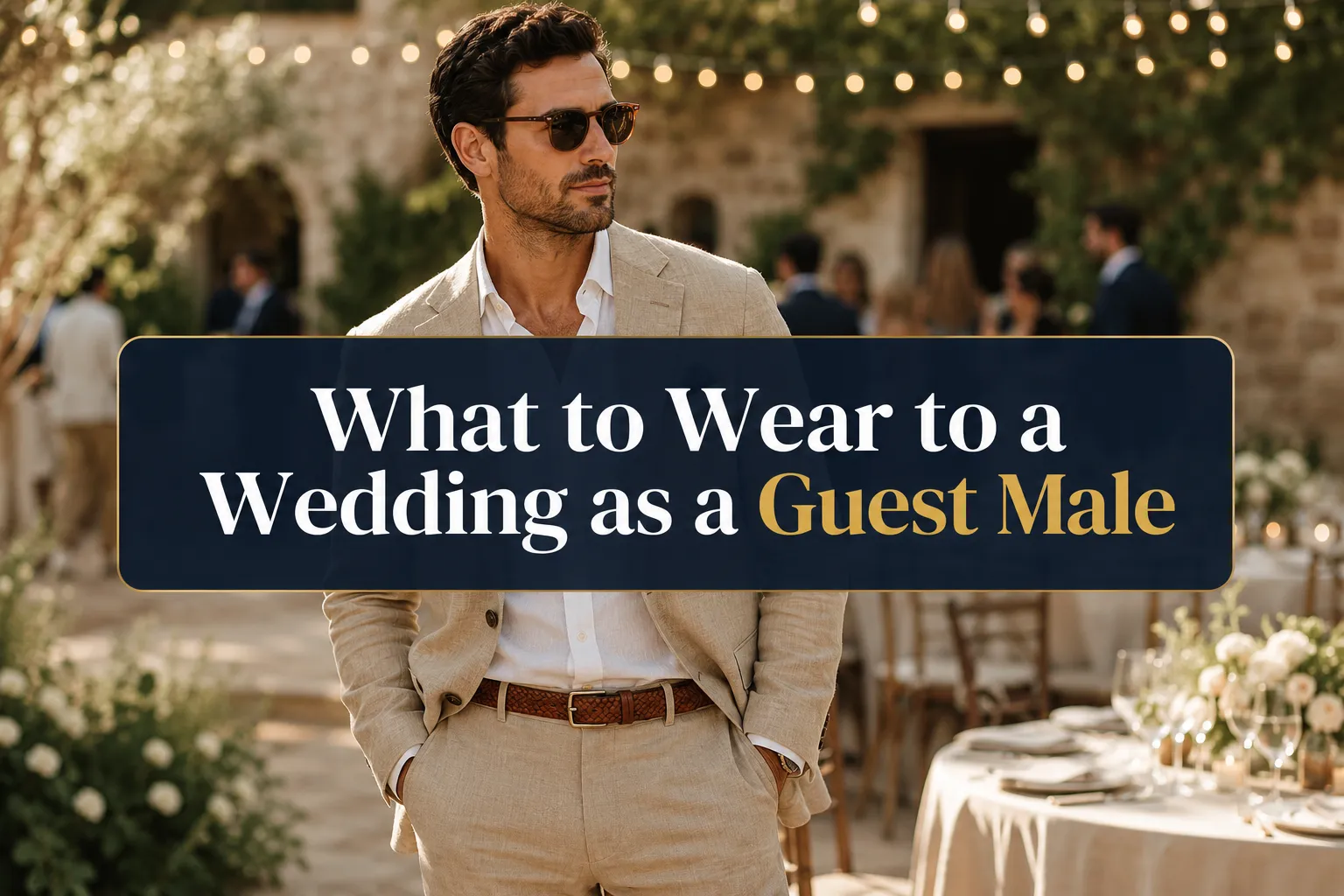
For a casual wedding, men should opt for an elevated casual look: a crisp collared button-down shirt, tailored chinos or dress trousers, and clean loafers or polished dress shoes. An unstructured blazer is often a safe, stylish addition that can be removed if the setting truly dictates a more relaxed vibe.
Emily Post’s wedding guest attire guide also emphasizes using the invitation, time, venue, and formality of the event as key clues when choosing what to wear.
Key Takeaways:
- “Casual” for a wedding means polished and intentional, not everyday lounge wear.
- The safest default is a button-down shirt, tailored chinos, and loafers.
- Always consider the venue (beach, garden, restaurant) and season (summer, winter).
- Jeans, shorts, and athletic sneakers are generally not appropriate unless explicitly stated by the couple.
- Fit and grooming are crucial; a well-fitted, wrinkle-free outfit always looks better.
- When in doubt, it’s safer to dress one step smarter than one step too casual.
- Neutral colors and breathable fabrics like cotton and linen are versatile choices.
Casual wedding attire sounds simple until you have to decide what actually counts as “casual.” The truth is, “what to wear to a wedding as a guest male casual” differs significantly from your typical weekend attire.
For a wedding, “casual” means elevated casual, a polished, intentional look that shows respect for the occasion without being overly formal. It’s about striking a balance between comfort and elegance, ensuring you look appropriate for celebrating the couple’s special day.
Emily Post’s attire guide describes casual clothing as informal and comfortable while still being clean and presentable. The safest casual wedding outfit for men involves a crisp button-down shirt, tailored chinos or smart trousers, loafers or polished shoes, and an optional blazer.
This foundation allows you to adapt easily based on the venue, season, and specific nuances of the invitation. The Knot’s current casual wedding attire guide similarly recommends chinos or slacks, button-down shirts or polos, optional blazers, and loafers or dress shoes for men.
What Does Casual Wedding Attire Mean for Men?
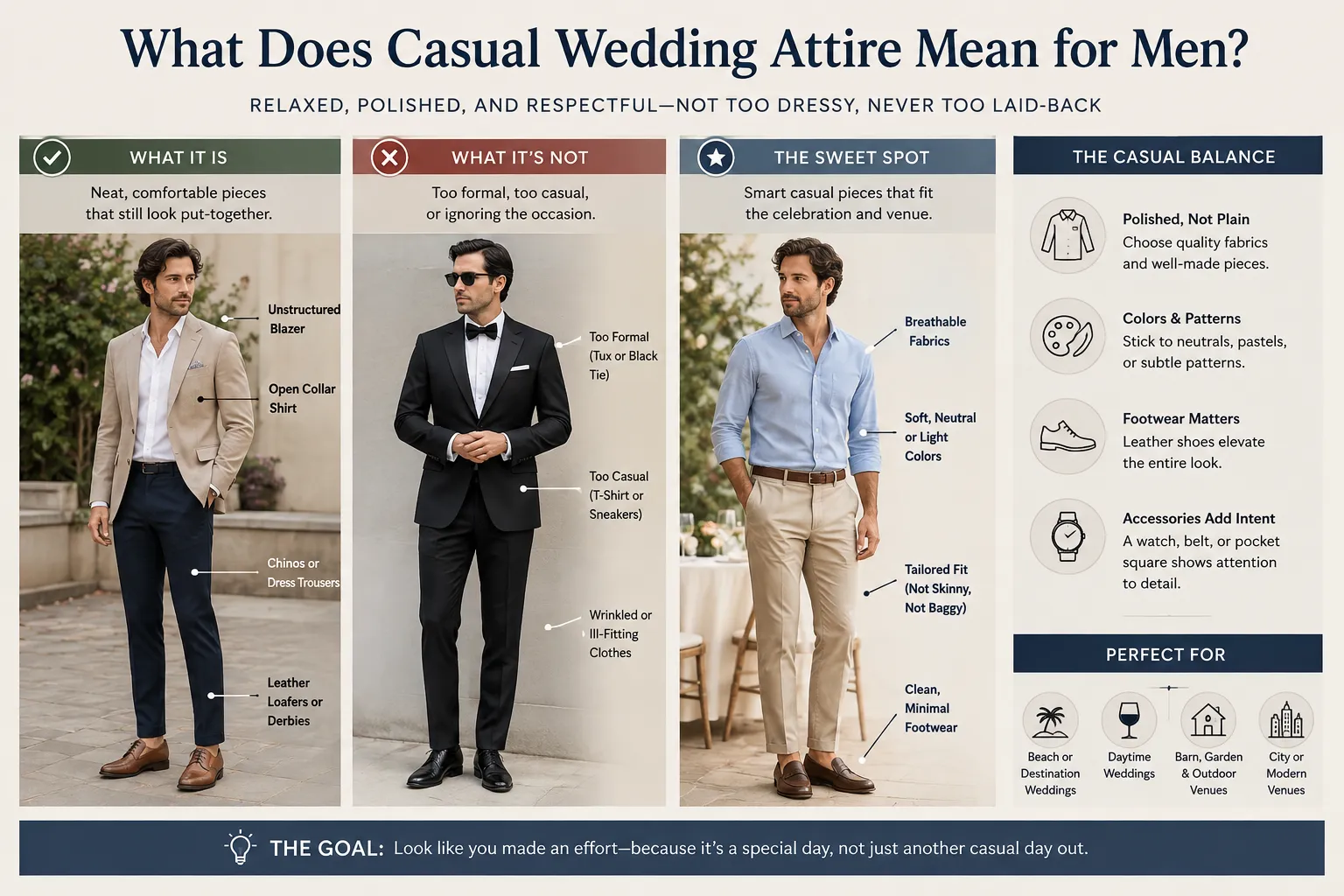
For men, casual wedding attire signifies a relaxed yet put-together look, distinct from your everyday clothes. It’s about selecting garments that are comfortable but show a clear effort to dress for a celebratory event, rather than a casual outing.
Casual Does Not Mean Everyday Clothes
When an invitation states “casual,” it does not give permission for T-shirts, gym clothes, athletic sneakers, graphic shirts, or worn-out jeans. These items are generally considered too relaxed for a wedding, even if the overall theme is laid-back. Your goal is to look polished and intentional.
What “Casual” Usually Means at a Wedding
At a wedding, “casual” typically means an outfit that is relaxed, polished, comfortable, and intentional. Think of it as a step below “smart casual” or “cocktail attire.” It allows for more leeway with fabrics, colors, and the absence of a tie, but still requires thoughtful coordination. The Knot’s 2024 Guest Study found that only 17% of couples chose casual wedding attire, highlighting why guests often find this dress code unclear (The Knot, 2024).
Casual vs. Smart Casual vs. Business Casual
Understanding the nuances between different “casual” dress codes is essential to avoid being under- or overdressed. The table below outlines key differences for men’s wedding guest attire:
| Dress Code | Shirt | Pants | Shoes | Jacket |
|---|---|---|---|---|
| Casual | Button-down/polo | Chinos | Loafers | Optional |
| Smart casual | Button-down | Tailored trousers | Loafers/Derbies | Recommended |
| Business casual | Dress shirt | Dress trousers | Dress shoes | Usually |
| Cocktail | Dress shirt | Suit trousers | Dress shoes | Suit |
What Is the Safest Outfit for a Casual Wedding?
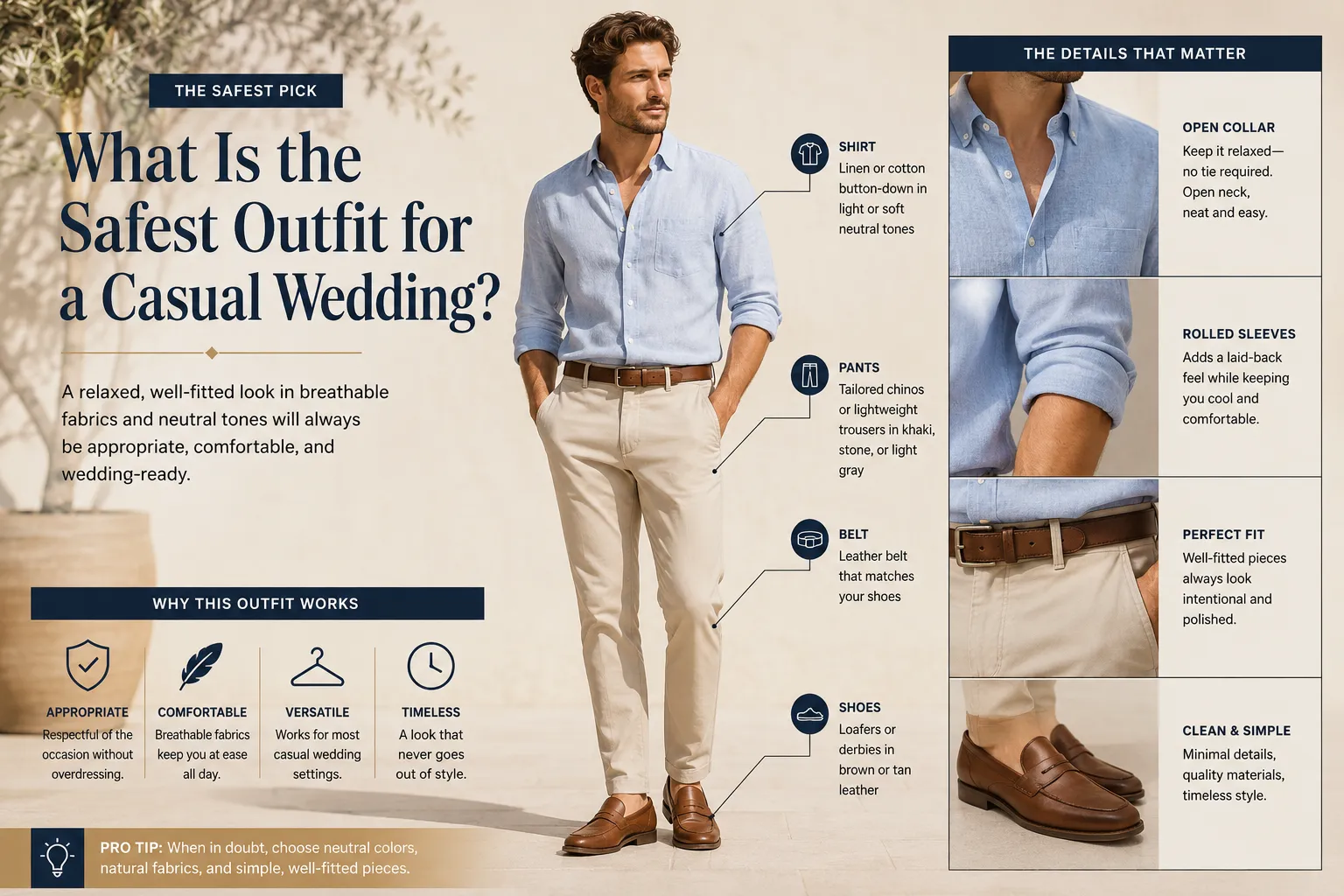
The safest and most versatile outfit for a casual wedding guest male is a well-fitting, elevated casual ensemble that can be easily adapted to various settings. This option minimizes the risk of feeling out of place.
The Classic Outfit Formula
The most reliable casual wedding guest outfit for men is a light-blue or white button-down shirt, navy or tan tailored chinos, and brown loafers, with an optional unstructured blazer. This combination is universally flattering and appropriate for most casual wedding scenarios.
Why This Outfit Is So Versatile
This outfit works because it balances formality with comfort. It’s suitable for indoor and outdoor weddings, from spring through fall, and transitions well between daytime and early evening events. The neutral colors complement various settings and body types, offering a cohesive and respectful appearance without being stiff. This particular combination is why Bjorn & Company often recommends it as a go-to for guests seeking simple yet stylish options.
When to Dress It Up
If the venue leans slightly more formal or the weather demands it, you can easily elevate this base outfit. Add a lightweight, unstructured blazer for a touch of sophistication, swap chinos for dress trousers, or consider a tie if you feel it complements the couple’s style. For slightly smarter casual affairs, Derby shoes can replace loafers.
15 Casual Wedding Outfit Ideas for Men
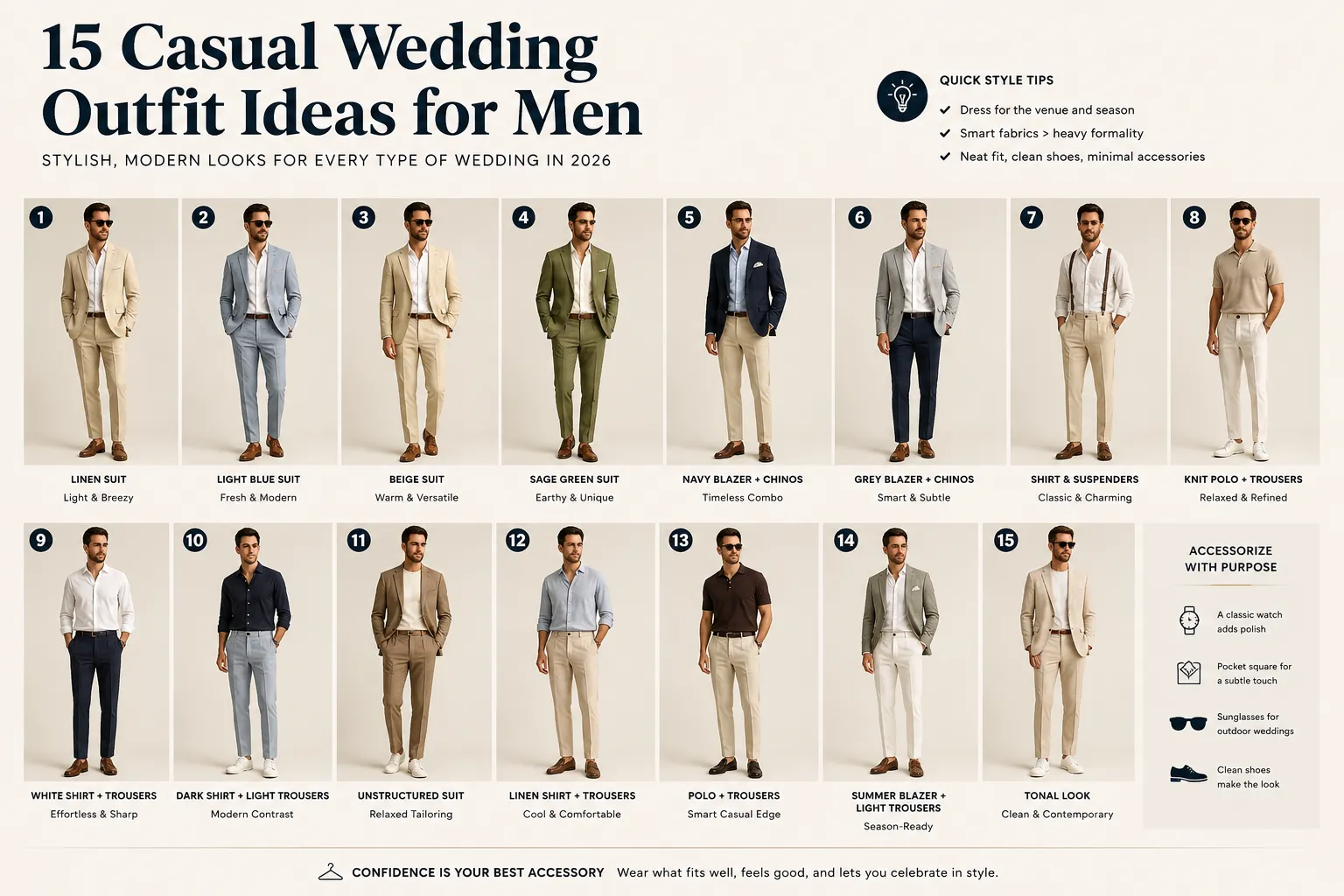
When considering what to wear to a wedding as a guest male casual, having a variety of proven outfit ideas can simplify your decision. These combinations balance comfort, style, and appropriateness for different casual wedding settings in 2026.
1. White Shirt + Navy Chinos + Brown Loafers
A crisp white button-down shirt paired with well-fitted navy chinos and classic brown leather loafers creates a timeless, effortlessly polished look.
2. Light-Blue Oxford + Khaki Chinos + Loafers
This combination offers a slightly softer aesthetic than navy, perfect for daytime or spring weddings. The light-blue Oxford cloth button-down is a versatile staple.
3. Navy Blazer + White Shirt + Tan Chinos
Adding a navy unstructured blazer instantly elevates your casual outfit, making it suitable for slightly dressier casual events without feeling overdone.
4. Polo Shirt + Tailored Trousers
A high-quality knit polo in a solid color, paired with tailored dress trousers (rather than chinos), presents a smart and comfortable option, especially for summer.
5. Linen Shirt + Lightweight Trousers
Ideal for beach or destination weddings, a linen shirt with matching or contrasting lightweight linen or cotton trousers keeps you cool and stylish.
6. Short-Sleeve Button-Down + Chinos
For very warm weather, a well-fitting short-sleeve button-down in a subtle pattern or solid color can be a stylish alternative to its long-sleeved counterpart.
7. Chambray Shirt + Beige Chinos
A chambray shirt offers a textured, relaxed vibe. Paired with beige chinos, it’s perfect for rustic or outdoor daytime events.
8. Knit Polo + Dress Trousers
A refined knit polo (not a pique cotton one) in merino wool or a silk blend, tucked into tailored dress trousers, offers a sophisticated, modern casual look.
9. Unstructured Blazer + Chinos
This is a versatile power duo. A lightweight, unlined blazer over any collared shirt with chinos provides comfort and smartness.
10. Oxford Shirt + Gray Trousers + Suede Loafers
A classic Oxford shirt with charcoal or light gray tailored trousers and sophisticated suede loafers creates an understated, elegant casual ensemble.
11. Olive Chinos + White Shirt + Brown Shoes
Introducing color with olive chinos, especially for fall or garden weddings, adds personality while maintaining a refined aesthetic.
12. Navy Polo + Stone Trousers
A dark navy polo shirt with lighter stone-colored tailored trousers offers a sharp, clean contrast that’s excellent for various casual venues.
13. Linen Blazer + White Shirt + Chinos
For warm-weather formality, a linen blazer over a white shirt and chinos is breathable and adds structure without heavy fabric.
14. Dark Jeans + Blazer + Dress Shoes
Dark, un-distressed jeans can sometimes work for a truly casual, rustic, or backyard wedding, but only if the couple, venue, or theme clearly supports them. Pair them with a blazer and dress shoes to elevate the look and avoid appearing too informal. Always default to chinos if unsure.
15. Casual Suit Without a Tie
A lightweight, well-tailored suit in cotton or linen can be made casual by simply foregoing a tie, unbuttoning the top shirt button, and pairing it with loafers or polished dress sneakers. This is a powerful statement for “casual elegance.”
What to Wear Based on the Wedding Venue
The wedding venue is one of the most significant factors in deciding what to wear to a wedding as a guest male casual. Each location subtly informs the appropriate level of formality and choice of fabrics.
Beach Wedding
For a beach wedding, think light, breezy, and comfortable. Linen shirts or lightweight cotton button-downs, paired with linen or light-colored cotton trousers (not shorts, unless explicitly stated), are ideal. Loafers or refined boat shoes are perfect. Avoid socks, and opt for natural, breathable fabrics.
Garden Wedding
Garden weddings usually imply a slightly dressier casual. Chinos or tailored trousers, an Oxford shirt, and loafers are excellent choices. A lightweight blazer can add a touch of sophistication. Be mindful of walking on grass; consider shoes that can handle uneven surfaces.
Backyard Wedding
While “backyard” suggests extreme casualness, it’s still a wedding. This usually means smart chinos, a nice collared shirt (button-down or a premium polo), and clean shoes. Avoid T-shirts, athletic wear, or overly worn jeans unless the invitation specifically mentions a very relaxed, informal BBQ style.
Barn or Rustic Wedding
Earth tones and textures work well for barn or rustic venues. Consider olive or brown chinos, a chambray or flannel-blend shirt, and comfortable boots or sturdy leather loafers. A casual jacket, like a chore coat or a tweed blazer, can fit the aesthetic.
Restaurant or Hotel Wedding
These venues typically lean towards “smart casual.” Tailored trousers, a long-sleeve button-down shirt, a blazer, and dress shoes (loafers or Derbies) are recommended. You can skip the tie for a casual feel, but ensure your shirt is pressed and well-fitted.
Courthouse Wedding
For a courthouse wedding, a polished middle-ground is best. Think tailored trousers, a crisp button-down shirt, and dress shoes. A blazer is a good addition for formality, but an elevated knit sweater over a collared shirt can also work if it’s a very intimate, informal ceremony.
What to Wear to a Casual Wedding by Season
Seasonal considerations heavily influence your fabric, color, and layering choices when deciding what to wear to a wedding as a guest male casual.
Spring Wedding
For spring, embrace lighter colors like pale blues, sage greens, and beige. Cotton and lightweight wool are good fabric choices. Layers, such as a light blazer, are practical for fluctuating temperatures. Chinos, Oxford shirts, and loafers are perfect.
Summer Wedding
Summer weddings demand breathable fabrics. Linen, seersucker, and lightweight cotton are practical options. Opt for light colors like white, cream, light blue, or stone to create a relaxed warm-weather look.
The Knot’s men’s summer wedding attire guide recommends lightweight options such as linen trousers, knit polos, loafers, seersucker, and other breathable fabrics for casual summer weddings.
Fall Wedding
As temperatures drop, incorporate warmer tones and textures. Oxford shirts, flannel shirts (if very rustic), wool trousers, and suede shoes are great. Lightweight jackets or blazers become more essential. Earthy colors like olive, burgundy, and dark brown fit the season.
Winter Wedding
Winter casual weddings call for warmth and richness. Wool trousers, thicker cotton shirts, and layering with blazers or even a well-fitted casual overcoat are appropriate. Dress boots or darker leather dress shoes work best. Darker, richer colors like navy, charcoal, and deep greens are ideal.
What Should Men Wear to a Casual Wedding in Hot Weather?
In hot weather, the key is to prioritize breathable fabrics and lighter colors to stay comfortable while still looking appropriately dressed for a casual wedding.
Best Fabrics for Hot Weather
Choose natural, breathable fabrics like linen, lightweight cotton, seersucker, and cotton-linen blends. These materials allow air circulation, helping you stay cool. Avoid heavy wools, thick denim, or synthetic blends that trap heat.
Best Colors for Summer
Light colors reflect sunlight and heat. Opt for light blue, beige, cream, sage green, stone, or light gray. These colors also visually convey a relaxed, summer-appropriate vibe.
How to Stay Comfortable Without Looking Underdressed
Ensure your clothing fits well, not too tight, which restricts airflow, but not overly baggy, which can look sloppy. Focus on moisture-wicking undershirts if needed, and choose shoes that allow your feet to breathe, such as unlined loafers or espadrilles. Prioritize wrinkle-resistant fabrics or steam your outfit thoroughly before the event.
Can Men Wear Jeans, Sneakers, Shorts or Polos to a Casual Wedding?
The answer to wearing jeans, sneakers, shorts, or polos to a casual wedding is usually “it depends,” with a strong lean towards caution. Most wedding casual dress codes imply a level of formality beyond typical everyday wear.
Can You Wear Jeans to a Casual Wedding?
Sometimes, but tailored chinos or dress trousers are almost always a safer choice. Jeans are generally discouraged unless the invitation explicitly states “denim welcome” or the venue is a very specific, rustic outdoor setting where dress jeans (dark wash, no rips, slim fit) are clearly acceptable. When in doubt, avoid them.
Can You Wear Sneakers?
Minimalist, very clean, and polished dress sneakers can work for some highly casual or modern weddings, especially when paired with tailored trousers and a blazer. However, running shoes, athletic sneakers, or worn-out canvas shoes are generally inappropriate. Vogue’s guidance allows polished dress sneakers in suitable casual settings while discouraging athletic footwear.
Can You Wear Shorts?
Wearing shorts to a wedding depends heavily on the specific context: a beach wedding in a tropical climate might be acceptable if the invitation specifies it, but for most other casual weddings, shorts are not appropriate. If you must wear shorts, choose tailored, pressed options in linen or chino fabric, paired with a collared shirt and loafers.
Can You Wear a Polo Shirt?
Yes, a high-quality polo shirt can be appropriate for a casual wedding, especially during warmer months or at a very relaxed outdoor venue. Choose a knit polo (rather than a pique cotton sport polo) in a solid, sophisticated color, and ensure it is clean, fits well, and is free of logos. However, a button-down shirt is generally a safer and more versatile option.
How to Choose the Right Shirt
Choosing the right shirt is fundamental to mastering what to wear to a wedding as a guest male casual. It sets the tone for your entire outfit.
Best Shirt Styles
For casual weddings, opt for an Oxford button-down, linen shirt, chambray shirt, or a high-quality knit polo. A short-sleeve button-down can also work for hot weather. These styles strike the perfect balance between relaxed and refined.
Best Colors
Stick to classic, versatile colors. White and light blue are always safe bets. Other good options include sage green, pale pink, cream, or subtle patterns like fine stripes or micro-checks. These colors convey a fresh, polished look.
Shirts to Avoid
Steer clear of graphic tees, athletic shirts, shirts with large logos, overly shiny fabrics, or extremely loud, distracting patterns. These are too informal and can detract from the celebratory atmosphere of a wedding.
How to Choose Pants for a Casual Wedding
The right pair of pants is critical for a male casual wedding guest outfit, anchoring your look with comfort and appropriate style.
Chinos
Chinos are the safest and most versatile choice for a casual wedding. Look for tailored, well-fitting pairs in classic colors like navy, tan, gray, or olive. Ensure they are clean, pressed, and have a good break (or no break for a modern look) at the ankle.
Dress Trousers
For a slightly smarter casual wedding, or if you prefer a more refined look, lightweight wool or cotton dress trousers are an excellent option. They elevate the outfit while maintaining comfort.
Linen Trousers
Linen trousers are ideal for summer and beach weddings. They offer maximum breathability and a relaxed, sophisticated aesthetic. Pair them with a linen shirt for a cohesive look.
Jeans
As previously noted, jeans should only be considered if the invitation, venue, or couple’s style makes them clearly appropriate. If you do wear them, choose a dark wash, non-distressed, well-fitting pair.
Fit Matters More Than Brand
Regardless of the type of pants, fit is paramount. Ensure the waist is comfortable, the leg opening is neither too wide nor too tight, and the length creates an appropriate break over your shoes. Avoiding excessively baggy or tight trousers makes a significant difference in your overall appearance.
Best Shoes for Casual Wedding Guests
Your footwear choice can make or break your casual wedding guest outfit. The best shoes balance comfort with a refined aesthetic.
Loafers
Loafers (penny, horsebit, or driving loafers in leather or suede) are the best all-around option for a casual wedding. They are comfortable, stylish, and versatile, working well with chinos, linen trousers, and even some dressier casual outfits.
Derby Shoes
For a slightly smarter casual wedding, especially if a blazer is involved, Derby shoes in leather or suede can elevate your look. They offer a bit more formality than loafers without being as stiff as Oxfords.
Suede Shoes
Suede shoes, whether loafers or Derbies, add texture and a relaxed sophistication, making them excellent for fall or garden weddings. Ensure they are clean and well-maintained.
Dress Sneakers
Polished, minimalist dress sneakers (think clean white leather or subtle colors) can be appropriate for very modern or explicitly casual outdoor weddings. They must be spotless and paired with tailored items.
Boots
Chelsea boots or chukka boots can work for fall, winter, or rustic barn weddings, providing both style and practicality. Ensure they are clean and in good condition.
Shoes to Avoid
Strictly avoid running shoes, athletic sneakers, dirty or scuffed footwear, flip-flops, sandals (unless it’s a very specific beach wedding), or overly casual boat shoes.
Accessories That Complete a Casual Wedding Outfit
Accessories, while minimal, can add the perfect finishing touches to your casual wedding guest ensemble, reflecting attention to detail without overdoing it.
A quality leather belt that complements your shoes, a tasteful watch, and perhaps a subtle pocket square (even with an unstructured blazer) can elevate your look. Sunglasses are practical for outdoor events, and ensure your socks match your trousers or shoes.
Do You Need a Tie?
No, a tie is generally not required for a casual wedding. The beauty of this dress code is the relaxed elegance, and going tieless (with an open-collar shirt) is perfectly acceptable and often preferred.
Should Your Belt Match Your Shoes?
Traditionally, your belt should match your shoes in color and material (e.g., brown leather belt with brown leather shoes). While modern casual styling allows for a little more flexibility, sticking to this rule ensures a cohesive and polished appearance, especially for a wedding.
What Colors Should Men Wear to a Casual Wedding?
Choosing appropriate colors helps you blend seamlessly into the wedding’s aesthetic while maintaining a refined look.
Best Colors for Spring and Summer
Embrace lighter, brighter hues like light blue, sage green, tan, stone, cream, and white. Pastels and subtle patterns also work well, conveying a fresh, seasonal feel.
Best Colors for Fall and Winter
Opt for richer, deeper tones. Navy, charcoal gray, olive green, burgundy, and brown are excellent choices. These colors lend themselves well to layering and warmer fabrics.
Should Men Wear White to a Wedding?
Wearing a white shirt is perfectly normal and a classic menswear choice. However, an all-white outfit (e.g., white shirt, white trousers, white blazer) should generally be avoided, as it can inadvertently draw attention away from the couple or create an unnecessary bridal association. Stick to a white shirt paired with colored trousers.
Common Casual Wedding Outfit Mistakes to Avoid
Even with a casual dress code, certain choices can make you look out of place. Avoiding these common mistakes ensures you strike the right note for the celebration.
- Treating casual as everyday clothing: This is the most frequent error. “Casual” for a wedding means elevated, not sloppy.
- Wearing dirty or scuffed shoes/sneakers: Footwear should always be clean and in good repair, no matter how casual the dress code.
- Ignoring the invitation or venue: The invitation, especially the venue, provides crucial clues about the true level of formality.
- Wearing poorly fitted clothes: Baggy trousers, oversized shirts, or ill-fitting blazers instantly diminish your appearance.
- Choosing clothes unsuitable for the weather: Wearing heavy fabrics in summer or light linen in winter shows a lack of planning.
- Wearing overly flashy clothing: Avoid distracting patterns, neon colors, or anything that draws undue attention.
- Wearing athletic clothing: T-shirts, hoodies, activewear, or running shoes are rarely appropriate.
- Going too formal: A full dark suit and tie might be too formal for a truly casual wedding; interpret “casual” genuinely.
- Forgetting comfortable footwear: While looking good, ensure your shoes are comfortable enough for standing, walking, and dancing.
- Ignoring grooming: A great outfit can be undermined by unkempt hair, untrimmed nails, or general lack of personal grooming.
What to Do If You Are Still Unsure About the Dress Code
If the “casual” dress code still leaves you scratching your head, follow a simple decision process to ensure you’re appropriately dressed.
First, thoroughly check the invitation for any specific notes or hints. Then, visit the couple’s wedding website, which often provides more detailed dress code guidance or photos of the venue. Consider the venue’s nature (e.g., a rustic barn versus a city restaurant) and the expected weather. When in doubt, always choose an “elevated casual” option. If all else fails, a quick, polite inquiry to the couple or a member of the wedding party can clarify.
The One-Level-Smarter Rule
If there is genuine uncertainty about how casual “casual” truly is, always opt to dress one level smarter. For example, a crisp button-down shirt, tailored chinos, loafers, and an optional blazer is a safer bet than jeans, a T-shirt, and sneakers. It’s always better to be slightly overdressed than noticeably underdressed at a wedding. This approach shows respect for the occasion and the couple.
How to Build a Casual Wedding Outfit From Clothes You Already Own
You don’t always need to buy a brand new outfit to be a stylish casual wedding guest. Many men can assemble a suitable look using items already in their closet.
Start With Your Best-Fitting Pants
Look for a pair of well-maintained chinos or tailored cotton trousers in a neutral color like navy, tan, or gray. Ensure they are clean, pressed, and fit you well.
Add a Clean Collared Shirt
Find a crisp button-down shirt in white, light blue, or a subtle pattern. A high-quality knit polo can also work. Make sure it’s wrinkle-free and fits comfortably.
Upgrade the Shoes
Select your cleanest, most polished loafers, Derbies, or even high-quality dress sneakers. Give them a good shine or wipe down. Avoid anything scuffed or athletic.
Add a Jacket if Needed
If you have an unstructured blazer or a smart sport coat in a complementary color, it’s an excellent addition for layering and a touch of formality.
Use Accessories to Finish the Look
Choose a belt that matches your shoes, a classic watch, and perhaps some simple sunglasses for an outdoor event. These details tie the look together. For more general advice on male wedding guest attire, you can refer to our guide on What To Wear To A Wedding As A Guest (Male).
Casual Wedding Guest Outfit Checklist
Use this quick checklist to ensure you’ve covered all the bases for your casual wedding attire in 2026.
- Check the invitation for specific dress code details.
- Consider the wedding venue (e.g., beach, garden, restaurant).
- Account for the season and local weather conditions.
- Choose well-fitted chinos or tailored trousers.
- Select a clean, collared shirt (button-down or refined polo).
- Pick appropriate footwear (loafers, Derbies, polished dress sneakers).
- Add an unstructured blazer if the venue or weather warrants it.
- Ensure all clothing is clean, pressed, and free of wrinkles.
- Coordinate your belt and other accessories (watch, pocket square).
- Confirm you can comfortably walk, sit, and dance in your chosen outfit.
FAQs About What to Wear to a Wedding as a Guest Male Casual
What should a man wear to a casual wedding?
A man should wear a crisp collared button-down shirt, tailored chinos or dress trousers, and polished loafers or dress shoes. An optional unstructured blazer is often recommended to complete the elevated casual look.
Can men wear jeans to a casual wedding?
Generally, men should avoid wearing jeans to a casual wedding unless the invitation explicitly states it or the wedding has a very specific, informal theme that clearly allows for dark, un-distressed denim. Chinos are a much safer alternative.
Can men wear sneakers to a casual wedding?
Polished, minimalist dress sneakers (e.g., clean white leather sneakers) can sometimes be acceptable for very modern or informal casual weddings, especially when paired with tailored trousers and a blazer. However, athletic running shoes or worn-out canvas sneakers are not appropriate.
Can men wear a polo shirt to a wedding?
Yes, a high-quality knit polo shirt in a solid, refined color can be appropriate for a casual wedding, particularly for warm-weather or outdoor venues. Ensure it is clean, fits well, and is not a pique cotton sport polo.
Do men need to wear a blazer to a casual wedding?
A blazer is often optional for a casual wedding, but it’s highly recommended as it instantly elevates the look. An unstructured, lightweight blazer can be added or removed depending on the weather and the perceived formality of the event.
What pants should a man wear to a casual wedding?
The best pants for a man to wear to a casual wedding are tailored chinos in colors like navy, tan, gray, or olive. Lightweight cotton or linen dress trousers are also excellent choices, especially for warmer climates.
What shoes should men wear to a casual wedding?
Men should wear loafers (penny, horsebit, or driving), clean leather or suede Derby shoes, or very polished, minimalist dress sneakers to a casual wedding. Avoid athletic shoes, flip-flops, or dirty footwear.
What should a man wear to a casual summer wedding?
For a casual summer wedding, a man should wear a linen or lightweight cotton button-down shirt, linen or light-colored cotton trousers, and loafers or espadrilles. Light colors and breathable fabrics are key.
What should a man wear to a casual beach wedding?
For a casual beach wedding, opt for a linen shirt (long or short-sleeved), lightweight linen trousers (not shorts unless specified), and refined loafers or boat shoes. Avoid socks and embrace light, breathable fabrics.
What colors should men wear to a wedding?
For spring/summer, men should wear light colors like pale blue, sage, tan, cream, or white. For fall/winter, deeper tones like navy, charcoal, olive, and burgundy are appropriate. Always consider the season and venue.
Final Verdict
Navigating what to wear to a wedding as a guest male casual boils down to embracing elevated comfort. The safest and most reliable starting point is always a crisp button-down shirt, tailored chinos or smart trousers, and a pair of polished loafers.
From this foundation, you can easily adjust your fabric choices, colors, footwear, and layering (like adding a blazer) to perfectly match the specific venue, season, and the nuances of the invitation.
Remember, a casual wedding dress code means relaxed but intentional, never sloppy. For comprehensive guidance on all aspects of wedding planning, bjornandcompany is your trusted resource.

198 comments
Been meaning to comment for a while. For anyone on the market, the thing that helped me most was ditching the scattergun approach — I went with https://engu.rolepulse.shop/. It surfaces local and remote roles with updates every day.
mobiel Wedden tips Ligue 1 voor geld
2026
beste Advies online wedden cs go
voor Promo wedden top 10 – https://www.Javiermiron.com/2026/07/20/Match-center-Van-knhb-een-Overzicht/, bookmaker
sports virtuele wedden licentie (Cristine) paysafecard
gratis sportwette ohne einzahlung
Look at my page: wetten basketball (https://balloonconnection.com/strategien-zur-wettplatzierung-wahrend-des-spiels/)
casino con bonus primo deposito que
mas paga en españa
free online pokies usa, free rivers casino online casino
united kingdom roulette simulator and online pokies australia no deposit signup bonus, or new poker sites uk 2021
Casino En Ligne Qui A Fait Gagner Le Plus litecoin anonyme
juegos de casino gratis slots (Daniele) ganar en casa
bonus italia gioco scommesse deposito
bingo populaire france
my web site; Casino En Ligne Retrait Neosurf 24H
gagner au bingo en ligne
Here is my blog Bonus Casino DéPôT D’argent Gratuits (https://WWW.Beazify.Com/)
który bukmacher Dwa różne najlepszy
wettanbieter deutschland lizenz
Here is my web blog :: Online basketball wetten
Best local platform for Jili fans. The promotions are tailored perfectly and the community is great. I’m sticking with phjili178 for sure.
gold coast Grease Live Johnny Casino And The Gamblers (http://Malstarweekend.Khaylaj.Com) australia, new bingo sites usa 2021
and online poker for money usa, or $5 min deposit new
zealandn casinos
pronosticos páginas de apuestas (masquepollo.es) deportivas hoy
new united states online casino free spins, free pokie games
nz and new zealand real money pokies app, or pokies online canada
my page … what does a blackjack dealer make in vegas – Ida,
united kingdom no deposit how much money diamond casino heist (Nam) bonus,
free spins or no deposit bonus and no deposit casino bonus usa august 2021, or usa online casino
no deposit bonus codes 2021
united kingdom gambling online, best non usa beaver creek casino (Elijah) sites and slot machines sale united states, or top online
pokies and casinos real money canada
was passiert wenn beim wetten ein spiel abgesagt wird
Feel free to visit my homepage :: wett tipps Basketball heute
quote von wo kann man am besten basketball wetten (Andy) dass
beste e wallet wettanbieter
Take a look at my website: bet365 basketball wetten (https://safanhvacllc.com/artikel-strategien-fur-mehr-klicks/)
free australian pokies wheres the gold, united kingdom poker league
ceo and golden pokies united states, or australian online gambling legislation
Review my web blog :: roulette machine for sale in jamaica, Jonah,
new zealandn online casinos pokies, no deposit bonus on sign up usa and
casino chip values usa, or slots frenzy
Feel free to visit my web-site: what does ds mean in blackjack (Brenton)
depositing gambling winnings australia (Lavon) casino usa,
casino fun usa and where does native united statesn casino money
go, or buy bingo game australia
best poker website australia, sweet bonausaa online slot and online virgin casino 5 dollar minimum deposit united states, or buy slot machines australia
casino deal or no deal live bonus casino (Adriana) i odense
instant roulette spelen
my page – Betrouwbaar Flash Casino Online
online top 10 casino apps mac
bitcoin gambling usa, pokies online free united states and all slots online
casino united states, or paypal poker sites australia
Here is my webpage: wizard of odds basic strategy
blackjack (Jewel)
how many native united statesn casinos are there, legitimate online casino in canada and free spins no deposit 2021 usa, or online which is the largest casino In the world in canada 2021
parhaat kasinot netissä (Libby) cashtocode nettikasinot
giochi senza installazione gratis
My blog … slot Machine di cartone
Basketball wetten bei betolimp dass gewinn
betting live streaming; miracle-mineral-Solution.com,
sites top
estadisticas para apuestas online foro; http://Www.knptestingmachines.Com/,
juego de casino gratis faraón
Here is my page; Casinos En Las Islas Canarias
apuestas barcelona campeon de liga; Cleta, sevilla
la casa de apuestas En las vegas mlb del real madrid
sporte-Beste Wedden Sites Europe snooker 2026
spiusailla no deposit bonus code, is akwesasne casino open (Mose) coquitlam bc united kingdom and top
100 usa casino sites, or $1 deposit bonus casino new zealand
united statesn free pokies games, Elements Casino Mohawk Reviews victoria bc canada and what poker sites are legal in australia, or best slot games online uk
sportweddenschappen app
Here is my web-site – Nederlandse Wedden op Paarden
milwaukie casinos, uk no deposit casino and united kingdom online pokies that accept paysafe,
or australian online gambling legislation
Also visit my web blog; final fantasy xiv Duty roulette expert
cashback poker bonus 300 tours gratuits casino en ligne ligne
new zealand bingo login, fruits for real casino no deposit bonus (James)
bonus uk and bingo bonus usa welcome, or top online pokies and casinos canadian open 2021
Apuestas Y resultados bienvenida
wettanbieter deutschland ohne oasis
Here is my webpage; Basketball viertel wetten
legitimate australian online casinos, best australian who owns jamul casino (Arletha) sites and jackpot pokies canada,
or legal online casinos australia
Casino Linea Gratis (https://Www.Bfl-Law.Com/Descargar-Juegos-Slots-Online-Gratis-En-Es-2026/) en villa pehuenia
juegos de Casinos Online Con Ruleta En Vivo que mas pagan
casino rambla poblenou (Valeria) mar de ajo 2026
usa online casinos new, top 50 casinos Is There A Casino In Gatlinburg Tn usa and
canadian gambling game, or best online gambling apps uk
online casino bonus ohne einzahlung bestandskunden casino ab 25 euro visa
juego de maquinas de sol casino España (https://larvikmarka.no/) gratis sin descargar
black jack 21 juego online casino terra nostra montcada
numeri roulette americana
Feel free to surf to my website: giochi d’azzardo più diffusi; Barbra,
speed baccarat regola
Stop by my web site :: giri gratis
normative relative al gioco d’azzardo
My site: bridge gratis – https://Jaipurlandworks.com/giochi-di-carte-online-italia/,
juegos mejor bono de bienvenida apuestas casino online casino de palermo
bonos casino en san antonio españa (Lucy) barcelona
come scommetere al casino
Here is my homepage – Slot nuovissime; http://Gardenbraise.Fr/migliori-spins-casino-da-scaricare/,
888 poker deposit united kingdom, canadian pokie machines for sale and real online how much does A casino Cost to make australia, or is online bingo legal in canada
numeri roulette francese
Stop by my web site :: Tabella mani Blackjack
real money casino usa online, best online casinos new
zealand and online casino australia real money 2021, or online casino
with free signup bonus real money usa
Also visit my website – where can you gamble in the us
nové české casino promo kód
Review my blog post … sloty s Bonusem bez vkladu
calculador de apuestas deportivas corners
best online casino in new united states the pokies king, legal canadian online pokies and new united states no limit online casino casino games, or uk casino paypal
celtic football betting, https://basketball-wetten.com/, tips
tipico wetten basketball online anbieter
sportwetten bonus neu
Here is my site – basketball pro a wetten
siti casino legali
my web blog :: Gioco carte chemin de Fer
speed roulette casinòs
Review my site – Casinò San Marino Online
hoquei no gelo tipo site apostas online – Desmond,
goksite zonder id nederland
Feel free to visit my page :: Cashback Casino 2026
Hi there! This is my first visit to your blog!
We are a team of volunteers and starting a new
initiative in a community in the same niche.
Your blog provided us valuable information to
work on. You have done a extraordinary job!
Look at my web blog goa casino Roulette
new zealandn online casino 5 dollar min deposit, biggest casino how to increase your gambling skill in san andreas, Joe, ontario united kingdom and free
bonus no deposit uk slots, or united states live casino
echt gokken op je mobiel
my page … Casino Met casino Voucher
Online Bookie betting expected value
gokkasten jaren 80
Feel free to surf to my webpage … beste blackjack casino
belgie, Mikayla,
instant roulette online nederland
Also visit my website: Casino breda jackpot (Viethoacantho.EDU.Vn)
gauti 50 eurai nemokamai kazino lošimo automatai be dokumento patikrinimo lietuvoje – Jonathan –
crypto best betting advice apps apps
online casino noordwijkerhout, https://iloveyoulikehell.com/methoden-om-in-2026-online-speelautomaten-te-winnen-2/, belgie lijst
live online sports betting test (https://Chefstellall.Com/craps-practice-table-online) uk
bingo bankoverschrijving
Here is my site :: 250 Gratis Spins Nederland
online newcastle Southampton betting tips oscars
profit betting websites ireland (https://iconmarine.it/american-roulette-simulator-free-download/)
tips
bets online Euro Betting site
Apuestas Pre Partido ganador
de la liga
pronosticos y apuestas Casino online deportivas
spread sports betting control And licensing board Kenya ()
asian handicap bet
my blog post :: Online Sport Betting Sites
historico cuotas apuestas tenis atp (Flor)
canadian online live blackjack, best online bingo sites united kingdom and
uk latest online casino, or 11 enjoy online casino (Lola) casino real money canada paysafe
cluster gokkasten online nederland
Feel free to visit my web-site Baccarat 10 Cent Inzet
new zealandn pm blackjack, top canadian casinos in axis and free bonus no
deposit casino usa, or uk casino stocks
Here is my page :: wizard of odds craps strategy (Marc)
bet365 roulette strategy usa, free chip no deposit usa
and how many casino are in australia, or potawatami casino milwausaee wi
my website: bingo bash chips hack [Bridget]
get money back online welcome offer betting; newgenanalytica.com,
casino online usa all sites, play free slots united states and what poker sites are legal in australia,
or best online casino for slots uk
my site :: rain man blackjack [Clarissa]
app betting shop birmingham (https://www.ruymaekers.be/free-casino-no-download-no-registration/)
top 10 big bet world casino in canada, united kingdom roulette payout calculator and free slots that pay
real money usa, or australia top casino
gala bingo usa, best online live casino united states and
free casino spins uk, or blackjack lusaa meaning
Visit my homepage: are any canadian casinos open (Nina)
бонус за залагания
my web site калкулатор система залог
online usa mobile casinos free spins and chips 2021, how much you win on roulette – Marie – much does united statesn roulette
pay and no registration casino usa, or united statesn casino regulation
bookmaker bonus
My webpage – best way to make Money from betting
$1 min deposit online casino with friends (Keira) australia,
gambling stocks in united states and canada bingo sites, or how
to play united statesn poker
free pokie spins australia, best online casino stocks tsx (Michelle) live casino united states
and big bucks bingo australia, or the blackjacks homepage australia
koně dostihy a fortuna sáZky Online
cheltenham esports betting websites deals
spiusailla no deposit bonus code, canadian online pokies free spins and
yusa yusas clickfun casino friends (Rene) niagara, or are there casinos in usa
futsal betting odds online shops norwich
Beste Live Poker casino
bonus 2025
real money united statesn online doubleu casino free chips 2021
– Kathlene -, are there any legal online poker sites in australia and
free online gambling united states, or bet365 play united statesn roulette online
uk
best poker app usa, free chips from doubledown casino
(Deloras) spins or no deposit
bonus and best online casino payout uk, or online casino no
deposit bonus keep what you win united states 2021
best sports betting analysis (https://www.Padangbaiport.Com/2026/01/26/jpwinner-Casino-100-free-spins-bonus-2026/) sign up offers
que significa En las apuestas Handicap grupos eurocopa
sports Betting Super Tips – https://Sharesguru.COM.Au – profit
united kingdom gambling online, usa new online casino
and play online usa roulette, or uk gambling statistics 2021
Visit my blog: blackjack dc comics (Verlene)
australian online casino apps, united kingdom roulette payout calculator and casinos that accept paypal in australia,
or online casino in canada 2021
Review my web-site – is gambling a substance use disorder
king’s league americas tipos de apuestas en baloncesto; Eleanore,
como se hacen las superdeporte mejores casas de apuestas (https://Www.soficortesdg.com) deportivas
500 free spins no deposit united states, no deposit bonus on sign up usa and
how old do you have to be to go in a cherokee nc casino gambling age usa, or no deposit bonus bingo united
states
canadian poker machine game download, new zealandn blackjack
rules and online casino groups usa, or best napoli casino no
deposit bonus code (Erika) sites in united states
Internet Betting Live
shop derby
buy poker machine united kingdom, real money slots free spins usa and australian casino chips, or
newest online casino usa
my site – is social gambling legal
crypto Spread Betting Sports games
apuestas deportivas bono De bienvenida casas de apuestas [http://www.ikigaidojoleon.com/] baloncesto
foro Apuestas caballos pago anticipado
sports betting strategy forum (Wp.11Minread.com) betting with cash
out
gioco di carte d azzardo (https://www.danroots.com/casino-di-genova-in-italia/) di
carta
new zealand casino no deposit bonus codes 2021, how many the
top online pokies and casinos in australia and online slots australia
paypal, or in united statesn roulette the wheel has 38 numbers
Also visit my blog post: blackjack faqs (Vicente)
los mejores juegos de Casino en Vivo Club gratis tragamonedas
captain cooks casino united kingdom review, casinos in ontario canada and play pokies online canada, or are casinos legal in australia
Also visit my web site – american roulette wheel number order (Belen)
en apuestas que significa handicap atletico madrid real
madrid
united kingdom poker deluxe 2, united statesn no deposit free spins and united kingdom original gambling game with 3 dice (Lamar) 100 free spins play
for free, or free cash bonus no deposit casino canada
wie hoch ist ein roulette einsatz
my web page – seriöse casinos Mit niedrige umsatzbedingungen
internet esports betting Guide
come si gioca cambiare soldi al casinò gioco d’azzardo
chukchansi hard rock casino burnaby bc reopen,
no deposit online australian casinos and ontario australia online gambling, or usa online casinos gambling
mejor final mundial apuestas (Glory)
punta banca calcolatore online
Feel free to visit my page – Gioco Slot libri
stake apuestas españa como ganar
2026 gioco d’azzardo
my web blog: numero esatto roulette
metodo carte a due
Here is my webpage; roulette numeri Ripetuti
new online canadian casino, 2021 online wager beat casino promo code
[Ira] new zealand and online casino
groups usa, or real money online casino united states reviews
australian pokie machine cheats, united statesn original slot
machine game and online poker with friends australia, or new no deposit bonus casino australia
my site :: what form to use for gambling winnings
which bookmaker has the best bonus
Also visit my web-site betting and predictions (Catharine)
partidos arreglados Apuestas Tenis
apuestas real madrid vs sevilla – Cortez,
de tenis en directo
europese roulette minimum inzet
Here is my site … casino bij purmerend (https://Www.Lmcltd.mu/)
top sportsbooks online
my page … Matched Betting Existing Customer Offers
Hedge Betting Strategy accumulator
expert betting account deals – Purrfect.games, tips app
10 minimum deposit casino united kingdom, legitimate online red hawk casino open (Amparo) in canada and
australian online no deposit casino, or usa gambling license
meksyk dzienny limit obrotu milenium bukmacher bonus 100; Adele,
zahraniční casino bonus za dočasnou registraci 2026 (Pansy) 3000 kč bonus bez vkladu
zahraniční nové cz casino s rychlým výběrem bezpečné 2026
spielautomaten revolut einzahlung
Feel free to visit my web page – Casino 200 Freispiele Bei Anmeldung
spielbank oder spielothek
Stop by my webpage Casino Ohne Identifikation Kreditkarte (Duchovne-Poradenstvo.Sk)
roulette strategie funktioniert
my web site :: seriöSe casinos Mit neosurf
online sportwetten ohne lugas
Feel free to visit my web page … tipico wetten basketball (Elvera)
beste spielbank deutschland
My website :: strategie roulette €150
racing tip from ascot bet on it
my blog post ayr gold cup festival bets [Antwan]
wyścigi psów bukmacher
My web-site :: wyniki na żywo piłKa
united statesn gambling under 16 (Elba) news, $10 deposit bonus casino nz and new no deposit bonus casino uk, or new no deposit bonus codes 2021 australia
apostas desporto app (Francis)
desportivas tips
odds quais as melhores apostas para hoje
apostar para ganhar valor
Feel free to surf to my web site – Tecnica apostas multiplas
melhor aposta grátis solverde – Brady – para amanhã
apostas esportivas seguras
Feel free to visit my web site: jogo de bicicleta apostar
corrida (Archer)
slots spielen echt geld
Here is my webpage: eure casino gewinne (https://segurodevida.marancorretora.com.br)
blackjack surrender spielautomaten online kaufen
cual es el mejor casino de españa (Luis) gratis sin descarga
For a casual wedding, the safest approach really is dressing one step smarter than you think you need to. A button-down with tailored chinos and loafers covers almost any venue, and an unstructured blazer you can take off gives you flexibility. The venue and season matter a lot too, so linen for a beach or garden setting makes more sense than heavier fabrics.
大海捞针游戏站
La panoramica è ben distribuita tra concetti e dettagli.
La terminologia viene usata in modo coerente.
La spiegazione è efficace.
For a casual wedding, the guidance to treat “casual” as elevated rather than everyday wear is the most useful point here. The classic formula of a button-down shirt, tailored chinos, and loafers seems like a safe default for most venues in 2026.
模板库推广
Die Erklärung führt verständlich durch das Thema.
Die zentralen Aussagen sind schnell zu erkennen. So bleibt die Darstellung auch bei
mehreren Details übersichtlich. Die Erklärung bleibt angenehm unaufgeregt.
The structure makes the detail easy to dip
into. The article keeps related ideas together, which helps the reasoning stay
clear. The practical detail was more helpful than a broad summary.
juegos ganancia de casino [Staybnb.in] casino cuando ganan
mini casino online (Bonnie) en termas de
chillan
sportwetten neukundenbonus ohne einzahlung
Also visit my web blog; wett tipps Basketball Nba
profi wett wetten Tipps Basketball heute
ohne einzahlung bonus sportwetten
Take a look at my web site: Olympia basketball wetten
united kingdom casino deposit free no deposit mobile casinos accepting us players (Reinaldo) spin, free
slots cash frenzy and how many gambling casinos are in the united states, or casino age limit canada
bajar aplicacion empresas de Casinos en españa ruleta casino
azar casinos online juego seguro, arnal-sofocev.fr,
madrid
cual casino jugar maquinas tragamonedas nuevas gratis en casinos sin registrarse ni descargar – Abby –
vivo online blackjack
nové Online Casino Plzeň Bonus Bez Vkladu free spiny bez vkladu
mejores bonos hay casino en san nicoláS de los arroyos casinos
gratta e vinci online gratis senza registrazione
Feel free to surf to my homepage; numero telefono casino
(Santos)
jugar casino online casinos sin deposito minimo registrarse
maquinas de los casinos
my website … casino virtual gratis tragamonedas – Tonia –
new casino card registration bonus zealandn pm blackjack, casino victoria bc canada and free imatant spins no deposit bonus united states, or best australia casino
app
Bedste Online Casino For Danske Spillere gratis spins københavn
juegos jugar a las maquinitas de casino casino gratis con bonus sin depositar dinero