
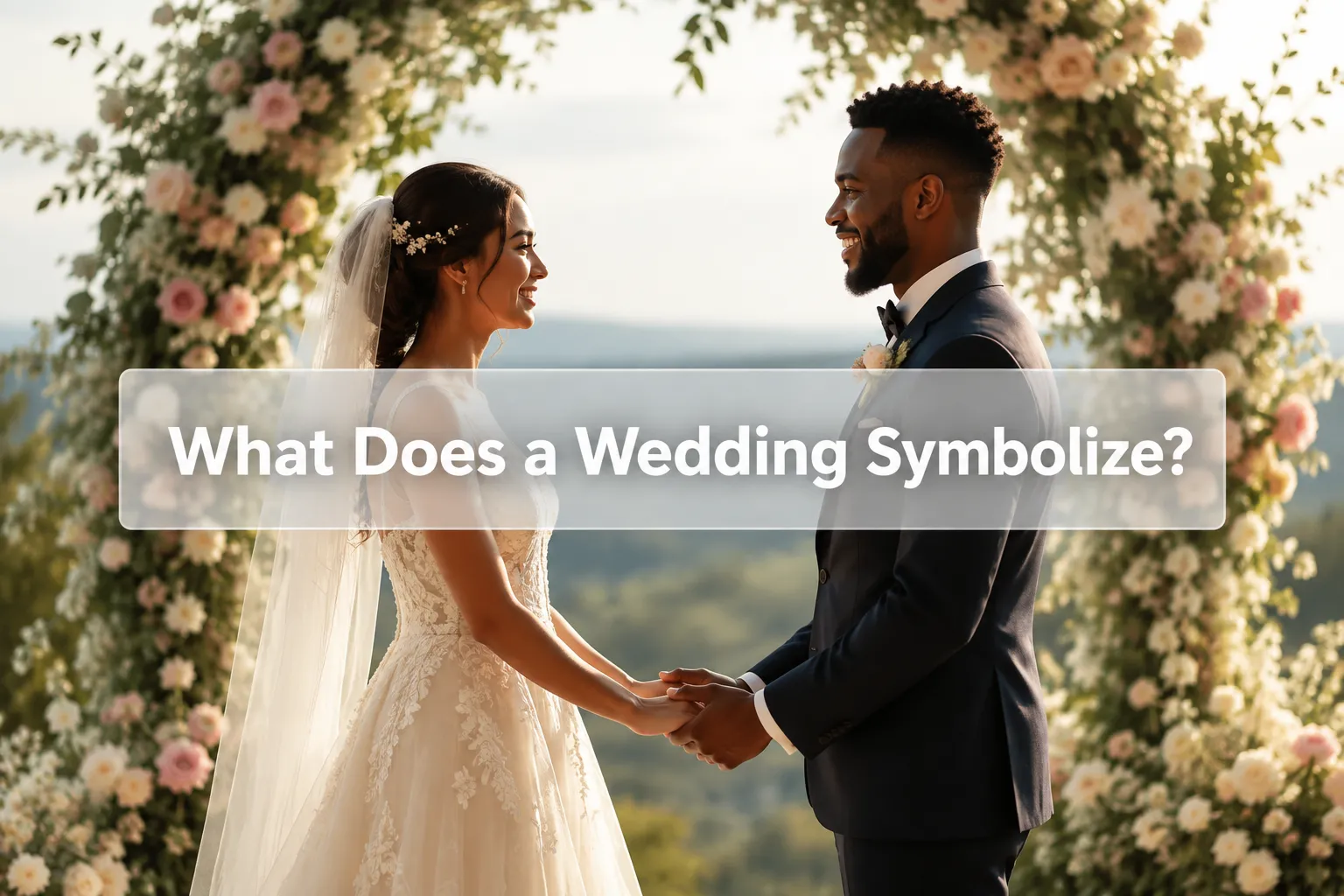
A wedding symbolizes far more than just a party; it fundamentally represents love, lifelong commitment, and the unity of two individuals. Across various cultures and faiths, it also signifies new beginnings, family alliances, community bonds, and a profound personal transformation.
Key Takeaways:
- Weddings primarily symbolize love, commitment, and the formal union of two lives.
- Specific wedding elements like wedding rings, dresses, and vows carry deep individual meanings.
- Symbolism varies significantly across cultures, religions, and personal beliefs.
- Historical contexts often explain the origins of common wedding traditions, as documented by institutions such as the Library of Congress.
- Modern weddings embrace personalization, allowing couples to infuse unique meanings.
- There’s a distinction between the transient symbolism of a “wedding” event and the enduring symbolism of “marriage.”
- Couples can actively choose symbolic rituals to reflect their personal values and journey.
What Are the Main Meanings of a Wedding?
A wedding is a profound public declaration that primarily symbolizes love, unwavering commitment, and the formation of a new unified partnership. In Christian traditions, the Catholic Catechism’s teaching on matrimonial consent likewise emphasizes freely exchanged consent as central to marriage.
Beyond these core elements, it also signifies trust, equality between partners, the joining of families and communities, and a significant new beginning in life.
For bjornandcompany clients, understanding these central meanings helps in crafting a ceremony that resonates deeply. When you plan your wedding, consider which of these core meanings you want to emphasize.
Do you prioritize the spiritual union, the family connection, or the personal journey of transformation? Identifying this early guides decisions on everything from vows to venue selection.
What Do Common Wedding Symbols Mean?
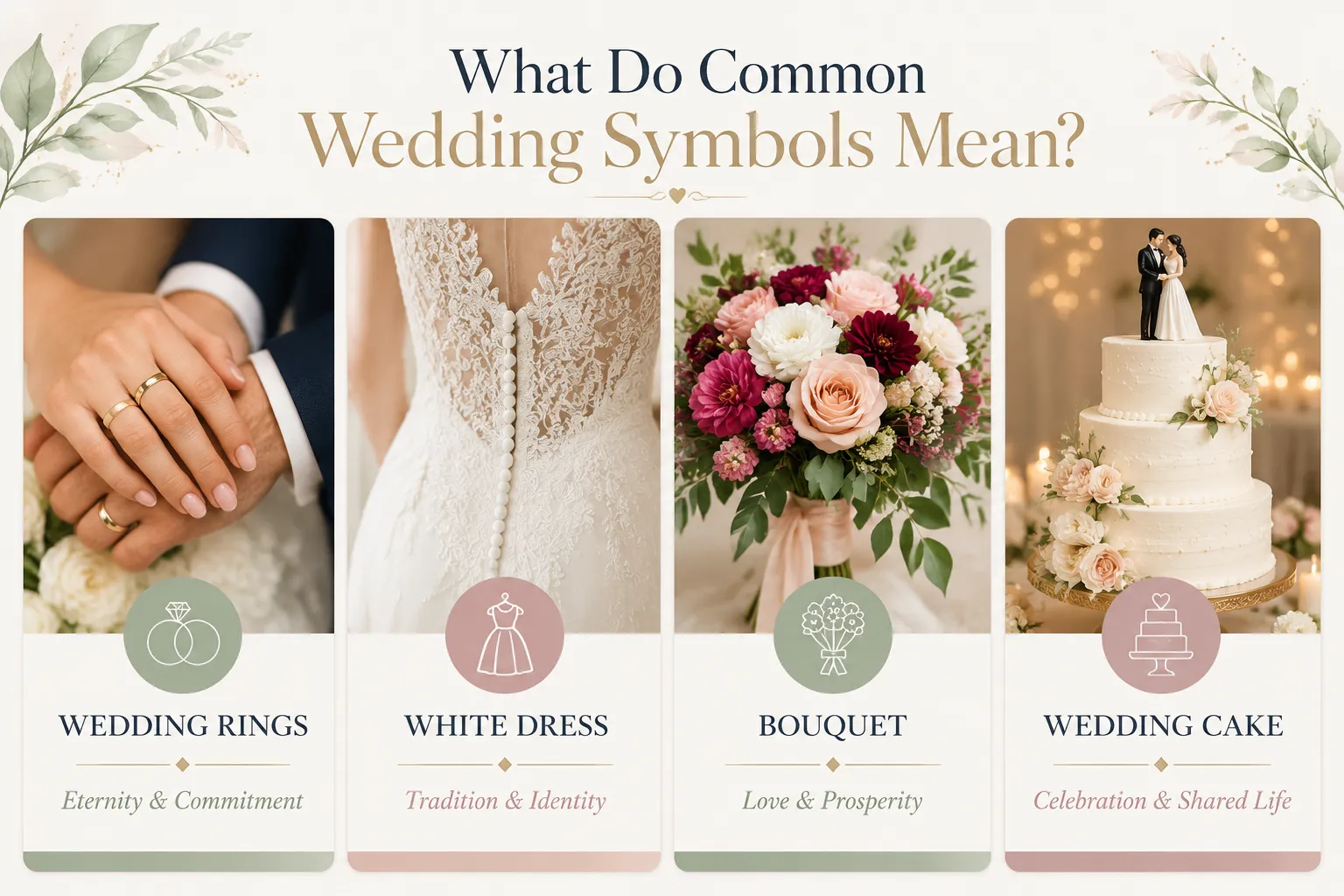
Common wedding symbols are powerful visual and ritualistic representations that deepen the meaning of the ceremony, conveying universal themes of love, commitment, and new beginnings. Each element, from the attire to the exchanged items, carries layers of historical and personal significance that can be tailored to a couple’s vision.
Wedding Rings Symbolism
Wedding rings symbolize eternity and unending commitment, reflecting a continuous bond without beginning or end. This tradition dates back to ancient times, with the circular shape representing wholeness and perfection.
For bjornandcompany, selecting the perfect wedding rings involves finding pieces that not only match aesthetically but also deeply resonate with the couple’s promise to each other.
Wedding Vows Meaning
Wedding vows are solemn promises exchanged by the couple, symbolizing mutual responsibility, unwavering dedication, and a public declaration of love and intent. These personal declarations are often considered the heart of the ceremony, outlining the commitment each partner makes for their shared future.
What Does a White Wedding Dress Symbolize?
A white wedding dress traditionally symbolizes purity and innocence, a meaning often associated with Victorian bridal fashion. However, the history is more nuanced: the Metropolitan Museum of Art notes that white was not commonplace wedding attire in the early 19th century, while the Library of Congress documents Queen Victoria’s 1840 marriage and its place in wedding history.
Today, while still representing tradition, it increasingly symbolizes a bride’s joy, the celebratory nature of the event, and a personal expression of style and identity rather than strict adherence to historical purity standards.
Wedding Veil Meaning
The wedding veil has historical roots in ancient traditions where it symbolized protection from evil spirits or modesty. In modern weddings, it primarily serves as a traditional bridal accessory that adds a sense of romance, elegance, and continuity with historical bridal fashion, often personalized to complement the wedding dress.
Wedding Bouquet Meaning
A wedding bouquet originally symbolized fertility and good fortune, often incorporating herbs and flowers believed to ward off evil spirits. Today, it mostly symbolizes beauty, love, and the personal style of the bride, with specific flower choices often carrying individual meanings such as roses for love or lilies for purity.
“Something Old, Something New, Something Borrowed, Something Blue” Meaning
This popular rhyme embodies a collection of wishes for the bride. “Something old” symbolizes continuity with the bride’s family and past, “something new” represents optimism and hope for the future, “something borrowed” brings good fortune from a happily married friend or relative, and “something blue” traditionally stood for fidelity and purity, tracing back to ancient beliefs.
Wedding Cake Symbolism
The wedding cake symbolizes celebration and shared festivity. Wedding cakes also have a documented place in social history; the Smithsonian Institution’s history of cakes traces the development of cake as a food associated with important celebrations and milestones.
Today, sharing the cake is a sweet tradition representing the couple’s first joint task and their shared future abundance, often a focal point of the reception.
Walking Down the Aisle Meaning
Walking down the aisle symbolizes a significant transition in life. Historically, it represented the father “giving away” the bride to the groom. In contemporary ceremonies, it signifies the couple’s journey from their individual lives to a united future, often walked together or with other significant figures to represent shared support.
First Kiss Symbolism
The first kiss as a married couple is a public and often emotional expression of affection, commitment, and legal union. It seals the marriage vows, symbolizing the intimacy and bond between the partners and their new status as husband and wife.
Wedding Flowers Meaning
Wedding flowers symbolize love, beauty, growth, and the ephemeral nature of life’s precious moments. Each type of flower can carry its own meaning, allowing couples to infuse personalized messages into their décor, reflecting their sentiments, memories, or cultural heritage.
What Does a Wedding Ceremony Symbolize?
The wedding ceremony itself symbolizes the formal, public declaration of a couple’s union, transitioning them from individual status to a married partnership recognized by society, family, and often, by faith.
It’s a ritualized event that signifies a new social status, a sacred bond, and the beginning of a shared future. The specific elements within the ceremony, such as vows, rings, and unity rituals, all contribute to this overarching declaration.
What Does a Wedding Symbolize Spiritually?
Spiritually, a wedding often symbolizes a sacred covenant, a divinely blessed union, and a commitment witnessed and sanctified by a higher power. This perspective transcends specific religious doctrines, focusing on the soul connection, mutual growth, and the spiritual support provided by the partnership.
Many couples, regardless of specific religious affiliation, seek to infuse their wedding with a sense of deeper, spiritual significance that extends beyond the material world.
What Does a Wedding Symbolize in Different Religions?
The symbolism of a wedding in a religious context is deeply rooted in the doctrines and traditions of each faith, emphasizing a sacred commitment and the couple’s relationship with their God and community.
Christian Symbolism
In Christianity, a wedding symbolizes a sacred covenant between a man and a woman, mirroring Christ’s unconditional love for the Church. It represents faithfulness, sacrificial love, and a commitment made before God, often viewed as a spiritual union blessed by divine grace.
Jewish Symbolism
Jewish weddings are rich in symbolism, including the chuppah, which is associated with the home being established by the couple, and the ketubah, the Jewish marriage contract. Rituals like the chuppah (wedding canopy) symbolize the new home and divine presence, while the breaking of the glass signifies the fragility of life and remembrance of past hardships.
Hindu Symbolism
Hindu weddings are elaborate ceremonies symbolizing a sacred partnership (samskara) designed to unite not just two individuals but two families, fulfilling spiritual and social obligations (dharma). Rituals such as the saptapadi (seven steps) represent promises for a shared life, prosperity, and devotion.
Muslim Wedding Symbolism
In Islam, a wedding (nikah) is a sacred contract emphasizing mutual rights and responsibilities between spouses, promoting family and community harmony. It symbolizes spiritual purity, companionship, and commitment to God’s will, with the contract (not a sacrament) forming the legal and social basis of the union.
Other Religious & Spiritual Traditions
Many other faiths, from indigenous traditions to Baha’i, incorporate unique symbols reflecting their beliefs. Celtic handfasting, for example, physically binds the couple’s hands with ribbons to symbolize their intertwined destinies. For bjornandcompany, understanding these diverse spiritual meanings is crucial for planning ceremonies that are respectful and authentic.
How Wedding Symbolism Differs Across Cultures
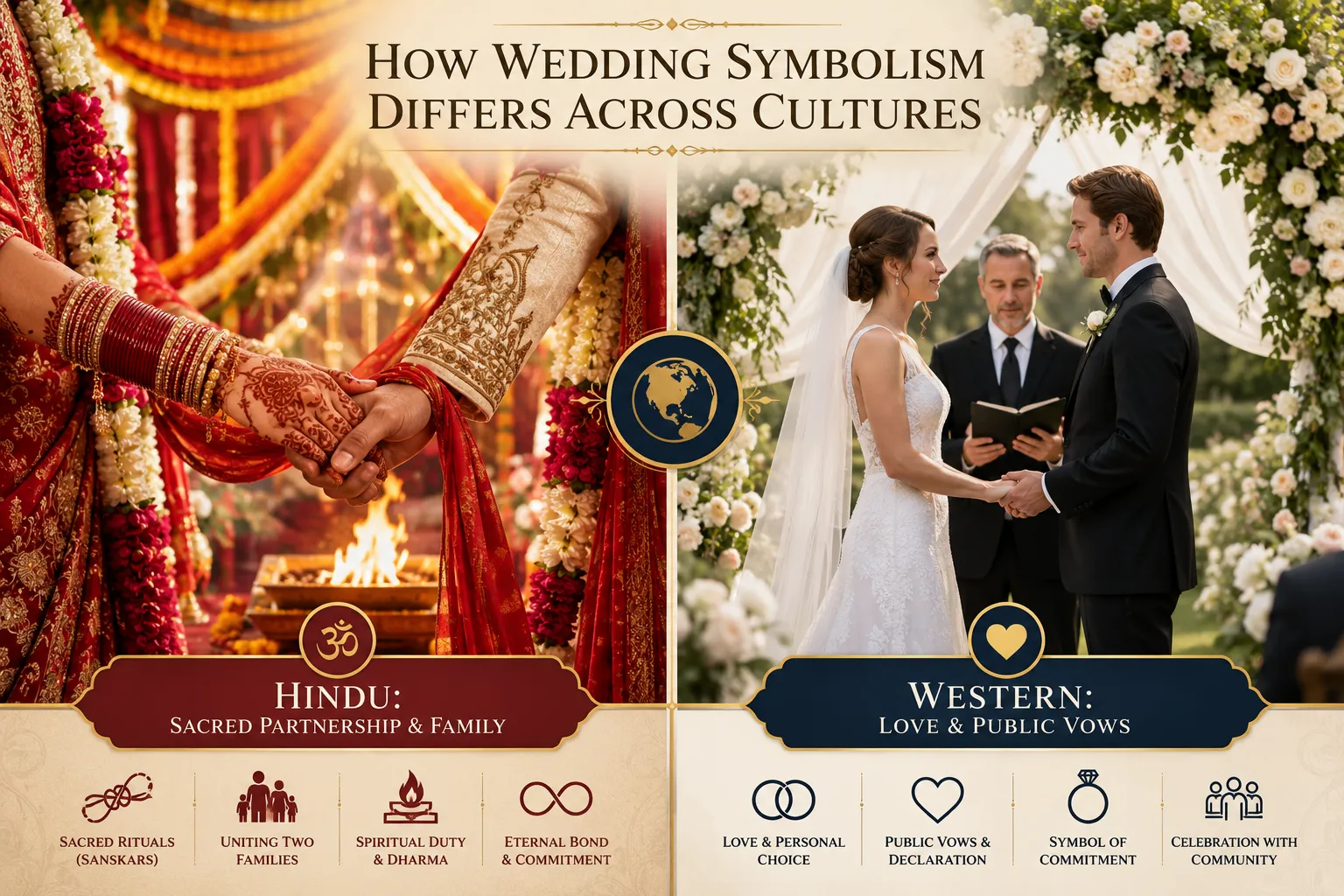
Wedding symbolism differs significantly across cultures, reflecting diverse historical, social, and spiritual values that shape each ceremony. What is central in one culture might be absent or interpreted differently in another, making each wedding a unique expression of identity.
- Western (e.g., European, North American): Often emphasizes individual romance, the couple’s choice, and public declaration of love. Symbols include white dresses, vows, rings, and the “giving away” of the bride.
- Hindu (India): Focuses on the union of families, spiritual duties, and often elaborate rituals spanning several days. Symbols include vibrant colors, henna, fire rituals, and the mangalsutra (sacred necklace).
- Jewish: Emphasizes covenant, community, and the establishment of a new home. Key symbols are the chuppah, the breaking of the glass, and the ketubah (marriage contract).
- Muslim: Centers on a contractual agreement (nikah) with mutual rights and responsibilities, prioritizing family consent and community recognition. Simplicity and adherence to Islamic principles are key.
- Chinese: Historically emphasized family continuity, prosperity, and fertility. Traditional symbols include red attire (for luck), dragon and phoenix motifs, and tea ceremonies honoring elders.
- Japanese: Often blend Shinto traditions with modern Western elements. Traditional Shinto weddings symbolize a union with nature and the gods, using symbolic saki ceremonies and traditional kimonos.
- African Wedding Traditions (Diverse): Highly varied across the continent, often involving vibrant attire, elaborate feasts, community participation, and rituals that reinforce family and tribal bonds. Dowry or bride price traditions are common.
- Celtic/Irish Traditions: Known for handfasting (tying the couple’s hands with ribbons), symbolizing commitment and the binding of two lives. Nature-based elements and ancient blessings are also common.
These examples highlight that while the core concept of uniting two people is universal, the symbolic language used to express it is deeply cultural.
The Historical Meaning Behind Wedding Traditions
Many wedding traditions carry historical meanings that have evolved over centuries, originating from ancient customs, social practices, and religious traditions.
Primary-source collections such as the Library of Congress record of Queen Victorias marriage provide useful evidence for studying how wedding customs were represented historically. Understanding these origins provides a richer context for modern ceremonies.
For instance, the tradition of the bridal party (bridesmaids and groomsmen) historically served to confuse evil spirits or potential kidnappers by having similarly dressed individuals, thereby protecting the couple.
The wedding cake, in its earliest forms, was not always the layered confection familiar today. The Smithsonian’s history of cakes provides broader historical context for how cakes developed as foods associated with celebrations. Distinguishing between documented history, popular tradition, and modern interpretation is key to appreciating these symbols without rigidly adhering to outdated concepts.
Wedding Symbolism: Tradition vs. Historical Fact
It’s common for popular explanations of wedding symbols to differ from their documented historical origins. Many widely accepted beliefs are more rooted in long-standing tradition or folklore than verifiable historical fact.
| Tradition | Popular Explanation | What Historical Evidence Supports |
|---|---|---|
| Ring Finger | “Vena Amoris” (vein directly to heart) | Ancient Roman belief, not anatomically accurate. |
| White Dress | Purity and virginity | Popularized by Queen Victoria in 1840, not ancient or universal. |
| Bouquet Toss | Single woman catches next to marry | Evolved from medieval guests tearing pieces of bride’s gown for luck. |
| Wedding Cake | Fertility and prosperity | Ancient Rome: breaking bread over bride; medieval: stacking buns. |
| Giving Away Bride | Father “transfers” ownership of bride | Historical practice; modern interpretation is blessing/support. |
bjornandcompany encourages couples to research these distinctions, allowing them to choose traditions that genuinely resonate with their values, rather than simply replicating practices based on misunderstood origins.
How Wedding Symbolism Has Changed in Modern Weddings
In modern weddings, symbolism has largely shifted from strict adherence to historical traditions towards personalized expression, equality, and inclusivity. Today’s couples often choose symbols that reflect their unique story, shared values, and contemporary understanding of partnership.
This evolution is particularly evident in the rise of personalized vows, unity ceremonies that blend families (e.g., sand ceremonies for blended families), and alternative attire. Modern weddings celebrate diverse forms of love and commitment, including LGBTQ+ unions, interfaith ceremonies, and nonreligious declarations, where the symbolism is crafted to be authentic to the couple rather than prescribed by rigid custom.
Wedding Symbolism for LGBTQ+, Interfaith, and Blended-Family Weddings
For LGBTQ+, interfaith, and blended-family weddings, symbolism is particularly powerful as a tool for creating inclusive, representative, and deeply personal ceremonies. These weddings redefine traditional symbols to reflect their unique dynamics and values.
- LGBTQ+ Weddings: Emphasize equality, shared commitment, and the celebration of love that transcends traditional gender roles. Symbols often include two rings for both partners, personalized vows focusing on partnership, and ceremonies that reflect shared passions rather than gendered traditions.
- Interfaith Weddings: Integrate elements from both religious or spiritual backgrounds, symbolizing mutual respect and the blending of traditions. This might involve prayers or blessings from different faiths, symbolic objects from each culture, or a ceremony structure that honors both lineages.
- Blended-Family Weddings: Focus on the symbolic union of not just two individuals, but also their children and extended families. Unity rituals like sand ceremonies where each family member adds a layer, special family vows, or symbolic jewelry for children are common ways to represent the new, cohesive unit. This ensures every member feels recognized and valued in the new family structure.
How to Add Meaningful Symbolism to Your Wedding
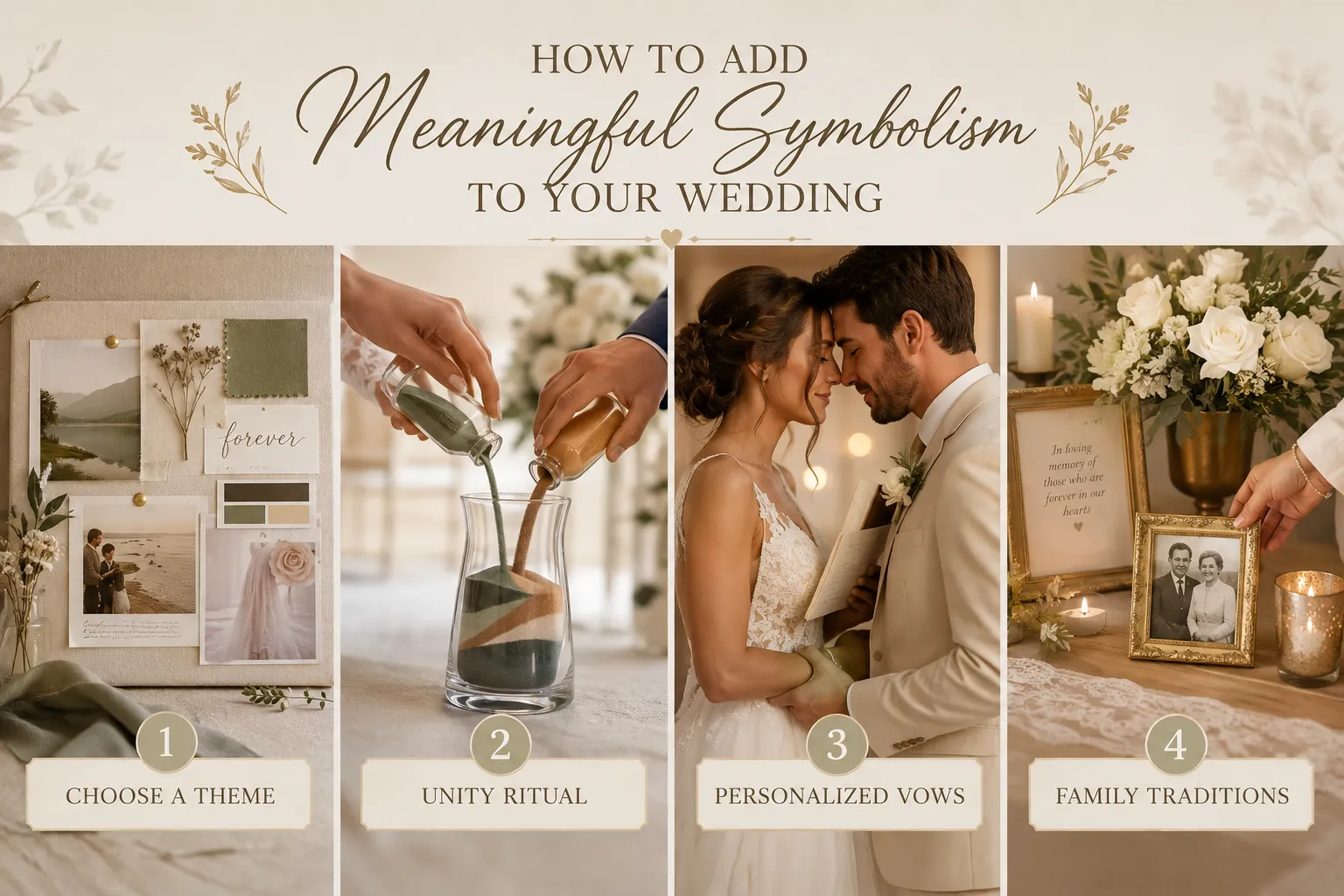
Adding meaningful symbolism to your wedding transforms it from a generic event into a deeply personal and unforgettable celebration of your unique love story. This involves intentional choices that reflect your values and journey together.
- Choose One Central Theme: Start by identifying what you want your wedding to primarily symbolize (e.g., adventure, enduring love, family unity). This theme can guide all subsequent symbolic choices.
- Select Meaningful Colors: Research colors that hold personal significance for you, or align with your chosen theme. Colors can evoke emotions and cultural associations.
- Incorporate a Unity Ritual: Consider rituals like a unity candle, sand ceremony, tree planting, handfasting, or a love letter and wine box ceremony. These visibly represent the merging of two lives.
- Write Personalized Vows: Crafting your own vows allows you to express your specific promises, dreams, and the unique qualities of your relationship, making the commitment deeply personal.
- Include Family Traditions: Adapt or honor traditions from your family’s heritage, such as a traditional dance, a passed-down recipe for your cake, or incorporating heirlooms into your attire or decor.
- Add Cultural Elements: If you or your partner have cultural heritage, weave in elements like traditional attire, music, readings, or specific rituals that honor your roots.
- Create a Symbolic Keepsake: Design a custom item, like a piece of art, a personalized guest book, or a time capsule, that you can cherish and revisit in the future.
- Explain the Meaning to Guests: Briefly share the significance of your chosen symbols in your program or during the ceremony. This helps guests connect more deeply with your celebration.
For bjornandcompany, guiding couples through these choices ensures their wedding day is not just beautiful, but also profoundly meaningful.
Wedding Symbolism vs. Marriage: What’s the Difference?
While often used interchangeably, there’s a key distinction: a wedding symbolizes the event,the public ceremony and celebration that marks the transition into married life. Marriage, on the other hand, symbolizes the ongoing legal, social, emotional, and often spiritual relationship that endures beyond the wedding day. The wedding is a one-time declaration; marriage is the lifelong journey and commitment that follows.
Do All Weddings Symbolize the Same Things?
No, all weddings do not symbolize the same things universally. While core themes like love and commitment are common, the specific meanings and the emphasis placed on various symbols differ significantly based on culture, religion, personal beliefs, historical context, and the couple’s individual choices. A Western wedding’s symbolism of individual romance will contrast sharply with an Eastern wedding’s focus on family alliance.
What Are Some Less Common Symbols in Modern Weddings?
Less common symbols in modern weddings often arise from a desire for unique personalization, ecological awareness, or cultural fusion. Examples include planting a tree together during the ceremony to symbolize growth, releasing doves for peace and new beginnings, incorporating specific crystals or stones for their energetic properties, or using a ring warming ceremony where guests hold the rings to infuse them with love and blessings before the exchange. These reflect a departure from strictly traditional elements.
What Does it Symbolize if a Wedding Gets Called Off?
If a wedding gets called off, it symbolizes a re-evaluation or cessation of the intended union and its future commitments. It can represent a change of heart, unresolved issues, external circumstances that prevent the marriage, or a decision that the partners are not compatible for a lifelong commitment. While often painful, it can also symbolize a new beginning for both individuals, allowing them to pursue paths better suited to their true needs.
What Are Some Alternatives to a Traditional Wedding That Still Hold Symbolic Meaning?
Alternatives to a traditional wedding, such as elopements, micro-weddings, or commitment ceremonies, still hold profound symbolic meaning by focusing on the core elements of union and personal vows. An elopement might symbolize an intimate, private declaration of love that prioritizes the couple’s bond over external expectations. A micro-wedding can symbolize a deep connection with a small, cherished circle, while a commitment ceremony publicly declares a lifelong partnership without legal or religious formalities, emphasizing shared values and autonomy.
Who Decides What a Wedding Symbolizes for the Couple?
Ultimately, the couple themselves decide what a wedding symbolizes for them. While family expectations, cultural norms, and religious traditions can influence choices, modern weddings increasingly empower couples to personalize every aspect. bjornandcompany assists couples in identifying their core values and translating them into meaningful symbols, ensuring their wedding truly reflects their unique relationship and aspirations.
What Does a Small, Intimate Wedding Symbolize Versus a Large One?
A small, intimate wedding often symbolizes a focus on the deep emotional connection between the couple and their closest circle, prioritizing quality interactions and personal significance over grand spectacle. It can signify privacy, genuine connection, and a desire to keep the focus solely on the couple’s bond.
A large wedding, conversely, often symbolizes a broad celebration of the couple’s union within their extended community, emphasizing social recognition, family integration, and a joyous public declaration to a wider audience. Both hold valid, powerful symbolic meanings depending on the couple’s preferences and priorities.
Frequently Asked Questions
What does a wedding symbolize?
A wedding fundamentally symbolizes love, commitment, and the unity of two individuals. It also represents new beginnings, family connections, community recognition, and personal transformation.
What does a wedding ceremony symbolize?
A wedding ceremony symbolizes the formal, public declaration of a couple’s union, transitioning them into a legally and socially recognized married partnership. It’s a ritualized event signifying a new social status and a shared future.
What does marriage symbolize?
Marriage symbolizes the ongoing legal, social, emotional, and often spiritual relationship that endures beyond the wedding day. It represents a lifelong journey of shared commitment, partnership, and mutual growth.
What do wedding rings symbolize?
Wedding rings symbolize eternity and unending commitment due to their circular shape, representing a continuous bond without beginning or end between the partners.
What do wedding vows symbolize?
Wedding vows symbolize the solemn promises and mutual responsibilities exchanged by the couple, acting as a public declaration of their love, intent, and dedication to their lifelong partnership.
What does a white wedding dress symbolize?
A white wedding dress traditionally symbolizes purity and innocence, famously popularized by Queen Victoria. Today, it often represents bridal joy, tradition, and a personal expression of the bride’s style and identity.
What does a wedding bouquet symbolize?
A wedding bouquet traditionally symbolized fertility and good fortune, thought to ward off evil spirits. Modernly, it symbolizes beauty, love, and the bride’s personal style, with specific flowers carrying individual meanings.
What does a wedding veil symbolize?
The wedding veil historically symbolized protection from evil spirits or modesty. In contemporary weddings, it primarily serves as a romantic and traditional bridal accessory, connecting to historical bridal fashion.
What does “something old, something new, something borrowed, something blue” mean?
This tradition brings good luck: “something old” for continuity, “something new” for optimism and the future, “something borrowed” for good fortune from a happily married friend, and “something blue” for fidelity and purity.
What does a wedding symbolize spiritually?
Spiritually, a wedding often symbolizes a sacred covenant, a divinely blessed union, and a commitment witnessed and sanctified by a higher power, focusing on a deep soul connection and mutual spiritual growth.
What does a wedding symbolize in Christianity?
In Christianity, a wedding symbolizes a sacred covenant mirroring Christ’s love for the Church, representing faithfulness, sacrificial love, and a commitment made before God as a spiritual union.
How does wedding symbolism differ across cultures?
Wedding symbolism differs widely across cultures, reflecting diverse historical, social, and spiritual values. For example, Western weddings emphasize individual romance, while Hindu weddings focus on the union of families and spiritual duties.
What does a wedding symbolize in modern society?
In modern society, a wedding symbolizes personalized expression, equality, and inclusivity. It reflects unique love stories, shared values, and often incorporates elements that celebrate diverse forms of relationships and family structures.
Is a wedding different from marriage?
Yes, a wedding is the ceremonial event that marks the beginning of a marriage, which is the ongoing legal, social, and emotional relationship. The wedding is a one-time declaration; marriage is the lifelong commitment that follows.
How can couples add meaningful symbolism to their wedding?
Couples can add meaningful symbolism by choosing a central theme, selecting colors with personal significance, incorporating unity rituals (like sand ceremonies), writing personalized vows, and including family or cultural traditions.
Conclusion
Understanding “What Does a Wedding Symbolize” reveals a rich tapestry of human connection, evolving from ancient rites to highly personalized celebrations.
From the universal declaration of love and commitment to the intricate meanings behind each ring, dress, or vow, weddings are profoundly significant. For bjornandcompany, our role is to help you navigate these layers of meaning, ensuring your wedding day is not only flawlessly executed but deeply reflective of your unique journey and values.
By consciously choosing symbols that resonate with your story, you create an event that is not just a beautiful memory, but a powerful foundation for your future together. We provide the expertise and resources, from wedding dresses to planner books, to bring your vision of a symbolically rich wedding to life, making every detail count towards your perfect day.
