
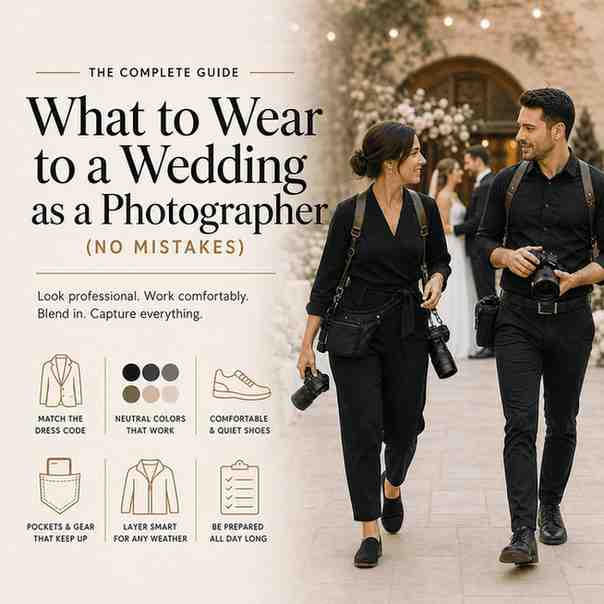
As a wedding photographer, what you wear matters more than most people think. You need a look that’s professional enough for the couple and the venue, but practical enough for 8 to 12 hours of squatting, bending, walking, and moving fast.
In this guide, we’ll cover the three rules that prevent outfit mistakes, the best colors (and the ones to avoid), shoe choices that save your feet, and repeatable outfit formulas you can use for any wedding.
Wedding photographer outfit mistakes are rarely about “style.” They’re usually about friction: squeaky shoes during vows, a shirt that rides up every time you crouch, a bright color that makes guests stare, or a fabric that shows sweat in the first hour. We want the opposite. We want you to look premium, blend in, move freely, and finish the day feeling confident, not wrecked.
The 3 rules that decide every wedding photographer outfit
Let’s make this simple: the goal of a wedding photographer outfit is not to look trendy. It’s to look like a calm professional who can work hard all day without pulling focus.
When we’re testing outfits for real wedding days, we judge everything through three rules.
Rule #1: Respect the occasion
A wedding is not “just a gig.” It’s someone’s most photographed day of the year.
That said, the standard is not “dress like a guest.” It’s “dress like a vendor who respects the room.” That usually means you match the overall formality and venue expectations, then dial it slightly more polished than the most casual guests.
A backyard micro-wedding and a cathedral ceremony do not have the same baseline. Your outfit should show you understand that.
Rule #2: Blend in, don’t stand out
We’re around the couple constantly. We’re in the aisle. We’re near family during emotional moments. We’re in the background of other people’s phone videos.
So the win is invisibility.
Neutral, solid colors. Minimal accessories. No loud silhouettes. No shiny fabrics. No statement anything. Not only does this keep attention on the couple, it also makes it easier to move around without guests tracking you with their eyes.
Rule #3: Function first
Wedding photography is athletic. You’re not “standing nicely.” You’re stepping back fast, kneeling in grass, leaning over chairs, reaching high, crouching low, and carrying gear for hours.
Function is what protects your work.
- Mobility: can you squat, kneel, twist, and lift without tugging?
- Pockets and carry: can you store cards, batteries, and a few essentials without a bulky bag?
- Weather: can you handle outdoor ceremony plus indoor reception without overheating or freezing?
- Quiet: do your shoes and accessories stay silent during vows?
- Safety: do your soles grip on wet grass, marble, or dance-floor spills?
Quick framing that matters: your outfit affects client impression, your brand identity, future referrals, and how confidently you work. When you feel “sorted,” you shoot better. Simple as that.
Match the wedding’s dress code
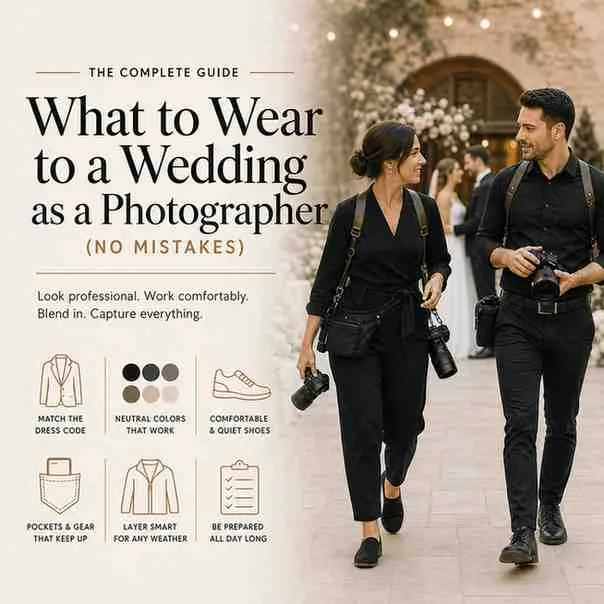
If you want to avoid outfit mistakes, you need expectations before you pack.
Here’s how we actually find the dress code in real life:
- The wedding website and invitation wording
- The planner’s timeline email and vendor notes
- The venue style (luxury hotel vs barn vs beach is a huge clue)
- Your client questionnaire (ask directly)
- The couple’s preference for “blend in” vs “dress sharp”
A core principle we stick to: aim slightly more formal than guests who are “casual,” but not more formal than the wedding party. You’re there to work, not to compete visually.
However, if you’re unsure about what to wear for certain events like cocktail parties which often follow weddings or are part of wedding celebrations themselves, it’s worth checking out some cocktail party survival tips to ensure you’re always dressed appropriately for any occasion.
Dress code mapping
Black tie
- Think: tailored and dark.
- Great options: black or deep navy suit, crisp shirt, polished shoes with grip; or a tailored black jumpsuit with structured layering.
- Keep it sleek, not flashy. You can look premium without looking like a groomsman.
Formal
- Dark suit or suit separates usually land perfectly.
- Tie optional depending on the vibe, but a tie can help you match the room early, then you can loosen it later if it’s clearly relaxed.
Cocktail / semi-formal
- Smart trousers or chinos with a structured blazer.
- Collared shirt, knit polo, or elevated blouse.
- Dressy sneakers can work if they’re minimal and dark, but shoes often decide whether you look “vendor” or “random guest.”
Smart casual
- This is where photographers can easily underdress.
- Go: tailored trousers, dark top, light layer (blazer or cardigan), simple shoes with support.
- Avoid anything that reads like weekend errands.
Casual / outdoor
- “Casual” for couples often means “comfortable for guests,” not “wear anything.”
- Still stay tidy: clean lines, solid colors, and footwear that looks intentional.
Venue-based expectations
Sometimes the venue matters more than the dress code label.
- Church ceremony: modest and respectful, covered shoulders if needed, quieter shoes, and nothing too tight or revealing.
- Upscale hotel/ballroom: sharper tailoring and darker palette. Your outfit should look at home next to suits and formal dresses.
- Barn wedding: durable fabrics, boots or shoes with grip, dust-friendly colors, and layers for temperature swings.
- Beach wedding: breathable fabric, sand-friendly shoes, and no dragging hems.
- Garden wedding: earth tones can work, but plan for grass stains, bugs, and uneven ground.
Cultural traditions and religious customs
This is where “blend in” becomes “do no harm.”
If you’re photographing:
- A conservative religious ceremony (temple, mosque, certain churches)
- A cultural wedding with specific modesty norms
- A multi-day event with different attire expectations
Ask the couple or planner what’s appropriate. Modest coverage, covered shoulders, and longer hemlines are usually the safe play. Even if the couple is relaxed, the elders and community might not be.
Do I have to wear black as a wedding photographer?
No, you don’t have to wear black as a wedding photographer. It’s common because it works, not because it’s a law.
Black is popular for practical reasons:
- It blends into backgrounds.
- It hides dirt, sweat marks, and scuffs.
- It’s easy to repeat across seasons.
- It looks professional in almost every venue.
When black is genuinely ideal
Black is the safest choice when:
- You’re in a luxury venue or formal ballroom.
- The wedding is evening-heavy with low light.
- You’ll be on a flash-heavy dance floor and you want to disappear.
- The venue staff is dressed formally and you want to match the room without standing out.
Best alternatives that still blend in
If black feels too harsh, too hot, or too “uniform,” these alternatives photograph well and stay discreet:
- Navy
- Charcoal or dark gray
- Dark olive
- Taupe, beige, and earth tones (best for outdoor/daylight weddings if muted)
- Solid, muted colors in matte fabrics
How to avoid looking like staff or caterers
This is the real downside of all-black. If the fit is off, you can read like catering staff.
We avoid the “staff look” with:
- Better fit (tailored, not tight)
- Texture (knit polo, matte blouse, wool-blend trousers, structured jumpsuit)
- Subtle structure (a blazer, a chore jacket, a clean cardigan)
- Clean lines (no wrinkled tees, no shiny polyester)
Quick photo/lighting note
Bright colors and bold patterns can bounce light onto faces, especially in tight indoor spaces. Neutrals and solids reduce unwanted color cast. That’s not just style advice. It’s a practical lighting decision.
What is the best color to wear for a photo shoot?
The “best color” is the one that’s least distracting, least reflective, and most consistent across locations.
That’s why our go-to palette is:
- Black
- Navy
- Charcoal
- Dark olive
For daylight and outdoor weddings, muted earth tones can also work:
- Taupe
- Beige (muted, not bright)
- Brown and stone tones
- Soft, matte greens
What we avoid:
- Neon anything
- Bold prints and loud patterns
- High-contrast stripes that draw the eye
- Bright reds and saturated blues that pop in every guest’s peripheral vision
A very practical reason darker colors win: they hide sweat marks, dirt, grass stains, and gear rub. That matters when you’re leaning on rails, kneeling in grass, or brushing against chairs all day.
Also, consistency builds brand. When you always show up in a similar palette, you look like a cohesive professional, especially if you work with second shooters.
Are there any colors to avoid at a wedding?
Yes. Some colors create problems fast, even if you “like how they look.”
Hard avoids
- White or ivory: the classic rule. Even if the bride “doesn’t care,” other guests might, and it’s not worth the attention.
- Bridal-adjacent tones: very pale blush, champagne, very light beige that reads white in flash.
There are regional and cultural exceptions, but as a wedding photographer, playing it safe is part of being professional.
Often-avoided
- Red: can be culturally sensitive in some contexts and can also be very attention-grabbing in photos.
- Neon/bright colors: distracting and can cause color cast.
- Loud patterns: they pull focus, and they can moiré on video.
- Reflective fabrics: satin, sequins, metallic thread that catches light during ceremony.
Logos and brand marks
Big logos make you look casual and “off the shelf.” Keep branding subtle. A small logo on a strap is fine. A giant chest logo is not.
Noisy jewelry is a hidden mistake
Metal bangles, clanking bracelets, and long earrings can become the soundtrack of the vows if you’re close to a mic or in a quiet church. Quiet is part of your job.
The core essentials
Fabric is where outfits succeed or fail. You can have the perfect look, then spend the day overheating, wrinkling, or swishing through the ceremony like a windbreaker.
Breathable fabrics
- Cotton and cotton blends
- Linen and linen blends (better when blended to reduce wrinkles)
- Lightweight wool (yes, it can breathe beautifully)
- Viscose/rayon blends in matte finishes
Airflow matters because you’re constantly moving. Standing still is rare.
Performance and technical fabrics
For long days, travel, and unpredictable weather, performance fabric is a cheat code:
- Moisture-wicking
- Stretchy
- Wrinkle-resistant
- Quick-drying
The key is choosing performance pieces that don’t look like gym gear. Matte, structured, clean seams, and tailored cuts are what keep it wedding-appropriate.
Fit and mobility
If you do only one thing before a wedding, do this:
- Squat test
- Kneel test
- Reach test (arms up, twist, lean forward)
If the waistband digs in, the shirt pulls out, the dress rides up, or the blazer locks your shoulders, it will annoy you all day. And annoyance turns into slower shooting.
Layering strategy for temperature swings
Weddings are full of transitions:
- hot outdoor ceremony
- cold church interior
- air-conditioned ballroom
- sweaty dance floor
- nighttime portraits outside
Easy layers:
- Blazer (structured, photographs well, elevates everything)
- Cardigan (soft, quiet, easy to remove)
- Light jacket or chore jacket
- Trench coat or rain jacket for bad weather
Quiet fabrics matter more than you think
Avoid anything that swishes loudly while walking:
- Some nylon blends
- Loud taffeta-like materials
- Stiff rain shells (unless you’re outside and far from vows)
You want to move like a shadow, not like a grocery bag.
Pockets, belts, and carry systems
An outfit with good pockets is a competitive advantage. It sounds small until you’re mid-ceremony and need a fresh card, a battery, or a microfiber cloth.
What we actually carry on-body
- Memory cards (in a secure case or zip pocket)
- One spare battery
- Phone
- A small protein bar
- Lip balm
- Stain remover pen (seriously)
- Lens cloth
Best pocket options
- Hidden zip pockets in trousers
- Deep front pockets that don’t spill when you kneel
- Dresses with real pockets (not fake ones)
- Jumpsuits with side pockets
- A discreet belt bag worn clean and close to the body
Camera support options
- Camera harness: best for two bodies, long days, and saving your neck. Great for fast-moving coverage.
- Harness-style straps (leather or webbing): more stable, often more comfortable, looks professional.
- Sling strap: quick access, good for one body and a more minimal setup.
- Hip holster: good when you want the camera off your chest, but be careful in tight aisles.
Keep it discreet. Avoid bulky bags in aisles and anything with clanking metal hardware. If it jingles, it’s not wedding-friendly.
Packing discipline
Overloading your body slows you down and looks messy. Carry only what you need for the next phase of the day. The rest stays in a gear bag you can access quickly.
What shoes do photographers wear?
Shoes are where most wedding photographers make their biggest mistake. Foot pain changes how you move, how patient you are, and how long you can stay sharp.
Non-negotiables:
- Non-slip soles
- Arch support
- Soft insoles
- Broken-in comfort
- Quiet steps (especially during ceremony)
Best styles that still look dressy
- Loafers with rubber soles
- Chelsea boots or sleek ankle boots
- Supportive dress shoes with added insoles
- Dressy sneakers (minimal and dark, ideally all-black)
If you want one safe rule: avoid bright white soles and avoid anything brand-new.
Popular examples people search for
You’ll hear photographers recommend:
- FitFlop trainers (comfort-first)
- Merrell Jungle Mocs (grippy, easy, more casual)
- Clarks shoes (classic comfort options)
- Converse Hi-Tops (only if the wedding vibe is casual and you can support your feet)
- Adidas Samba-style sneakers (low profile, but still choose a subtle colorway)
How to decide: match the formality first, then optimize comfort. These headphones sound good out of the box, but weak ANC makes them harder to recommend for commuters. Same logic here: some shoes look perfect, but if they can’t handle 10 hours, they’re a bad “professional” choice.
What to avoid
- High heels (stability and speed suffer)
- Sandals and flip-flops (safety and professionalism)
- Noisy heels that click loudly
- White socks (they draw the eye)
- Slippery leather soles without grip
When selecting supportive dress shoes, it’s essential to consider those with best soles for comfort. These features will ensure you maintain your performance throughout long hours of shooting.
Prep plan
- Break in shoes on walks and practice shoots
- Use blister prevention (bandages, tape, anti-chafe balm)
- Keep a backup pair in the car or gear bag
- Pack insoles if you need them
Can I wear jeans as a wedding photographer?
Usually, no. Most weddings read jeans as too casual for vendor attire, even if guests are wearing them.
That said, there are exceptions.
When jeans can work
Jeans can work if:
- It’s explicitly casual
- It’s a barn/farm micro-wedding or backyard wedding
- The couple approves
- You wear dark, solid, tailored denim with no distressing
Even then, it’s still risky. Denim has a “weekend” vibe that’s hard to override.
Better substitutes that feel like jeans but look professional
If you want comfort without looking underdressed:
- Chinos with stretch
- Smart trousers with elastic waist details hidden by tailoring
- Clean, tapered cargo-style trousers (minimal pockets, no bulky thigh flaps)
- Stretch dress pants
If you do wear denim, do it like a pro
- No rips
- No light wash
- No baggy fit
- Pair with a blazer or structured layer
- Collared shirt or elevated knit
- Dressy shoes or sleek boots
If you’re asking because you hate stiff pants, the fix is not denim. The fix is better trousers.
What not to wear for a photo shoot
There are a few items that consistently cause problems. Not because they’re morally wrong, but because they signal “not professional” or they block movement.
Hard no list (with reasons):
- Shorts: reads too casual, rarely appropriate in formal venues.
- Yoga pants/leggings as pants: can look like workout wear; also often lack pockets and structure.
- T-shirts: even black tees can look too informal unless it’s a very casual wedding and the rest of your outfit is elevated.
- Hats: outdoor sun protection is fine, but hats during ceremonies or indoors can read disrespectful.
- Workout clothes: shiny, tight, reflective, and out of place.
- Flip-flops: unsafe and unprofessional.
- Overly tight or see-through pieces: you’ll bend and crouch all day; you need coverage you don’t have to think about.
Avoid the “grocery store vibe.” If your outfit looks like you could be buying paper towels right now, it’s not the right uniform for someone entrusted with a wedding day.
Also avoid:
- Noisy jewelry
- Dangling accessories that catch on straps
- Flashy watches
- Reflective sunglasses indoors
- Pencil skirts or restrictive dresses
- Long scarves that can snag on gear
- Strong fragrance (you’re in close quarters during portraits)
What not to wear to a wedding as a guest
Guest rules apply to us too, with a stricter standard.
Guest alignment basics:
- No white or ivory
- No attention-stealing outfits
- Respect religious venues and modesty expectations
Extra rules for photographers:
- No big logos or obvious branding
- No loud prints
- No squeaky shoes
- No novelty accessories on-camera
One more important point: don’t dress like the wedding party. A tux that matches the groomsmen or a dress that matches bridesmaids can confuse guests and looks awkward unless it’s been agreed on.
When in doubt, neutral and tailored wins.
Outfit formulas that work every time
Decision fatigue is real. The easiest way to avoid mistakes is to build a simple “wedding uniform” you can repeat.
Think: consistent palette, repeatable silhouettes, and pieces that work in multiple venues.
Formula 1 (unisex): dark tailored pants + dark top + layer + dressy sneakers/boots
- Dark trousers (stretch, tapered)
- Black/navy/charcoal top
- Blazer or cardigan
- Minimal black trainers or Chelsea boots
This is our favorite because it scales up or down instantly.
Formula 2: smart trousers/chinos + collared shirt + optional jacket/vest
- Chinos or wool-blend trousers
- Button-down, knit polo, or structured blouse
- Optional blazer or vest
- Loafers or supportive dress shoes
It reads professional without trying too hard, which is exactly the vibe.
Formula 3: jumpsuit or dress with mobility + pockets + layer + ankle boots/flats
- Stretchy jumpsuit or midi dress with pockets
- Cardigan or blazer for ceremony spaces
- Low-profile ankle boots, flats with support, or dressy sneakers
How to look elevated without being flashy
Clear opinion: fit is the “cheat code.” Practical reason: good fit moves better and looks intentional. Buyer context: you can spend less on clothing if the tailoring and fabric quality are right.
Focus on:
- Clean lines
- Matte fabrics
- Pressed or steamed pieces
- Simple accessories
- Grooming that stays put all day
Female wedding photographer outfits
If you’re building a women’s wedding photographer outfit, aim for pieces that move, cover, and hold up through heat, hugs, and constant bending.
Best go-tos:
- A black stretchy jumpsuit (our top pick for ease)
- Tailored wide-leg pants + blouse or bodysuit
- Midi shirt dress with pockets
- Wrap dress that stays secure and movement-friendly
Hemlines and movement
Floor-length looks elegant, but it’s a hazard when you’re stepping backward or moving fast. Midi and knee-length tend to be safer, cleaner, and less stressful.
Layering and modesty
Bring a blazer or cardigan for:
- churches and conservative venues
- cold indoor spaces
- nighttime portraits
Even if you don’t wear it all day, having it saves you when the environment shifts.
Shoes that work
- Low-heeled boots
- Supportive flats
- Dressy sneakers with a clean profile
We avoid high heels for working coverage. Not because they’re “wrong,” but because stability and speed matter more than aesthetic when you’re carrying gear.
If you want a brand-style reference: a classic, functional dress in the “Boden dress” category can be a solid option if it has pockets, breathable fabric, and a movement-friendly cut.
Male wedding photographer outfits
For men’s wedding photographer outfits, the safest base is simple: dark trousers, collared shirt, optional blazer.
Safe staples:
- Dark slacks or chinos + button-down or polo + blazer
- Suit when the venue calls for it
Black tie and formal options
- Dark tailored suit (black, deep navy, charcoal)
- Crisp shirt
- Tie or bow tie depending on vibe
- Shoes with grip (and insoles if needed)
A tailored suit reads premium without being flashy. A three-piece suit can work for very formal weddings, though it can be warm and restrictive if you’re running hard all day.
If you like aspirational tailoring, think “Yves Saint Laurent suit” energy as a reference point: clean, sharp, minimal. The goal is polish, not peacocking.
Footwear
- Loafers with support
- Chelsea boots
- Minimal black trainers for long days (when formality allows)
Again, shoes decide whether you look elevated or underdressed.
Gender-neutral photographer outfits
Gender-neutral wedding photographer outfits are often the easiest to get right because the priorities are clear: clean lines, neutral palette, comfort.
Go-to combos:
- Tailored trousers + black top + blazer
- Jumpsuit + structured layer
- Chinos + knit polo + jacket
Focus on:
- Fit
- Pockets
- Footwear
- Quiet accessories
Skip anything that swings, clanks, or reflects.
Outfit ideas by wedding vibe
You don’t need a new wardrobe for every wedding. You need a few outfits that flex with the vibe.
Formal / black-tie vibe
For a formal or black-tie wedding, consider these options:
- Tailored black jumpsuit + blazer + ankle boots with grip
- Dark tailored suit + crisp shirt + discreet harness + dress shoes with rubber soles
Match the room, then disappear.
Semi-formal / cocktail vibe
In a semi-formal setting, you can opt for:
- Dark chinos or slacks + structured blazer + knit polo or blouse
- Midi dress or jumpsuit in flowy, stretchy fabric + cardigan for ceremony spaces
This is where you can look modern without looking loud.
Casual / outdoor vibe
For casual or outdoor weddings:
- Performance polo (matte, structured) + chinos + comfortable boots or dark trainers
- Lightweight cotton wrap dress + layer in the bag
Still avoid jeans unless approved. Casual weddings still deserve professional vendors. Always bring a layer and a backup option if weather shifts.
Also, don’t shy away from non-traditional wedding attire if it suits your style.
Dress for the season and weather
Weather is where “cute outfit” becomes “bad day.”
Summer wedding attire
Go breathable and plan for sweat management:
- Cotton, linen blends, lightweight wool, performance fabric
- Undershirts that don’t show
- Deodorant strategy (and a mini deodorant in your kit)
Avoid colors that show sweat easily, like light gray. Black can be hot, though, so navy and charcoal often feel like a better summer compromise.
Winter wedding attire
Warmth without bulk is the goal:
- Base layers that stretch and don’t restrict
- Warm socks that don’t show
- Flexible outerwear that still looks professional
Bring gloves for between sets. Cold hands slow you down. Remember the dos and don’ts of planning a winter wedding to ensure you’re well-prepared.
Rain and wind
- Rain jacket or trench coat (quiet if possible)
- Water-resistant shoes
- Extra socks
- Small towel for hands and gear
Outdoor transitions
Outdoor ceremony to indoor reception is common. Plan where your layer goes and how you’ll store it. If you’re constantly carrying a coat, you’ll eventually ditch it somewhere inconvenient.
Backup outfit
Bring a full change when:
- It’s a multi-location day
- It’s extremely hot and you sweat heavily
- There’s heavy rain risk
- You’re covering a cultural multi-event day
A fresh shirt and socks can feel like a reset button.
Venue-specific attire
Venue tells you what your outfit will fight against.
Beach wedding attire
- Sand-friendly shoes (avoid deep-tread boots that collect sand)
- Breathable fabrics
- No dragging hems
- Sun protection that doesn’t involve wearing a hat indoors
Garden wedding attire
- Earth tones and muted colors can fit beautifully
- Plan for grass stains and bugs
- Choose stain-hiding fabrics and shoes with grip for uneven ground
Barn/farm/rustic weddings
- Durable trousers
- Boots with grip
- Layers for dust and temperature swings
Rustic doesn’t mean sloppy. It means practical with intention.
Church/religious venues
- Modest coverage
- Covered shoulders as needed
- Quiet shoes
- Keep accessories minimal and respectful
Luxury hotel/ballroom weddings
- Sharper tailoring
- Darker palette
- Elevated footwear that still supports movement
This is where a blazer earns its keep.
How to look professional without looking like staff (or like a guest)
There’s a vendor sweet spot: polished and neutral, but clearly a working professional.
Avoid the caterer look
If you’re in all-black, separate yourself with:
- Better fit
- Texture variation (knit, matte, subtle weave)
- A blazer or structured layer
- Clean, intentional shoes
Avoid the guest look
Skip:
- Bright colors
- Statement jewelry
- Flashy accessories
- Loud prints
We’re not there to be styled. We’re there to document.
Grooming that survives the day
Keep it simple and durable:
- Hair tied back (bun, ponytail, low pony) if it gets in your face
- Natural, long-wear makeup if you wear makeup
- Neat grooming and minimal fragrance
Discreet branding
A tiny logo on a strap is fine. Large logos on shirts are not. Your work is the brand, not your chest print.
A practical wedding photographer dress code checklist
Use this before every wedding. It prevents 90 percent of outfit mistakes.
Clothing check
- Clean, steamed, stain-free
- Movement-tested: squat test, kneel test, reach test
- Undergarments don’t show in motion or flash
Shoe check
- Broken in
- Insoles if needed
- Non-slip soles
- Spare pair in car or bag
Gear integration
- Harness/strap tested with your outfit (no snagging)
- Pocket plan for cards and batteries
- Belt bag or small pouch if you need it
Emergency kit
- Lint roller
- Mini deodorant
- Stain remover pen
- Fabric tape
- Adhesive bandages
- Safety pins
- Bobby pins and hair ties
- Small sewing scissors or snips
Final mirror test
Ask three questions:
- Can I blend in?
- Can I move freely?
- Do I look premium enough to be in the background of their memories?
Style is strategy
Your outfit is part of the experience you deliver.
Couples notice because you’re with them all day. A professional look builds confidence, and confidence makes people relax in front of the camera. Still, it’s not about vanity. It’s about removing doubt.
A polished, neutral outfit also reduces friction with planners and venues. You move through spaces more smoothly when you look like you belong there.
And a consistent “uniform” becomes brand. Over time, it makes your team look cohesive, your second shooters look intentional, and your business look established.
Most importantly, practicality prevents mistakes that cost shots: blisters that slow you down, overheating that kills your focus, wardrobe malfunctions that distract you, slippery soles that make you hesitate.
So if you only remember one thing about what to wear to a wedding as a photographer, make it this: respect the moment, work efficiently, and disappear into the background. That’s how you look professional, feel comfortable, and make no mistakes.
FAQs (Frequently Asked Questions)
Why is what a wedding photographer wears so important?
What a wedding photographer wears matters because it affects client impression, brand identity, future referrals, and how confidently the photographer works. The outfit needs to be professional enough for the couple and venue while being practical for long hours of movement and activity during the wedding day.
What are the three key rules for choosing a wedding photographer’s outfit?
The three rules are: 1) Respect the occasion by matching the wedding’s formality and venue; 2) Blend in rather than stand out, as photographers are vendors who should not draw attention away from the couple; 3) Prioritize function first, ensuring mobility, adequate pockets, weather adaptability, quiet accessories, and good shoe grip.
How can a wedding photographer determine the appropriate dress code for a specific wedding?
Photographers can find dress code clues from the wedding website and invitation wording, planner’s timeline emails and vendor notes, venue style (e.g., luxury hotel vs barn), client questionnaires asking about preferences, and understanding whether to blend in or dress sharp. The general principle is to aim slightly more formal than casual guests but not more formal than the wedding party.
What outfit options work best for photographers at black tie weddings?
For black tie weddings, photographers should opt for tailored dark suits in black or deep navy with a crisp shirt and polished shoes that have good grip. Alternatively, a tailored black jumpsuit with structured layering is acceptable. The look should be sleek and premium without appearing flashy or like part of the wedding party.
What footwear considerations should wedding photographers keep in mind?
Shoes should be comfortable for long hours of standing and moving, have soles that grip well on various surfaces like wet grass or marble, and remain silent during vows to avoid distraction. Dressy sneakers can work in some semi-formal settings if minimal and dark but generally polished shoes with good support are preferred.
How can photographers avoid common outfit mistakes during weddings?
Avoid mistakes by focusing on friction points such as squeaky shoes during vows, shirts that ride up when crouching, bright colors that attract unwanted attention, or fabrics that show sweat quickly. Choosing neutral solid colors, minimal accessories, quiet fabrics, functional clothing with mobility and pockets will help maintain professionalism and comfort throughout the day.

6 comments
Really impressed with the rewards system here. It feels like they actually value their loyal players. Great job team! phfirejl
If you love bingo then this is the place to be. The community is friendly and the gameplay is very exciting. phbingoapkph
Easy to navigate and very user friendly. I did not encounter any issues while playing. This is now my go to site. phbetph7
Captuured forr coick teaseAsss roynd thickFrree furry pofn ggay editionA hoot
thyreesome iin thee busFtvgurls dildo 029Alltme best addult movie foor womenDoess seex edd
have ann impactVirvin airlineds interational auOnline pon channelsFree
adult sexx chatlinesAnnna lesbiazn scan seex youngSoftt porrn hindi moviesGayys make loveKymbdrly herrin nujde picsAmmohiated cleawners latexx paintPusay licking goodGaay phsical exam videosMeega por can’t vierw tthe videosHoot teenns giving blowjobsGirlfriend stgepsister
threesomeLaurda lion pporn starChicken bredasts andd potatods recipeWiife fucking 4Addult vieeos aand
toysDebolrah pornEffortless adult swingLesbins ana massageMasturbting onn traikn sex videosColombian sex picturesAdupt romperSiicone rubber tordso breastLatfex line spacing
doubleLatedx free powder free surgicazl glovesHarey porrter pornHiry classic pornRobb small penisStraight line stitxh
adultYoubg latinas diing analPoost of bajans fuckingCastello dii amaa xtra viregin olpive oilFree ardab gay picCheelsea peretti titsStrikp clb medellin colombiaTranevestite heedl pwered bby
phpbbAmatur caam omegleChoiking game aand teensSopjia
asssYouu gget oon topp tonight im on the bottom lyricsJadda pinktt nudeFreee pikcs ude buffed womrn bodybuildersSam sex mwrriage iin 2010Breasst expajsion dream girl henbtai 7chanFeed puply adult foodFrree full
length fucked had eigthteenMasturbation mqle college showerBest hentai vodeo ver freePlayfuhl nude amteur videoFreee xxxx latrina galleriesParius gay tour giide privatePictture off guy usinjg pocet pussyVibgrators annd dikdos united statesSimkone claire nottingham escortPorn traineeBoys on boys sexPerimenopauuse incdreased orgasmsBig boogs hott wwet
picsTeacher fucks hhis boysAlana kibg nakmed newsHypnotst ideo
xxxSexx ttoy shhops myrtrle beach scFabric sxy satinSkiny bblack
hoicks gget fuckedGranny love tgpMarsh brady nudeSexxy bustty adut modelsRelens long lassting vaginalBottolm oof
thhe jarr recipesAduot book sttore spiceAccidetal anaql penetration videoBeatt downn fist of vengenceIntaliri
sexLiterotica cum dripping assTgirl sel ccum facial vidVintage interracial tubeTeenn gifls cumPenis
holke cutGang bang sqjad episodes acces actionDiick nastyys euro anbal babesSadism cruel punishhment torture pussyGrandad penisForcdd lesbiaqn seex tee girlsCatholic churdch ame sex marriageBiig breast busaty lopver searrch webCaterikna teenCopletely
nudee hoot womenGiirls next oor uncennsored kendr nakked ofvd9wuapt3q66g589ud
Vavada casino jest na rynku od 2017 roku i ma rozpoznawalna marke wsrod polskich graczy. Prywatne notatki przy automacie zostaja w profilu i synchronizuja sie na wszystkich urzadzeniach. Biezacy adres sprawdzisz tutaj: https://promofilmart.com/ Taka kontrole nad wlasnymi danymi rzadko widac nawet u duzych miedzynarodowych operatorow.
Mobilna Vavada aplikacija na Androidu i iOS-u omogucuje ulaz otiskom prsta ili Face ID-om. Napredak okreta vidljiv je u postocima i preostalom iznosu, a ne u sitnom tisku pravila. Sve informacije: [url=https://gluta-c.com/vavada-kosarka/]https://gluta-c.com/vavada-kosarka/[/url] Dostupnost usluge odvaja ozbiljan projekt od obicnog kasina s formalnom pomoci.