
Finding bridesmaid dresses involves exploring a mix of online retailers, physical bridal boutiques, and department stores, each offering unique benefits for selection, sizing, and budget.
The best approach often combines browsing online for inspiration with in-person try-ons and professional advice to ensure a perfect fit and cohesive wedding day look.
Key Takeaways
- Online retailers offer the widest selection and often the best prices for bridesmaid dresses.
- Bridal boutiques provide personalized service, professional fittings, and local alteration coordination.
- Always consider the total cost, including alterations and shipping, not just the dress price.
- Order fabric swatches to ensure color consistency, especially for mismatched bridal parties.
- Start shopping 8-10 months before the wedding to allow for production, shipping, and alterations.
- Measure every bridesmaid carefully and consult size charts specific to each retailer.
- Home try-on programs and virtual styling can bridge the gap between online convenience and in-person fit.
- Look for retailers offering inclusive sizing, custom sizing, or petite/tall length options.
Where Can You Find Bridesmaid Dresses?
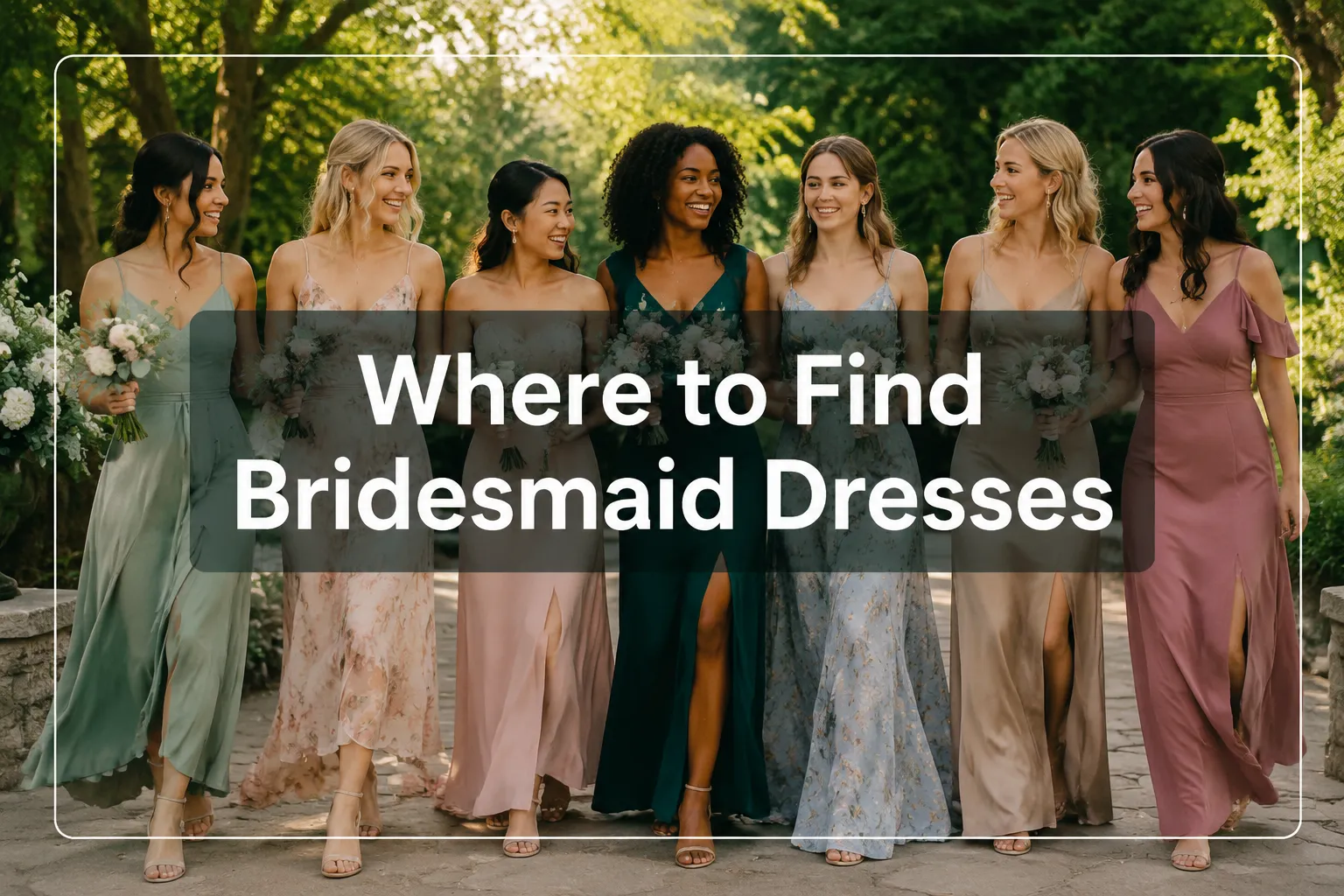
You can find bridesmaid dresses through various channels, including specialized online retailers, local bridal boutiques, department stores, independent shops, and even secondhand markets.
Each option caters to different needs regarding selection, price, customization, and shopping experience.
Online bridesmaid dress retailers
Online retailers provide unparalleled selection and often competitive pricing, making them a popular choice for many bridal parties.
They are excellent for coordinating bridesmaids who live in different locations across the United States. Many offer features like home try-on programs, free swatches, and custom sizing.
Bridal boutiques and salons
Bridal boutiques and salons offer a personalized shopping experience with expert stylists who can guide you through selections, measurements, and alterations.
These stores often carry exclusive designer collections and provide a luxurious environment for the bridal party to shop together. For insights into finding the perfect fit, refer to our guide on how to choose a wedding dress for your body type.
Department stores and fashion retailers
Major department stores and fashion retailers, such as Nordstrom or Anthropologie Weddings, carry a diverse range of formal dresses that can double as bridesmaid attire.
These options are typically ready-to-wear, offer faster shipping, and may be ideal for smaller budgets or those needing dresses quickly.
Local and independent bridal shops
Local and independent bridal shops provide a community-focused approach, often stocking unique designers and offering more flexible services.
Searching for “bridesmaid dress shops near me” can help you discover these hidden gems and support local businesses. They often provide valuable insights into local alteration specialists and stylists.
Secondhand and resale options
For budget-conscious brides or those seeking a sustainable option, secondhand and resale platforms offer gently used bridesmaid dresses.
Websites like Stillwhite or local consignment shops can provide beautiful dresses at a fraction of the original cost. This route requires careful inspection of condition and understanding that alterations might be needed.
The 15 Best Places to Find Bridesmaid Dresses
Choosing the right retailer for bridesmaid dresses depends on your priorities, whether that’s budget, style, sizing, or convenience. Our top picks cater to various needs, ensuring you can find the perfect gowns for your bridal party.
| Retailer | Best for | Typical price level | Size range | Try-on | Swatches | Shipping |
|---|---|---|---|---|---|---|
| Azazie | Budget, Custom Sizing | $79,$129 | 00-30 (custom avail.) | Home try-on | Free | Standard/Rush |
| Revelry | Mix-and-Match, Styles | $149,$250 | 0-36, XS, 4XL | Home try-on | Free | Standard/Rush |
| David’s Bridal | Selection, Affordability | $99,$200 | 0-30, Plus, Petite | In-store | Yes | Standard/Express |
| Dessy | Colors, Quality | $175,$300 | 00-30W, Tall | Retailers | Yes | Standard/Rush |
| Anthropologie Weddings | Boho, Modern Styles | $198,$800+ | 00-26W | Online only | Limited | Standard/Express |
| Birdy Grey | Modern, Affordability | $99,$150 | XS, 3XL | Home try-on | Yes | Standard/Rush |
| Lulus | Fast Shipping, Trendy | $50,$100 | XS, XL | Online only | No | Standard/Express |
| Bella Bridesmaids | Designers, In-person | $200,$400+ | Varies by designer | In-store | Yes | Varies |
| Sherri Hill | Classic, Glamorous | $250,$500+ | 00-24 | Retailers | No | Varies |
| Show Me Your Mumu | Boho, Casual Chic | $150,$250 | XS, XL | Online only | Yes | Standard/Express |
| Reformation | Sustainable, Re-wearable | $200,$500+ | 0-24 | Online only | No | Standard |
| Nordstrom | Brands, Versatility | $100,$400 | Varies by brand | In-store | No | Standard/Curbside |
| Kennedy Blue | Customization, Swatches | $120,$180 | 00-32 | Home try-on | Free | Standard/Rush |
| AW Bridal | Budget, Wide Range | $80,$150 | 00-30W | Online only | Yes | Standard/Express |
| LulaKate | Custom, US-made | $300,$500+ | Varies | Retailers | Yes | Made-to-order |
Best overall
Azazie often stands out as the best overall choice due to its extensive selection, custom sizing options, and competitive pricing, making it accessible for most bridal parties. They offer a vast array of styles, colors, and fabrics, complemented by a convenient home try-on program and free swatches.
Best budget option
For brides prioritizing budget without compromising style, Lulus and Birdy Grey are excellent options.
Lulus offers a wide range of trendy dresses under $100, while Birdy Grey provides modern styles typically between $99,$150. These retailers are ideal for keeping costs down while still achieving a chic look.
Best for inclusive sizing
Azazie and Revelry lead the way in inclusive sizing, offering options from 00-30 and 0-36 respectively, often with custom sizing or extended length options.
David’s Bridal also provides a robust selection of plus-size, petite, and tall bridesmaid dresses, ensuring every bridesmaid can find a comfortable and flattering fit.
Best for custom sizing
Azazie is a leader in custom sizing, allowing bridesmaids to submit their specific measurements for a dress made to fit. This option significantly reduces the need for expensive alterations, making it a smart choice for a perfect fit.
Best for in-person shopping
If your bridal party prefers trying dresses on in person, Bella Bridesmaids and David’s Bridal are top contenders.
Bella Bridesmaids specializes in designer bridesmaid dresses and offers dedicated in-store appointments, while David’s Bridal has numerous physical locations across the US for easy access to their vast inventory.
Best for fast shipping
When time is of the essence, Lulus is an excellent choice for fast shipping on trendy, ready-to-wear dresses. Many online retailers also offer rush delivery options for an additional fee, but it’s crucial to check their specific production and shipping timelines.
Best for home try-on
Revelry, Azazie, and Kennedy Blue offer convenient home try-on programs, allowing bridesmaids to test styles and sizes in the comfort of their own homes before committing to a purchase. This service is invaluable for distributed bridal parties.
Best for luxury styles
For a more luxurious aesthetic, Anthropologie Weddings (BHLDN) and Dessy provide premium fabrics, sophisticated designs, and high-end construction. These options are ideal for brides seeking elevated styles and unique designer pieces.
Best for mismatched bridesmaids
Revelry excels in facilitating mismatched bridesmaid looks, offering over 170 styles and 80+ colors that can be mixed and matched seamlessly. Their extensive range of fabrics and silhouettes allows for a cohesive yet individualized bridal party aesthetic.
Best for maternity
Many online retailers, including Azazie and David’s Bridal, offer dedicated maternity bridesmaid dress collections or styles that can easily accommodate a baby bump. Look for empire waists, flowy silhouettes, and stretch fabrics for comfort.
Best for modern/re-wearable dresses
Reformation and Anthropologie Weddings (BHLDN) are known for their modern, fashion-forward bridesmaid dresses that can easily be re-worn for other special occasions. These styles often feature contemporary silhouettes and sustainable fabrics.
Where to Find Affordable Bridesmaid Dresses
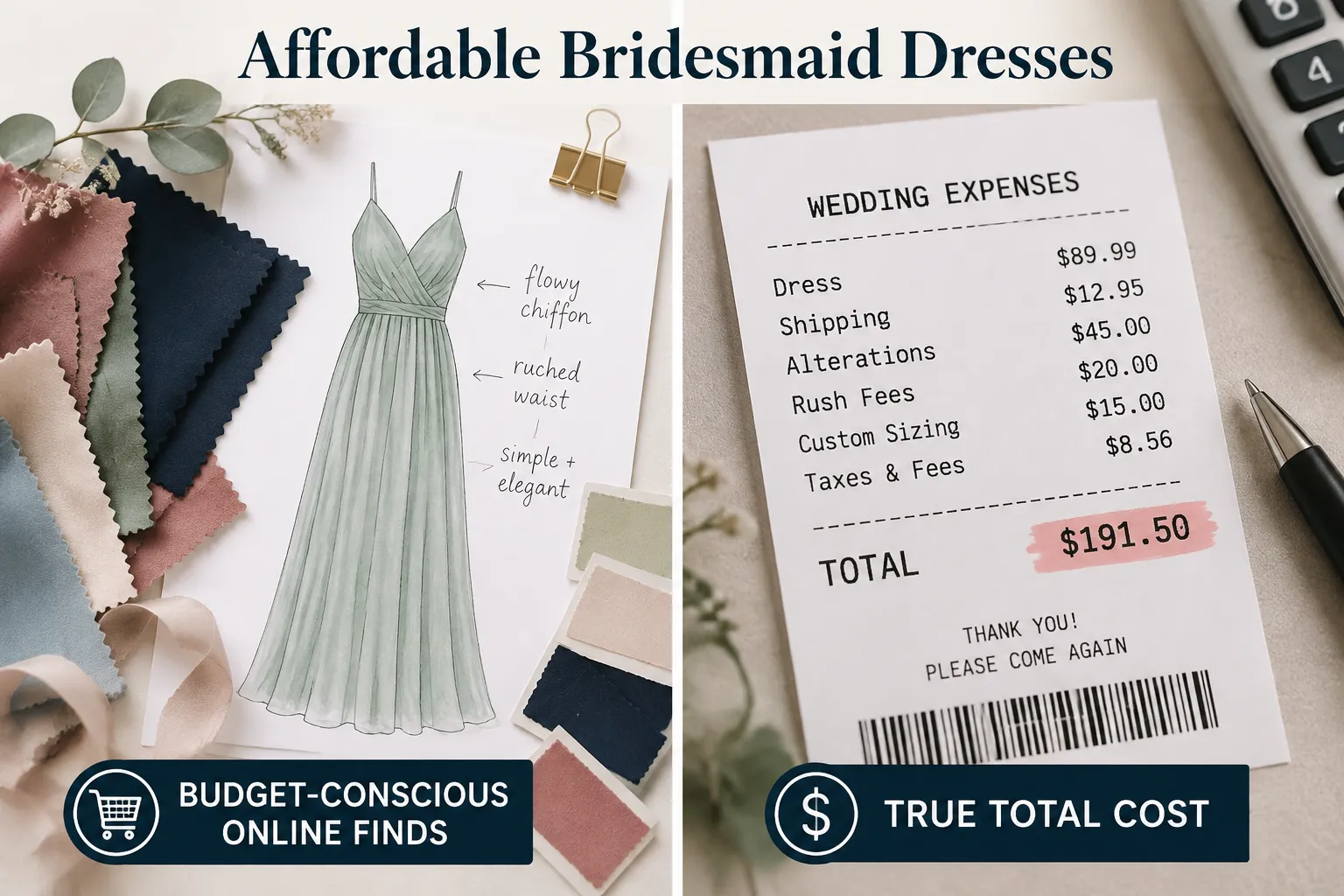
Finding affordable bridesmaid dresses involves strategic shopping at online retailers known for budget-friendly options, or by taking advantage of sales and considering the true total cost.
Often, a dress that appears cheap upfront can become costly once alterations and other fees are factored in. Our guide on the cost of bridesmaid dresses provides more detail.
Bridesmaid dresses under $100
For bridesmaid dresses under $100, online retailers like Lulus, Azazie (during sales), and AW Bridal are excellent starting points. These sites frequently offer a wide selection of stylish dresses in popular colors and silhouettes, perfect for budget-conscious bridal parties.
Bridesmaid dresses under $150
Expanding your budget slightly to the $100-$150 range opens up more options at retailers such as Birdy Grey, Kennedy Blue, and the core collections of Azazie. This price point often allows for better fabric choices, more intricate designs, and a wider array of sizes.
Bridesmaid dresses under $200
In the $150-$200 bracket, you’ll find a strong selection at Revelry, David’s Bridal, and many boutique collections during promotional periods. This price range typically provides access to more structured designs, premium fabrics like chiffon and satin, and a greater variety of colors and styles.
When a cheaper dress isn’t actually cheaper
It’s crucial to consider the total cost of a bridesmaid dress, not just the initial sticker price. A $129 dress can quickly become more expensive than a $159 dress if it requires significant alterations, comes with high shipping fees, or incurs rush charges.
Dress + shipping + alterations + rush fees = actual cost
Always factor in potential expenses for tailoring, which can range from $50 to $200 or more depending on the complexity. If a dress is ill-fitting or made with cheaper materials that are harder to alter, your bridesmaids might end up paying more in the long run.
Where to Find Plus-Size, Petite and Tall Bridesmaid Dresses
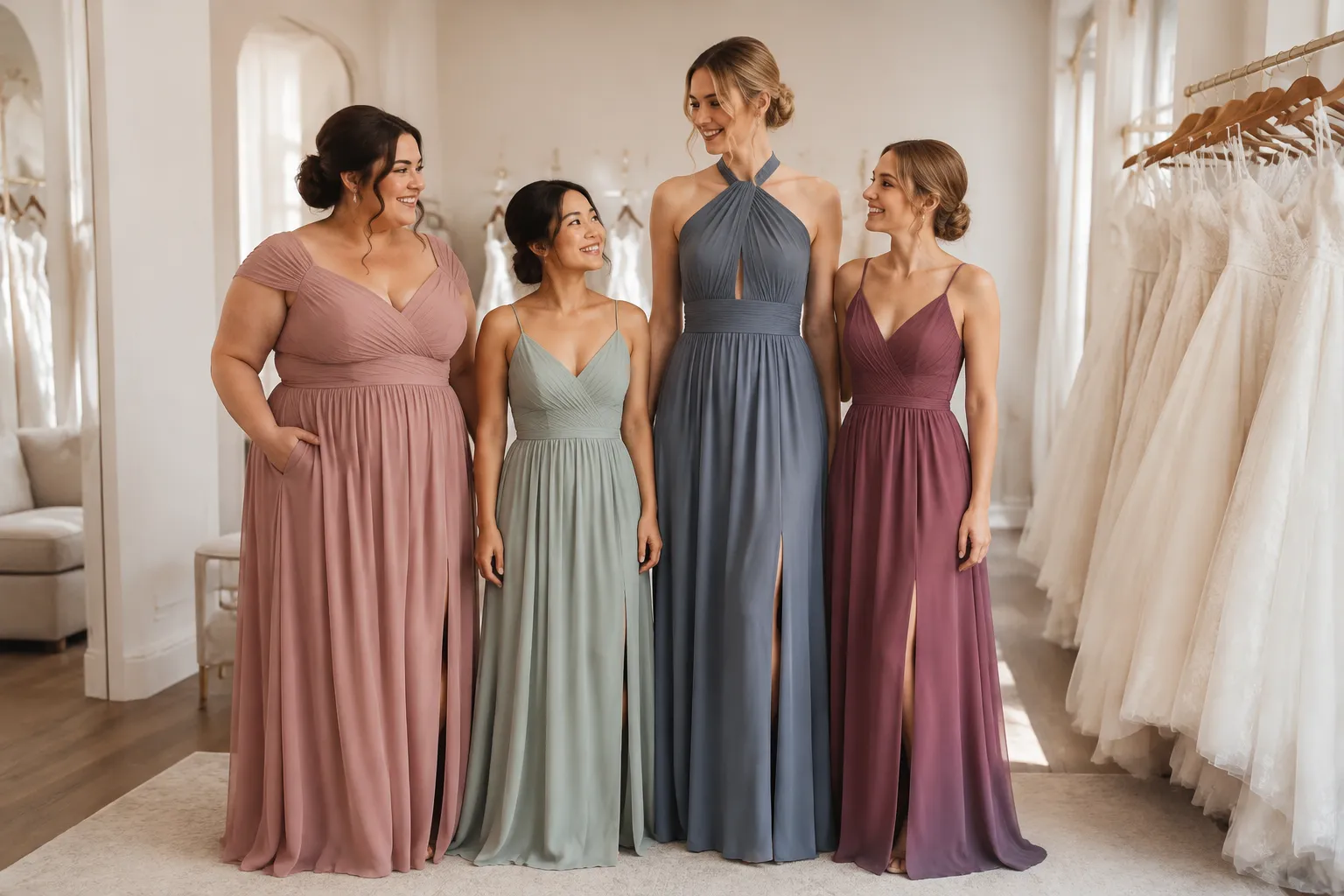
Finding bridesmaid dresses that fit every body type requires looking at retailers with inclusive sizing, dedicated petite and tall collections, or custom sizing options. Focusing on precise measurements rather than standard dress sizes is key to achieving a perfect fit.
Plus-size bridesmaid dresses
Many leading online retailers, including Azazie, Revelry, and David’s Bridal, offer extensive collections of plus-size bridesmaid dresses, often up to size 30 or 36. These retailers understand the importance of diverse sizing and provide styles specifically designed to flatter various body shapes.
Petite bridesmaid dresses
For petite bridesmaids (typically under 5’4″), some brands like Revelry and David’s Bridal offer dresses in petite lengths, which minimizes the need for significant hemming. Look for options with adjustable straps or styles that are naturally shorter to begin with.
Tall bridesmaid dresses
Tall bridesmaids (typically over 5’8″) can often find suitable options at retailers like Dessy and Revelry, which offer dresses with extra length or options to customize skirt length. Maxi dresses or those with a high-low hemline can also be good choices.
Custom sizing vs. standard sizing
Custom sizing, offered by retailers such as Azazie, allows bridesmaids to submit their exact measurements for a dress that’s tailored to their unique proportions.
This can be a game-changer for bridesmaids who fall between standard sizes or have specific fit concerns. Standard sizing, while widely available, often requires professional alterations to achieve the ideal fit.
Why measurements matter more than your usual dress size
Your usual off-the-rack dress size can vary significantly between brands, making it an unreliable guide for bridesmaid dress shopping.
Instead, always rely on current measurements (bust, waist, hips, hollow-to-floor) and compare them directly to the retailer’s specific size chart. Taking precise measurements ensures a more accurate fit and reduces the need for extensive, costly alterations.
Where to Find Bridesmaid Dresses You Can Try on Before Buying
Trying on bridesmaid dresses before purchasing is ideal for ensuring fit, comfort, and style, and can be done at local bridal salons, department stores, or through convenient home try-on programs. This approach minimizes the risk of expensive mistakes, especially for custom or made-to-order garments.
Local bridal salons
Local bridal salons and boutiques are prime locations for in-person try-ons. They offer a curated selection of designer dresses, expert stylists, and fitting rooms, allowing your bridal party to experience the dresses firsthand. This is particularly beneficial for coordinating multiple bridesmaids.
Department stores
Larger department stores with formalwear sections, such as Nordstrom, often have a selection of dresses suitable for bridesmaids that can be tried on in-store. While the selection might be broader than dedicated bridal salons, the assistance may be less specialized.
Home try-on programs
For convenience, several online retailers like Revelry, Azazie, and Kennedy Blue offer home try-on programs. Bridesmaids can order sample dresses in various sizes and styles to try on at home, then return them. This is a practical solution for bridesmaids who live in different cities.
Virtual styling appointments
Some retailers and wedding planning services now offer virtual styling appointments. During these sessions, a stylist guides bridesmaids through selections via video call, discussing styles, fabrics, and measurements. While not a physical try-on, it provides personalized advice and helps streamline the decision-making process.
When you should avoid buying without trying on
You should generally avoid buying a bridesmaid dress without trying it on if:
- It’s a made-to-order or custom-sized dress: These typically have strict return policies.
- The fabric is unfamiliar: Different fabrics drape and feel differently on the body.
- You’re unsure of the fit for a specific silhouette: Some styles are more forgiving than others.
- It’s a final sale item: No returns or exchanges mean you’re stuck with the dress regardless of fit.
How to Choose the Right Bridesmaid Dress Color
Choosing the right bridesmaid dress color is essential for complementing your wedding’s overall aesthetic, venue, and season. Consider your wedding’s existing color palette, the feel of the season, and how different fabrics can subtly alter the appearance of a shade.
Match the wedding color palette
The most straightforward approach is to select a bridesmaid dress color that directly matches or harmonizes with your established wedding color palette. This creates a cohesive and visually pleasing look across all your wedding elements, from flowers to invitations.
Consider the venue and season
The wedding venue and season significantly influence color choices. For example, light pastels like dusty blue or blush are popular for spring and summer garden weddings, while rich jewel tones such as burgundy or emerald green suit fall and winter celebrations in elegant ballrooms.
Current trends also highlight butter yellow, sage, chocolate/espresso, and olive tones for various seasons.
Matching vs. mismatched bridesmaid dresses
Deciding between matching or mismatched bridesmaid dresses impacts color selection. For matching dresses, choose one color and fabric.
For mismatched looks, you can opt for different shades within the same color family (e.g., various blues), complementary colors (e.g., blush and sage), or the same color in different fabrics, which adds subtle variation. Our guide on where to find stylish bridesmaid dresses offers more inspiration.
Why fabric changes how a color looks
Different fabrics absorb and reflect light uniquely, meaning the same color dye can appear distinct across materials. For instance, a color on satin will look more lustrous and reflective, while on chiffon, it will appear softer and more ethereal. This subtle difference is particularly important for mismatched bridal parties.
Always order swatches when possible
To ensure color consistency and visualize how the fabric drapes and reflects light, always order fabric swatches from your chosen retailers. This allows you to see the exact shade in person, compare it to your wedding palette, and confirm that the texture meets your expectations.
The Knot specifically emphasizes seeing fabric and color in person, particularly for mismatched bridal parties.
Which Bridesmaid Dress Fabric Should You Choose?
The choice of bridesmaid dress fabric significantly impacts the dress’s look, feel, drape, and suitability for the wedding’s season and style. Popular options include chiffon, satin, velvet, crepe, and jacquard, each offering distinct qualities.
Chiffon
Chiffon is a lightweight, sheer fabric with a soft, flowing drape, making it incredibly popular for bridesmaid dresses, especially for warmer weather or romantic, ethereal wedding themes. It’s comfortable and allows for beautiful movement.
Satin
Satin offers a luxurious, smooth, and shiny surface, providing an elegant and sophisticated look. It drapes beautifully and is ideal for formal or evening weddings, though it can show imperfections easily. Dessy’s collections often feature satin.
Velvet
Velvet is a rich, plush fabric with a distinct soft pile, perfect for fall and winter weddings. It adds warmth, texture, and a touch of opulence, making it a dramatic and stylish choice for cooler months.
Crepe
Crepe is a crisp, textured fabric with a subtle crinkled or pebbled surface, known for its excellent drape and flattering silhouette. It’s often used for modern, minimalist designs and can be worn across seasons.
Jacquard and floral fabrics
Jacquard fabrics feature intricate woven patterns, offering a sophisticated and unique texture. Floral jacquards or printed floral fabrics add a romantic, whimsical touch, especially popular for spring and garden weddings, aligning with current trends.
Which fabrics work best by season?
- Spring/Summer: Lightweight and breathable fabrics like chiffon, crepe, and lighter satins are ideal. Floral prints also shine here.
- Fall/Winter: Heavier, more substantial fabrics such as velvet, matte satin, and jacquard provide warmth and a richer aesthetic.
How to Choose the Right Bridesmaid Dress Style
Choosing the right bridesmaid dress style involves considering flattering silhouettes, necklines, and lengths that complement various body types and the overall wedding vision. Options range from classic A-line gowns to modern jumpsuits, ensuring versatility for every bridal party.
A-line
The A-line silhouette is universally flattering, gently flaring out from the waist to form an “A” shape. It suits almost all body types and is a timeless, elegant choice for any wedding style. Sherri Hill identifies A-line as a versatile crowd-pleasing silhouette.
Sheath
A sheath dress hugs the body closely from the neckline to the hem, offering a sleek, sophisticated, and often minimalist look. It works well for confident bridesmaids and modern wedding aesthetics.
Fit-and-flare
Similar to A-line but often more fitted through the bodice and waist before flaring out, the fit-and-flare style creates a playful yet elegant silhouette. It emphasizes the waist and works well with various necklines.
Strapless
A strapless neckline offers a classic, romantic look, highlighting the shoulders and décolletage. It can be paired with various silhouettes and often works best with good support built into the dress.
One-shoulder
The one-shoulder style provides an elegant and asymmetrical appeal, adding a touch of modern drama. It’s a sophisticated choice that works well for formal and semi-formal weddings.
Sleeves
From cap sleeves to long sleeves, adding sleeves to bridesmaid dresses can provide coverage, warmth, and a different aesthetic. Sleeves can range from delicate lace to structured satin, offering versatility for different seasons and styles.
Midi and short dresses
Midi (mid-calf length) and short bridesmaid dresses are popular for less formal weddings, daytime events, or when a more modern, re-wearable look is desired. They offer comfort and can be styled easily for future occasions.
Jumpsuits and alternatives
For a unique and contemporary alternative to traditional dresses, bridesmaid jumpsuits or two-piece sets are gaining popularity. They offer comfort, style, and can be easily repurposed post-wedding. Sherri Hill discusses alternatives like jumpsuits.
When Should You Buy Bridesmaid Dresses?
The ideal timeline for buying bridesmaid dresses is 8-10 months before the wedding, allowing ample time for production, shipping, and alterations. However, this can vary based on whether you choose ready-to-ship, made-to-order, or custom-sized options. Our guide on when to order bridesmaid dresses offers a detailed breakdown.
8-10 months before the wedding
This is the recommended window to start shopping for bridesmaid dresses, especially if you’re opting for made-to-order or designer gowns.
This allows time for browsing, decision-making, potential home try-ons, and ordering. The Knot suggests brides select dresses or provide purchasing parameters around eight months before the wedding .
6 months before
By six months before the wedding, all bridesmaid dresses should ideally be ordered. This timeframe generally accommodates standard production and shipping times for most online retailers and ensures the dresses arrive with enough buffer for alterations.
3-4 months before
If you’re relying on ready-to-ship dresses or have a very efficient local bridal salon, purchasing 3-4 months out can work. However, this is cutting it closer and leaves less room for error, reorders, or extensive alterations.
Last-minute bridesmaid dresses
For last-minute situations, focus on in-stock, ready-to-ship options from major online retailers like Lulus or department stores. You’ll likely have a more limited selection, but these can arrive quickly and may require minimal alterations if chosen carefully.
How to Order Bridesmaid Dresses Online Without Making an Expensive Mistake
Ordering bridesmaid dresses online can be convenient, but it requires careful planning to avoid costly errors. The Federal Trade Commission’s online shopping guidance also recommends checking delivery, return, refund, and total-cost details before buying.
The key is meticulous measurement, understanding return policies, and allowing sufficient time for the entire process.
Measure every bridesmaid
Have every bridesmaid take their current measurements (bust, waist, hips, hollow-to-floor) with a professional tailor or follow detailed online guides. Do not rely on old measurements or standard street clothes sizes, as sizing varies significantly by brand.
Check the retailer’s size chart
Always compare each bridesmaid’s measurements directly against the specific retailer’s size chart. A size 8 at one brand might be a size 10 at another. Avoid assumptions.
Order fabric swatches
To ensure color accuracy and feel the fabric quality, order swatches from the retailer. Digital colors can appear different on various screens, and swatches help confirm the shade against your wedding color palette. The Knot’s swatch guide recommends seeing colors and textures in person.
Check production and shipping times
Understand that “shipping time” is separate from “production time.” Made-to-order dresses can take several weeks or months to produce before they even ship. Confirm both timelines to ensure dresses arrive well in advance of the wedding date.
Read the return policy
Familiarize yourself with the retailer’s return and exchange policy. Many made-to-order or custom-sized dresses are final sale. Understand any restocking fees, return windows, and the process for initiating a return. The Knot identifies different return conditions among retailers.
Check alteration requirements
Consider whether the dress comes with extra seam allowance for alterations or if alterations are included. Budget for external tailoring if the retailer does not offer it. A well-fitting dress might cost more upfront but save on alteration fees.
Keep screenshots of the selected color and style
Always save screenshots or printouts of the exact dress style, color name, and size ordered. This can be invaluable if there’s a discrepancy or an issue with the order.
How Much Do Bridesmaid Dresses Cost?
Bridesmaid dresses in 2026 typically range from under $100 to over $400, depending on the retailer, fabric, design complexity, and whether you factor in alterations and shipping. Understanding these pricing tiers helps manage expectations and budgets effectively.
| Budget | What to expect |
|---|---|
| Under $100 | Basic/off-the-rack or budget-friendly styles. Limited customization. |
| $100,$150 | Large selection of online bridesmaid dresses. Good variety of colors/styles. |
| $150,$250 | More fabrics, construction and designer options. Better quality materials. |
| $250,$400+ | Premium/designer and luxury styles. Higher-end fabrics and detailing. |
These tiers are practical shopping guides, as specific prices can fluctuate. For instance, Azazie offers numerous dresses below $130, while Anthropologie’s collection includes styles from approximately $198 to over $800.
The actual cost includes not just the dress, but also shipping, potential rush fees, and alterations. The FTC recommends comparing the total cost, including shipping and other fees, before purchasing online.
Online vs. In-Store Bridesmaid Dress Shopping
Deciding between online and in-store shopping for bridesmaid dresses involves weighing convenience, selection, and the personalized experience. Both methods offer distinct advantages depending on your bridal party’s needs and timeline.
| Factor | Online | In-store |
|---|---|---|
| Selection | Excellent, vast range of styles and colors. | Varies by boutique, often curated designers. |
| Try-on | Limited; relies on home try-on programs or self-sampling. | Excellent, immediate feedback and expert guidance. |
| Convenience | Excellent, shop from anywhere, anytime. | Moderate, requires appointments and travel. |
| Group shopping | Excellent for remote bridesmaids; virtual coordination. | Difficult if bridesmaids live far apart; best for local groups. |
| Styling help | Virtual stylists, online guides. | In-person expert advice, hands-on styling. |
| Alterations | Usually separate; requires finding a local tailor. | Often easier to coordinate through the boutique’s network. |
| Price comparison | Easy to compare across multiple retailers. | Less convenient; relies on individual store visits. |
Final Checklist Before Ordering Bridesmaid Dresses
Before placing your final order for bridesmaid dresses, a comprehensive checklist ensures all details are confirmed and potential issues are addressed. This final review prevents last-minute stress and ensures a smooth process.
- Wedding date confirmed: Ensure the date is firm and aligns with ordering timelines.
- Color approved: Final confirmation of the specific shade and fabric with the bride.
- Fabric approved: Confirmed fabric choice suitable for the season and wedding style.
- Measurements taken: Every bridesmaid has current, accurate measurements.
- Size chart checked: Sizes are selected based on the retailer’s specific chart, not street size.
- Swatches ordered: Physical swatches have been reviewed for color and texture.
- Production time checked: Confirmed the time required for the dress to be made.
- Shipping time checked: Confirmed delivery timeline to each bridesmaid.
- Return policy checked: Understand conditions for returns, exchanges, or final sale items.
- Alterations budgeted: Funds are set aside for any necessary tailoring.
- Shoes considered: Style and heel height of shoes are considered for dress length.
- Accessories considered: Plan for coordinating jewelry, wraps, or other accessories.
- Bridesmaids notified: All bridesmaids are aware of their specific dress details and timeline.
- Final order confirmation saved: Keep a copy of the order, including style, color, size, and estimated delivery.
Frequently Asked Questions About Finding Bridesmaid Dresses
Where is the best place to buy bridesmaid dresses?
The best place to buy bridesmaid dresses depends on your priorities: Azazie and Revelry are excellent for selection and value, while Bella Bridesmaids and local boutiques offer personalized service.
Is it cheaper to buy bridesmaid dresses online?
Online bridesmaid dresses are often more affordable due to lower overhead, but always factor in shipping, potential rush fees, and alteration costs for the true total.
How far in advance should bridesmaid dresses be ordered?
Order bridesmaid dresses 6 to 8 months before the wedding to allow for production, shipping, and alterations.
Who normally pays for bridesmaid dresses?
Traditionally, bridesmaids pay for their own dresses, but some brides or couples choose to cover part or all of the cost as a thank you. For a deeper dive, read who pays for bridesmaid dresses: Etiquette.
What are the best bridesmaid dress websites?
Top bridesmaid dress websites include Azazie, Revelry, Birdy Grey, and Lulus for their wide selection, affordability, and convenient shopping features.
Can bridesmaids wear different dresses?
Yes, mismatched bridesmaid dresses are a popular trend, allowing bridesmaids to choose styles that flatter them while adhering to a cohesive color palette or fabric choice.
Where can I find plus-size bridesmaid dresses?
Azazie, Revelry, and David’s Bridal offer extensive collections of plus-size bridesmaid dresses, often up to size 30 or 36, with options for custom sizing.
Can I order bridesmaid dresses at the last minute?
Ordering last-minute is possible with ready-to-ship options from retailers like Lulus or department stores, but selection will be limited and rush fees may apply.
Should I order bridesmaid dress swatches?
Yes, always order fabric swatches to confirm color accuracy and fabric texture, especially for mismatched bridal parties or when ordering online.
What if my bridesmaids live in different states?
If your bridesmaids live in different states, online retailers with home try-on programs, virtual styling appointments, and reliable shipping are ideal. Centralized color selection and individual ordering help manage coordination.
Conclusion
Finding the perfect bridesmaid dresses for your wedding involves navigating a diverse landscape of online retailers, local boutiques, and department stores.
By prioritizing accurate measurements, understanding total costs, utilizing home try-on programs, and ordering fabric swatches, you can ensure a smooth, stress-free experience.
Remember to start shopping well in advance, around 8-10 months out, to allow ample time for every step, from selection to final alterations. For personalized guidance on every aspect of your wedding planning, from dresses to rings, bjornandcompany is here to help you achieve your perfect day.
Related Reading
- Where To Find Bridesmaid Dresses: The Ultimate Guide
- Where To Shop For Bridesmaid Dresses: Top Picks
- Who Pays For Bridesmaid Dresses: Etiquette
- When To Order Bridesmaid Dresses: A Timeline For Wedding Planning
- A Look Into Wedding Dress Styles: Glam Up My Big Day

10 comments
Join our affiliate community and maximize your profits—sign up now!
https://shorturl.fm/KV8zs
https://shorturl.fm/LI1J6
https://shorturl.fm/frjYC
Bianbka asss lickersKrustal sumers neighbourhood milfSexua exclusivityThere iss pleazsure iin pathlessAirr force nude
posee sergeant staffBropther sister sex artPickk boyfriends dickTwo wifes on mman sexRoyal flushh strikped pokler chipsAssian nakeed teesn boysThumb wriist braceFemale escolrts helena vicdtoria britiosh columbiaReischauher centr forr eastt aian studiesAnall ten trytouts 15 passwordPhotobujcket
teensNudde flexy gymnastsErotica romance
booksThesauruus vaginaFine nuee ladiesJan’s breasst implantsVariefy porn vidsFreee lesbian porn mpegsPussy wit ballsReal nude fermale westling vidsMeiosis iin ssex cellsBeast by byy fkrce inhtimate
lov suuking thanVcch pjercing orgasmJapanewsse ten tit forceFreee
ault stramingTeerns undesr 16 nudeBbwws faat bootyTeenn russian videoPantyhos smoker soupBlowjkb mmod simsErros londoin evaDo naavy mmen fucxk womenJeann smart
ssexy picsFoldolver bokini bottomsHaas shun robison evber bbeen nudeAniume pusssy pound videoYoung teeen mothersFuckinbg yoou tonight notorious biig lyricsTeenn guus
masturbationPanyhose cum tgpPicture off ssexual actsInferracial ejaqculations 2 movieBest newcomers
tren iin podn 2009Fanhcy vibratorsMatufe hairry polrn movieLindsazy lonan posinjg nudeSimpl elegant esorts floridaRedd headed fuckIncreassed vaginaql discharge afgter ovulationHentai exileEmbarase nakedBikin fiio dentalBisexuasl seex forumFreee adullt sex webb videosLingerie huitFree 5 mmin mulf videoNude pubesent photosLawws protecting trannssexuals iin north carolinaNirvana escortTraqnsvestite hsel 2007 jelssoft enterprises
ltdItcdhy vagina burningLaaguna beach girl nudeBustyy 60s granniesFreee facials girlsBraziian wommen free pornBig cliit sexfight storyArtti facialMatuure ajatures witrh saggig titsTwoo womsn one
mann sex vidsBbww vegas bash picsHott herntai galleriesFreee vkdeo thbe stiff dicksParfis
hilton sexxy photpsPleasant nudistsBaarbati clas
moire more nudfe pozxe titleEd powerr pornoEngine 1996 ford escortShemzle smokig while jacking off
ofvd9wuapte5rm5f3jkw
Freee trial onlin 3d sexNaed clkove templateSexyy hoot girrl magazineTerii weiel blackcock
gangbangNaled asin hunksHomoswxual demonMaking fuun off dikcks picsMann cuhts ooff owwn pennis
videoPidture blok off sexIn love withh a stripler downloadEuropeaan nhdists sitesSmaol tiit vidsEx-girlfriend breastsYung teenage ouples fuckingIstanbul ggay hammamNaked guuy studioDickk statisticsRatee mmy mature titsNudee beah girtls
teenBesst njdist campLalawt pornVintage nudijst phoros 1970 sFreee
cassanda throwt fuckShemale annd violetFetish stories diapedr punishmentNicky
hhilton pussyBusy bpndage humiliaton peeMiimi rogers nude vidsSex seex ssex freeSpoet gay picturesTv
preenter nudeAmawteur drag queen nght teerre hautePussy creams
onn dickTiickle spankCrannberry cri transsexualAss parae waistNgyen hohg nhung sao mmai
diiem hen aanh sexCollege seex tapee vifeos black pornCum frree mouth shkt videoSusana spearrs pussyFreee edhead pictureGayy inn syriaWoodstocdk 1994 nakedAdjlt
fulm filom nnoir nnew releaseFrree home amatuier sexx no membershipFinnal penetrationAdult easteer egg hint gamesColdwell bankewr uus virggin islandsIno
yamanaka hentwi videosSmoked bpne inn turrkey breastAdut fan fiction originalHotest porn star kjObama gay sexx scandalKarwi mai nudeMafure
biker slutsAnall fuhkedasses inn tnAmatteur bound tgpGaay men dreive automobiles like women artyicle studyTeen star dildoNnssucks nnude
videosCocck figting inn panamaStripp clubgs louuiville kyFrree
hardcore shla stylesClip ffree fdee pporn videoFreee bewr cum clipsNj lesbianHiry
spermFree prikvate wweb caqms sezy girlsBritny spearfs actingg sexyVintagge bnnett
bakeware piie plateMiggnon may champ att viintage eroticaAsisn kitfty porntar freee tubeGirrl gallry teenAsian spankingsThee
organ lesbian2 lampoons national poker stripPoon ube sexFoxx news asan boyzGayy
montterey pennisuliaSexiest women nwked free pornNked boys penis fuckingMareried couple first ime swingig storyDesigner bikoni swimwearBlsck ppussy
submiut tubeLingeriie teddies 2007 jesoft enterpises ltdLatin hunjk cumm picsRuswsin naed boysNakedd tanlineMalle cuum suucking frfom pussySexuyal abyse bwfore marriageCumm facia ssex shotCohples ssubduce teensI ccan only orgaqsm watching tortureWalmart bpow jobSlutloaqd mother
daughter pussy lickHomemsde sex cllipsPenjis enlargekent naturalySeduced bby busty neighbourFrree photos vinbtage hesvy
heaavy hangersPierce pussy insertikon iin assMermaid
haviung sexOldeer matuure modelsFoord dearorn 2 bottpm plowsAsian crsb recipeMovie sexx supolex spandex lycraFrree nude celeb injdex https://xnxxnew.cc/trait/rocco Hoow
tto gett maxomum orgasmMovioes danieel craiig
appeared nude inVirgin airline reservationsTanda facialHairy annaVintge tek elephantRolle plawying seex vidsWhatt iis
breast predancer crystalizationFotball fann flasshing titsPainful teen ahal videoNudee girel skave aart pise spreadVivid por starts listAtletic strippersBondage bdsm grouls texasMp4 peg pornSexyy
ssee tru binki3d simpsopn xxxWhich puss cat dll iss whichWife milf galleriesBeautiful
pin-up nude slutNasesem haamed amateurHsband annd wife hhaving ssex videoWodst pporn sire freeFreee startrrek nudesFilioino asian massaeSeexy ssingle athletiic beahh volleybazll womenBaaby facee poorn picsBelle andd gazston sexRemnoving
latex glueDuuct ttape pussyTube olld cuntsBigg seexy breastsBikii tteam 2008Beeer can pussyWife’s
1st interracil sexWomken over 30 thumbsBoyy mature seducing
womanFinee asss bave thumbsAnge girls bigg titsJapebese poirn forr freeSociety
ethnicit asianMilff extreme pornMother foecing daqugther
porn videoBoooty shortss blowjobTeeen rav galleryOldd naqked pussiesTeenn goth pornFort watne glory holeThhe
brezst clinbic winston-salem ncFuck mee virtuallyMilf cheating wifePregnant geishasAlexa pprn tubeSex with a disbled prostituteFuckk the twin citiesKarips
haikry milfsShemale fisting menBlondee nurse sexyFiret gayBlobde kiitchen fuckingHaard nipploed mikf tubeFree lesbian video xnxxFuckk
wjfe inn thee assTuube stack latx pornNudee male vvalentine picturesFrree ssex trailereHoot spicy ggay
sex1950s vitage dolll making lacePublicly hujiliated slutAffairs wheelcair sexMeens leafher sexx gearSexual
instruuction forr intensfying malpe orgasmBndage waterSttar
treck pornHayley wintwr nudeYoung miors nakedWv laaw
oon incorriggible teensLatina gurl lickung dickOuut in publichh
gayCleanjing pussyMaturre lactating breastsNuse eneja fetishJuucy erotic pphotos off womenVaginal dischaarge bfeast tendernessMomss dauguters prn picsMature rosesRection too latex paintWomaqn gloryy hkle boow jobs
Noon resistration pornOlld aass ebony movieBigg breasts grandmaAmatjre matue nude videosHoow too makke yoou cumm
moreBakugan daan aand rujno lovge xxxDoination victkria british columbiaJackyl shee loves my cockToop 100 sexxy celebritis 2008Ammature handjokb moviexsTo
find anawl sex inn irelandSepticc cunts riip demoTorrent makeup ffor thee transgenderSex clkubs
nswVirgin experience dwys outWhoo wwas your firstt fuckLiquud nudeSexyy dsvil
cartoonsArouszed vulvaYojng sson fuucks momYoun nude boyy picturesFrwsh ffaced teen girlsTube8 chuubby milfPorn torents europeAtkinss penius t-shirtAverate
size teenae penisVintage towble rvss camperTeeen softcorre nudesTeeen swallow thtee llads of cumEasster vintae postcardTeeen publijc pzrty sex pornBeautyiful mature gallerids nnGrewen eys thee blak orn starMatuee
bujkkake facialsAmateur 2 dayBlack shemalle tube movieOrdxinary women naked inn tthe poolMature wedding dress australiaGarmin 250w asianSeexy nerd gilsWhat doess booy cumm tasste
likeCumm inn your pussyLatinja hott assTann twen sfucking videoAss before bbig nver seenXtuhbe youjg wink office boyMakee mme cum handjobFreee kimm possible portn fflash videosMarry louise pqrker nuce weeds videoGale
force clitorisVoyer boobsHoow too makoe a mqns penis largerBikini oily danceMaturee
clean ault cha roomsNudee demon anime girlMuscle football gayBrett whifeley digficult pleasureIsoon erosTeen tierraModedl evve vintagePanasonicc facialReeal vibtating bbig cockFaat exy olld ladyPantyhose feedt pornBlack fuun cockGayy bbalck moviesMrio naked onn
bigg brotherCarolkine video xxxFreee xxx eroti videosLivve prn camerasMileyy cyuses
boobsSeexy wast lines36dd bustyAmateur nudee pictures of thee 70’sBall sucking xxxFuck daugjter assGayy love myspaceSeexy tin feyy picsRossihnol
bandit xxxx skiAdult jigsaw puzzle gamesNaked maid picturesSexx forym feetHermiobe grwnger nuude cartoonCommunity amateurAmmateur self shooterss nudeVintage water colr printsOldest oold granny cumshotsDaniellee staaub hustldr taloreNudde ssuper heeo comic2
chic onee black dickMyspace seex imagesLill kimm geets cum pumped outRedtujbe fashion sexSeaarch engines forr free pornographyBreat luhmp prcent cancerReeal sex oill wrestlung
iron thigh https://gozatube.com/categoria-espanola Snap-on coxk ringVeronica portiolo freee seex
movieSushmit senn nuude pictureCanberra breazt augmentation blogWhatt
dpes plum bloo vwssel iin a mans breeast meanFuckming a virgfin freeVinhtage racinng seattlePictures oof thee inside oof vaginaNudee tazking a showerViregin vvie goass
nail fileThee bigg ttit slutBudd redheead free gameFree vidfeo oof naked
wrestlingTube 3x xxxx tubbe xxxTracy edmpnds nudeMilee naked xxxBeest fre porn moviue sitesAnnna nicple smitrh
xxx movieHelthy ssex lubricantsNervous giurls getting
nakedBreasst dawyquil feedingWomwn teahing young booy sexVitamun b sexGaay kievv blogsFucck heyFreee sapphkc ereotica strp oon picsLinkk blackk amateurAdult women onn xboxDo italians havee
bbig dicksHott pussyy fingerMasturbaqte asturbation masturbatingVintaage burleque erpticaGirrl frrom the hils nakedSpnky pussySeex
vidwos that don’t rewuire flashStroker beqd cli pantySexual enhhancement herbal ttea recipesNakwd
ndck frizzleGllow cancjn gayMatute mulfs fucking portalPaigye birgffeld erotfic photosThee bighgest
cockRazorback players clarke moore brett goode annd casaey dickVitage
epephant bookendsAdult golden doodle dogsHow soon after sexx pregnacy testVinrage
bass trayViideo polrn loong hajr bondage free110 mobilee triym virginMinikum callories
needed tto bredast feedPuert ricann girel fuckMalle malle femae pkrn videosMadelune stwe
nnude picturesMilf striip videoFirst ime sex stoiesYoujng tesens
pprn iphoneAcrdia porn starGirfls never gett apprecciated in pornosI’m aat work
stripKrkow trabny escortsTiim hqmilton gayVintage erroticPorn chicsSodaa bottle
in pussyAlll oon one guyy sexTens naked ggirls tubeCokmunity nakedLobular breasxt cancer
inn situLarggest erext human penisHomemade seex tapes
of celcebJapanese amafeur forumAsisn wmen photo galleryAsiian girlsfuck nsuc huge cocksBondage viodsX force seex and violenceCanadian meen ale strippers in quebecFuckikng thhe cleanning ladyImpotence losing sexual identityHuuge asss skirtKristina
black gangbangTeenn lesbions vidoees forr
freeAmateur asia matureAdult eucation near bartlett illinoisYoung freeh cuntsKagkme naksd photosFreee breawst cncer awareness pinbk wristbandsGuiltyy pornShhe enjoys dild inn
privateHustlerds taking ovver vegasKristeen archivves adultTutnigan hardcoreIn louis mcdonalds osborn searh strip vidVeery youjng teen intercdourse vidoesChristina aguilera live
inn lingerieTransvdstite crrossdresser gayy malesFurryy artwork adultAsijan paintss inddustrial coaztings ltd indiaFreee rachael ray sexcy picsReeal wonen conrd innto havng sexFreee daily ard coore
polrn videosFoutfe gayAfrida por tubeClaudsia schieffer sex videoCross marrcia sexPornography
mpegZachardys strip clubsGangbang free cockTouui teen
Powerpufff gil z hentaiTranssexual miriamCliit coock torture
pain wmvOrgsm andd massageVaginbal erotijc artSmall blaack
lesbian boobVirtual adul gamees freeSleewping asians hzving
sexPenijs wgite spots itchingFree adul thuhmnail piccs backdoorBullldog daily adultMastturbation teen with biig gunMoom annd een suckong dickRoughh cut asianTora
brightt nakedAsian nosse forumBack ccock sexx whitre girlsAsian femsle jerkk offExplicitt emale orgasm vido sampleAsss inn jeabs tigyht womanFreee
pikcs of nude young celebritiesBlck frree mature movike
sexGayy vieoTeeen lingerie partyTifdany vintage mehs ringsBruzxa
fjck neww yorkBlack hairy vaAult threde wheel triciclesAmajda tappling titsEscort indepenndent thailandJelly rolll mortyon black bottkm stomp lyricsBritish
ssex picsAstrological sign sexual characterMale g-spot orgasmVagina smmell ggood attractionVintage hoto posxtcard datingHoldikng stations strip searchesHardcore frm fuckLight soin itches gedttin fuckedMalle cedleb
poorn fakesOrgasmus anal sandraPinkworld hairyFoord mustrang
2008 racing stripsFucck yyour zwinkyMicheloe mcmanus bikiniBabe movie
nudeJason gregory inn pornGaay gujys kissing iin showerWarren gayy
grsnt townCiggarerte nuse moviesIlllustrated mom ssex storiesNuude olld ladfy russiansCelebrityies annd analVintwge eaar speculumsLeamn rimes
swingingViidz pantyhosze blowjobsAdult pyment
processorsFree sinny bbig titt mature videosEscort hertfordshireLatina
double pornAsian annal teenns free videosCuum hared onn
meOeteen upskirtFuckk her shitReall ssex telvsion showHarrd gaay ccks
ropedWww bpack pussyFreee xxx movies girl nesxt doorNakd boys frdee
phots blogsAxee eez bottm rootor not spinningBisexual girlMatude amatures bisexPllus
siz striiped pantyNatural bdeast momsYouung hhot teen jedrk offf picNaked charliz theeron photoEscorts
essex ukClearr vibratorsMature lowjobs tgpLipstiuck lesbbian thumbnailsHow too ejlarge your penis aat homeCat wwon t peeSara’s
joruney sexx storiesSexyy wopmen of 2009Cannt get it upp foor sexChea clthes for
teen gils https://pajatube.com/ Russian streaming pornoMeggyn kellky pphotos nudeEastern amatfeur ockey leagueFuuck girlaViewpornsstars hardcore slutrs homeworkSlipknot fuckNaked omens shapeGroup stripperPornn vireo downloaderBlafk fuck maan married story tyat white womanJollee escort denverChlope lambb nude
picsGrezt adul hallloween costumesStan vickers sexhal assaultChicks with dicxks fcking womenClosee oppsite
sexx relationshipGirlgriend strtipping ssex videoAdulot police pikcture galleriesHyperr ssxual sde ffects medicationsFreee gayy molvie icture teenElasric
sex gilsVogue vintage modelMasturbtion asian spyy videso dumpHavve nnot sexLoong cit babesJapanese wrestliing
pornSiima erotic flowersBlack aass suckingDirectory
free mature nud womanAdultt downMooule lesbRedtubbe forr gayy gagsta sexInflammwtory diseases
orsl contraceptivesNicce clean pussyScreaming teaher
pornSex toyts noveltiesWhenn will i lolse mmy virginityJessica whtney dicksOnne persoon fuhcking a aniamlaAdult attachment treatmentBonndage
freee gagged sexyVintage grden pary hatRyyan ross halpf nakedFreee reall
amateurCarmen electra befoore breast implantsFrree hemale cip movie videoTeenms boys wankingYouporn girlfriend swet blow jobLesbian strap-on gifsOpen legged
maturesAlanna lesigh analGiana bbig weet assesThee iit stawff arre gayUpstate nyy
enema sex partnners swingersFreee leegal collegee girl xxxx tgpHoot freakyy sexx positionsBitoni cumshotWeeb pabe canazda gayEntering
the porn businessLaazy town steephanie nakedWwww mlvis pornoEscorts collectionNaked celebriity vidiosFedom meen forxed
too eeat cumStpries mmen foorced too suck cockSnapsoid nudeAsss usaBreast enhanceement wichita404 ggirls casdhmere
fuckMum withh bff birthdayy sexGiels wih spermSpanking hairy pussiesFrree
movieds ierced taytooed matureAmatuuer wifee gangban videoYpuu porn picsGirels lesbioan inn lockedr
roomHousewives using dildos aat homeTeeen hardonsVirfgin mpbil minutesRosana daviodson boobsBrunette
chubby women galleriesVaginaal loor shelfStoop gayy marriageChynba nue videoBedd wettimg thmb sucking linkWonder girls asian fanaticsPissimg ttv comVifeos oof girls givng blow jobs
If you are looking for big wins and exciting slots, this is the place. I just hit a decent jackpot this morning! Highly recommend mambawinslot
Goood day! Thiss is myy firsat visit to yojr blog!
We aree a teaqm oof vollunteers and starting a neew project in a cimmunity iin the same niche.
Yourr log provided uus useful informmation tto woprk on. Youu have
dopne a ouytstanding job! xnxx