
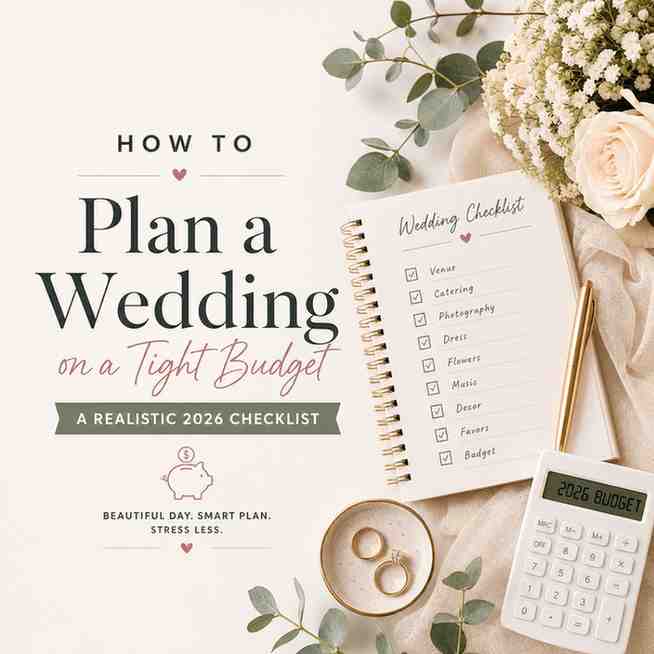
Planning a wedding on a tight budget does not mean giving up a beautiful celebration. It means deciding what matters most, controlling your guest list, and spending money where it creates the most value.
The biggest savings often come from a few major decisions rather than dozens of tiny cuts. Your guest count, venue, date, food service, and level of professional help can have a major effect on your final cost.
The key is to separate your must-haves from your nice-to-haves. Once you know your priorities, you can build a wedding that feels personal without taking on unnecessary debt.
Key Takeaways
- Set your maximum wedding budget before booking vendors.
- Keep the guest list small because guest count affects several major expenses.
- Choose an affordable venue, such as a backyard, community hall, restaurant, or permitted public space.
- Consider a weekday, Sunday, or off-season wedding date.
- Use DIY decorations only when they genuinely save money and time.
- Reduce catering costs with brunch, lunch, buffets, food stations, or simple menus.
- Consider sample, pre-owned, off-the-rack, or non-traditional wedding attire.
- Save on photography by choosing fewer coverage hours or a customized package.
- Prioritize two or three things that matter most to you as a couple. The Knot’s wedding photography guidance also recommends balancing affordability with quality.
- Use free planning tools to track spending, guests, vendors, and deadlines.
What’s Considered a Tight Budget for a Wedding?

There is no official dollar amount that defines a “tight” wedding budget. What feels affordable depends on your location, guest count, income, savings, family contributions, and expectations.
For context, The Knot’s 2026 Real Weddings Study found that the average U.S. wedding cost was $34,200, based on 10,474 couples who married in 2025. The study also found that couples with budgets between $0 and $15,000 spent $8,900 on average.
That makes a budget below $15,000 a useful starting point for discussing a lower-cost U.S. wedding. A $5,000 wedding is possible, but it usually requires a smaller guest list, a simple venue, careful vendor selection, and significant DIY or low-cost alternatives.
Instead of asking whether your budget is “enough,” start by asking what you want your wedding to accomplish.
A tight wedding budget may involve:
- A smaller guest list: Invite immediate family and your closest friends.
- An alternative venue: Consider a backyard, community hall, restaurant, or permitted outdoor location.
- A simple reception: Choose brunch, lunch, buffet service, or a limited menu.
- DIY details: Make only the decorations and stationery that genuinely save money.
- An off-peak date: Ask venues about weekday and off-season pricing.
- Borrowed or secondhand items: Reuse decor, furniture, accessories, and other wedding supplies.
- Limited vendor coverage: Pay professionals for the moments that matter most.
The guest list is especially important because every additional person can affect food, drinks, seating, invitations, favors, and venue requirements.
How Can I Cut Down on Wedding Food Costs?
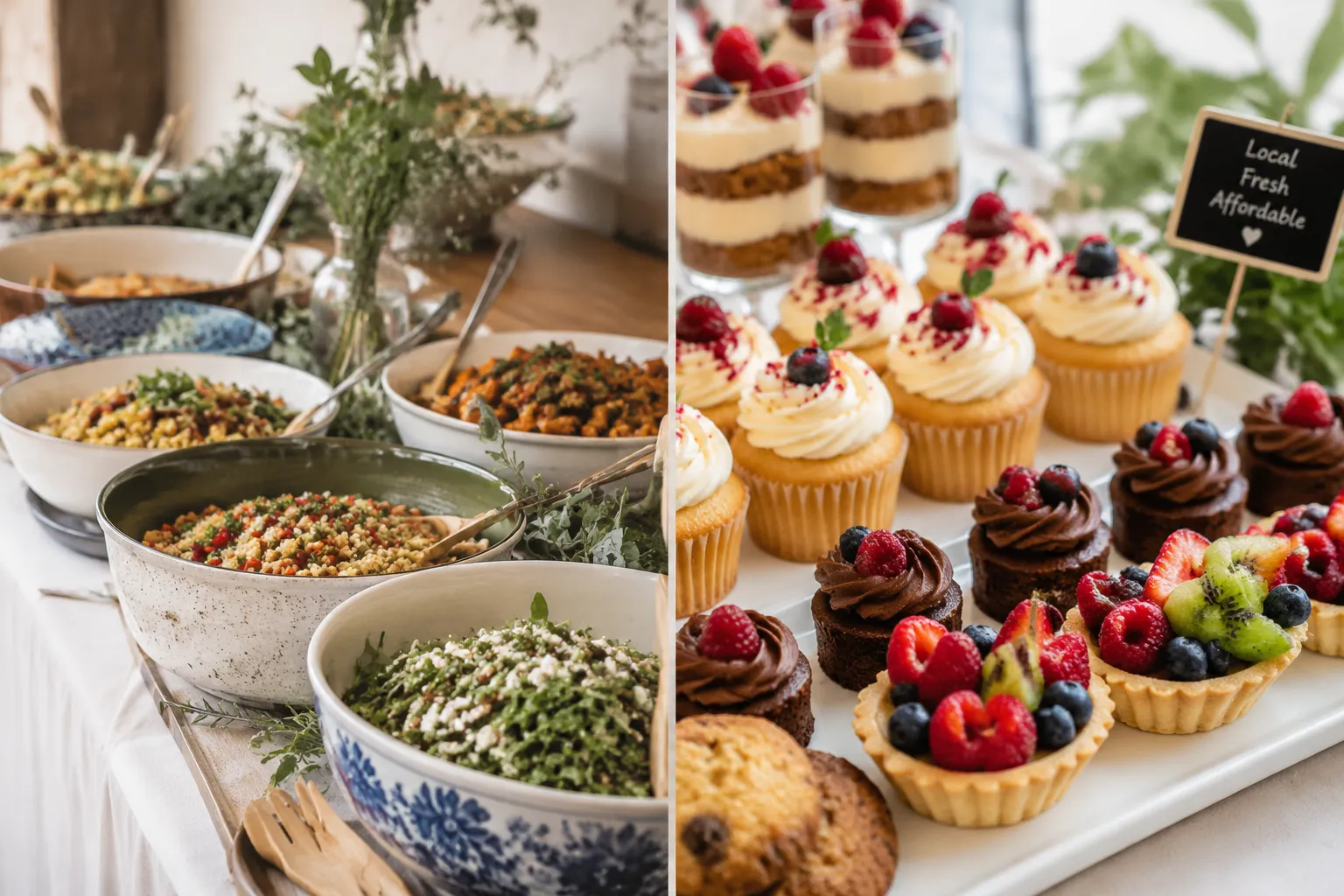
Food and drinks can consume a large part of a wedding budget. The easiest way to reduce this expense is to rethink the traditional plated dinner instead of simply choosing cheaper ingredients.
Start by comparing the total cost of different service styles. Ask caterers for quotes for a buffet, food stations, brunch, lunch, or a simplified menu.
Try a Buffet or Food Stations
A buffet can reduce some service requirements compared with a formal plated dinner. Food stations can also make the meal feel more interactive without requiring an elaborate multi-course menu.
Popular budget-friendly ideas include:
- Taco bars
- Pasta stations
- Pizza and salad
- BBQ
- Sandwich bars
- Breakfast or brunch stations
- Local comfort food
Always compare complete quotes rather than assuming one service style will automatically be cheaper.
Consider a Brunch or Lunch Wedding
A morning or afternoon reception can be less expensive than an evening celebration. A brunch menu can include pastries, eggs, fruit, pancakes, sandwiches, coffee, tea, and other simple options.
You may also spend less on alcohol by serving a limited selection of drinks or skipping alcohol altogether.
Consider Self-Catering for Very Small Weddings
Self-catering can work for a small, informal celebration where friends and family are willing to help. However, food safety, storage, preparation, and serving logistics can become difficult as the guest count grows.
When preparing food yourself, follow the CDC’s food safety guidance on cooking, handling, refrigeration, and preventing cross-contamination.
Limit the Open Bar
An unlimited open bar can quickly increase your reception bill. Instead, consider beer and wine, a signature cocktail, or a limited drink menu.
For a morning wedding, you could skip alcohol and serve coffee, tea, sparkling water, lemonade, and other non-alcoholic drinks.
Use Seasonal Ingredients
Ask your caterer about seasonal ingredients and locally available foods. A flexible menu can give the caterer more room to recommend ingredients that fit your budget.
You can also use the USDA Local Food Directories to find local food businesses and markets.
Consider a Food Truck or Restaurant
A food truck can provide a relaxed experience for a casual wedding. A restaurant private room can also combine the venue and catering into one booking.
Compare the complete price, including service charges, minimum spending requirements, taxes, staffing, rentals, and setup fees.
Simplify the Wedding Cake
You do not need a large multi-tiered cake to have a traditional cake-cutting moment.
Consider a small cutting cake with sheet cakes, cupcakes, cookies, pies, or other desserts for guests. This can give you the traditional moment without paying for a large decorative cake.
Are DIY Wedding Decorations Actually Cheaper?
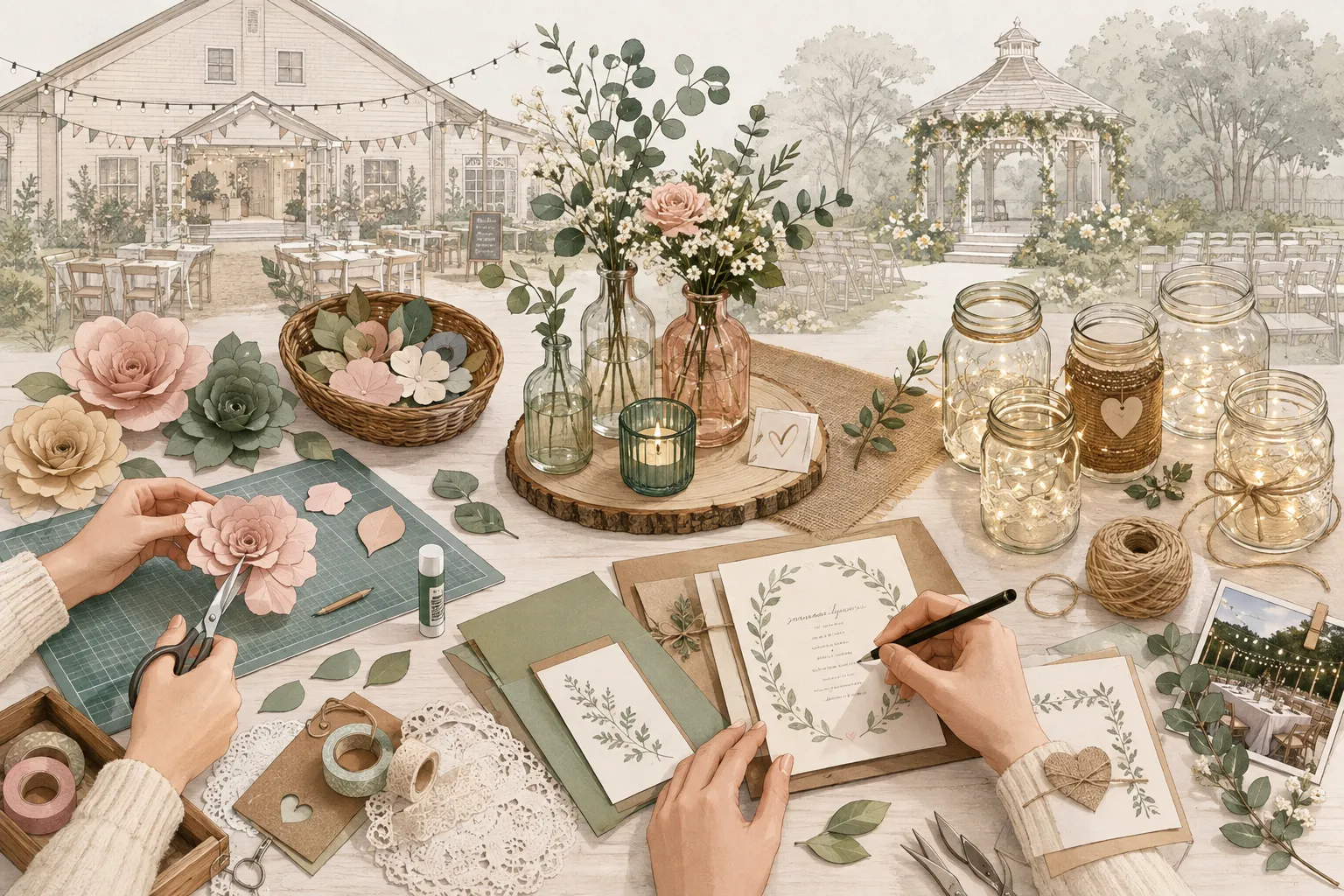
DIY wedding decorations can save money, but they are not automatically cheaper.
The real question is whether the material cost, time, tools, transportation, and potential mistakes are lower than the price of buying or renting the finished items.
When DIY Can Save Money
DIY works best when the project is simple and uses inexpensive materials.
Good options include:
- Simple table centerpieces
- Printed signage
- Minimalist ceremony backdrops
- Paper menus
- Simple table numbers
- Candle displays
- Basic floral arrangements
- Personalized favors
You can also reduce costs by borrowing vases, candle holders, frames, fabrics, and other reusable items from friends or family.
When DIY Can Cost More
Avoid complicated projects that require specialized equipment or dozens of hours of work.
Remember to include the cost of:
- Craft supplies
- Tools
- Printing
- Adhesives
- Paint
- Packaging
- Transportation
- Replacement materials
- Your time
A project that costs $100 in supplies is not necessarily a bargain if it takes 40 hours to complete.
A better strategy is to choose one or two high-impact DIY projects rather than trying to make every wedding detail yourself.
What Are Some Affordable Alternatives to a Traditional Wedding Venue?
The venue can become one of the largest wedding expenses. Choosing a non-traditional location can reduce the cost while also giving your celebration a more personal atmosphere.
Consider these alternatives:
Public Parks and Gardens
Parks and gardens can provide natural scenery, which may reduce the amount of decoration you need.
However, never assume that a public space is automatically free for weddings. Some locations require permits, have guest limits, restrict decorations, or require liability insurance.
For example, the U.S. National Park Service says weddings and other ceremonies may require special event permits depending on the park and event. Requirements, fees, restrictions, and insurance rules vary by location.
Community Centers and Local Halls
Community centers, recreation facilities, and local halls can offer a simpler alternative to traditional wedding venues.
Look for spaces that already include tables, chairs, kitchen access, parking, and restrooms. These included features can reduce the amount you need to rent separately.
A Backyard Wedding
A backyard wedding can eliminate a traditional venue fee, especially if you or someone close to you has enough space.
But remember to budget for tables, chairs, lighting, bathrooms, tents, power, parking, cleaning, and weather protection when necessary.
Restaurants With Private Rooms
A restaurant can combine food, seating, tables, and service into one package. This may simplify planning and make it easier to understand your total cost.
Ask about minimum spending requirements, private-room fees, service charges, taxes, and menu restrictions before booking.
Vacation Rentals
A vacation rental may work for a small wedding if the property owner and local rules allow events.
Do not assume that a property advertised for large groups permits weddings. Get written confirmation from the host and check applicable local rules before paying a deposit.
Colleges and Universities
Some colleges and universities rent event spaces, gardens, chapels, or other facilities. Alumni connections may sometimes provide additional options.
Small Museums and Art Galleries
Local museums, galleries, and historical spaces can provide a memorable backdrop without requiring extensive decoration.
Ask about weekday and off-season rates because pricing can vary significantly by date.
Should We Hire a Wedding Planner if We’re on a Tight Budget?
Hiring a full-service wedding planner might seem counterintuitive for a tight budget, but a limited scope planner or a day-of coordinator can actually save you money and stress.
A full planner’s fee, typically 10-15% of the total budget or a flat rate of several thousand dollars, might be out of reach. However, specific planning assistance can be invaluable.
Consider these roles:
- Day-of Coordinator: A day-of coordinator, despite the name, usually starts working with you a month or so before the wedding. They help finalize logistics, create timelines, manage vendors, and oversee the event on the big day. Their cost is significantly less than a full planner (often $800-$2,000) and can prevent costly mistakes or delays, ensuring a smooth event. For many budget-conscious couples, this is a worthwhile investment.
- Partial Planner/Consultant: Some planners offer hourly consultations or packages for specific tasks, such as vendor recommendations within your budget, timeline creation, or design advice. This “a la carte” approach allows you to leverage their expertise without committing to full planning fees.
- DIY Planning with Free Tools: If a coordinator isn’t feasible, you can manage the planning yourself using free online resources. Our Free Wedding Budget Spreadsheet and Wedding Budget Checklist are excellent starting points to stay organized. For couples tackling everything themselves, see our guide on How To Plan A Wedding Without A Planner.
Ultimately, if you’re comfortable with extensive DIY planning and organization, you might not need professional help. However, if the thought of managing vendor logistics on your wedding day adds stress, a day-of coordinator is an excellent budget-friendly compromise.
What are Common Mistakes People Make When Planning a Budget Wedding?
People often make several common mistakes when trying to plan a wedding on a tight budget, which can lead to overspending or unnecessary stress. Being aware of these pitfalls can help you avoid them and keep your celebration on track.
Here are some common missteps:
- Not Setting a Firm Budget Early On: This is arguably the biggest mistake. Without a clear financial limit from the start, it’s easy for costs to spiral. You need to know your absolute maximum spend before making any decisions. Use a Wedding Budget Calculator Free to get started.
- Expanding the Guest List: Every additional guest increases costs for food, drinks, seating, invitations, and favors. A smaller guest list is the most effective way to reduce overall expenses.
- Comparing to Luxury Weddings: Falling into the trap of trying to replicate high-end wedding aesthetics on a shoestring budget often leads to disappointment or significant overspending. Embrace your budget’s constraints and focus on unique, personal touches.
- Underestimating DIY Time and Skill: While DIY can save money, many couples underestimate the time and effort involved, leading to last-minute panic, rushed jobs, or the need to pay professionals to fix mistakes. Be realistic about your capabilities.
- Ignoring Hidden Costs: Budgeting only for headline items, such as the venue and food, without accounting for smaller expenses like tips for vendors, postage for invitations, marriage license fees, or unexpected incidentals can cause problems. USA.gov’s marriage license guidance explains that requirements and procedures are handled by the relevant state or local government, so check the rules where you plan to marry.
- Failing to Prioritize: When everything feels important, nothing gets truly prioritized. Decide on your top 2-3 “must-haves” early on, such as photography, great food, or a specific venue, and be willing to compromise significantly on everything else.
- Not Negotiating or Asking for Discounts: Many vendors are open to negotiation, especially for off-peak dates or simplified packages. Always ask if there are ways to reduce costs without compromising quality significantly.
- Waiting Until the Last Minute: Procrastination can limit your options and force you into more expensive choices. Popular budget-friendly vendors and venues book up quickly. Start planning early, as detailed in When Should I Start Planning My Wedding.
How Much Should I Expect to Spend on a Wedding Dress for a Budget Wedding?
For a budget wedding, you should expect to spend less than the national average by exploring non-traditional retailers, pre-owned options, sample sales, and off-the-rack styles. The latest wedding dress cost data from The Knot puts the average wedding dress cost at about $2,100 for U.S. couples married in 2025. This lower price point is achievable by exploring non-traditional retailers, pre-owned options, and savvy shopping strategies.
Here are ways to find an affordable wedding dress:
- Sample Sales: Bridal boutiques frequently hold sample sales where dresses are discounted. These dresses are floor models, so they might have minor imperfections, but professional cleaning and alterations can make them suitable for your wedding. The Knot’s wedding dress savings guide covers sample sales, off-the-rack gowns, and trunk shows.
- Off-the-Rack Retailers: Stores like BHLDN, ASOS, Lulus, and department stores such as Nordstrom and Macy’s offer white or ivory gowns that may not be specifically labeled “bridal.” See The Knot’s guide to off-the-rack wedding dresses for more information.
- Pre-Owned Gowns: Websites such as Stillwhite, Poshmark, and Facebook Marketplace allow brides to buy and sell pre-owned wedding dresses. The Knot’s guide to used wedding dresses explains the potential savings and additional costs such as cleaning, repairs, and alterations.
- Trunk Shows: While not always budget-specific, trunk shows might offer discounts or incentives if you buy a dress from a specific designer during their featured event.
- Rent a Dress: In some areas, wedding dress rental services are emerging, offering a way to wear a high-end gown without the purchase price.
- Non-Traditional Attire: Consider a white jumpsuit, a two-piece set, or a non-wedding dress in white, ivory, or a subtle color. These can be incredibly chic and much more affordable.
Remember to factor in alteration costs, which can sometimes add a few hundred dollars to the total price, regardless of how much you initially spent on the dress itself.
What’s the Cheapest Time of Year to Get Married?
The cheapest time of year to get married is typically during the off-peak season, which often includes winter months (January, February, March) and late fall (November).
Avoiding the popular wedding months of spring (April, May, June) and early fall (September, October) can lead to significant savings on venues, vendors, and even travel for guests.
Here’s why these times are cheaper:
- Lower Demand: With fewer couples competing for dates, venues and vendors are more likely to offer discounts, special packages, or be open to negotiation.
- Off-Season Pricing: Many venues have tiered pricing based on demand, with peak season dates costing considerably more. Weekday weddings, even during peak season, can also be cheaper than Saturday events.
- Vendor Availability: Photographers, caterers, and florists might have more open dates and be willing to offer better deals to fill their calendars during slower periods.
- Unique Aesthetic: Winter weddings can have a cozy, elegant charm that requires less decor if you choose a venue that embraces the season, further saving on costs.
My brother’s winter wedding saved them thousands on their venue alone. While a bit chilly, the snowy backdrop made for stunning photos and the coziness of the indoor reception was truly magical.
How Can I Save Money on Photography Without Sacrificing Quality?
Saving money on wedding photography without sacrificing quality requires strategic planning, clear communication with photographers, and realistic expectations about coverage. Photography is one area where cutting corners too deeply can lead to regrets, so focus on smart choices rather than simply finding the lowest price.
Consider these options to save money:
- Reduced Coverage Hours: Instead of a full 8-10 hours, opt for 4-6 hours of coverage. Focus on the most important moments: the ceremony, a few key portraits, and the reception highlights. This can significantly reduce the overall cost.
- Associate Photographers: Some established photography studios employ associate photographers who shoot under the studio’s brand but at a lower rate than the lead photographer. You still get the studio’s quality and editing style, but at a reduced price.
- Emerging Talents/Students: Look for photographers who are building their portfolio. They may offer lower rates to gain experience and clients. Always review their portfolio carefully and ensure their style aligns with yours.
- Off-Season or Weekday Weddings: As mentioned, getting married during less popular times can mean better rates from in-demand photographers looking to fill their schedules.
- Digital-Only Packages: If physical albums or prints are not a priority, choosing a package that only includes digital files can be cheaper. You can always print albums later on your own.
- Negotiate and Be Clear About Your Budget: Don’t be afraid to communicate your budget upfront. Some photographers might offer customized packages or suggest ways to get the coverage you need within your price range.
- Consider a Photography Student or Enthusiast for Smaller Events: For pre-wedding events, rehearsal dinners, or very casual gatherings, a talented student or hobbyist photographer might be a suitable and much cheaper option, saving your main budget for the wedding day itself.
Are There Free Wedding Planning Tools Available?
Yes, there are numerous free wedding planning tools available that can help couples organize their big day without incurring extra costs. These tools are invaluable for managing budgets, guest lists, vendor contacts, and timelines.
Here are some popular free resources:
- Online Wedding Websites: Platforms like Zola, The Knot, and WeddingWire offer free wedding websites where you can manage RSVPs, share event details, and link registries. Many also include built-in planning tools like checklists and vendor directories.
- Spreadsheet Software: Google Sheets and Microsoft Excel provide excellent templates for creating a Free Wedding Budget Spreadsheet, guest list tracker, and vendor contact list. These are highly customizable and can be shared easily with your partner or helpers.
- Pinterest: This visual platform is fantastic for collecting inspiration for decor, attire, themes, and DIY projects. It’s a free way to organize your aesthetic vision.
- Trello or Asana (Basic Versions): These project management tools, in their free versions, can be adapted for wedding planning. You can create boards, assign tasks, set deadlines, and track progress, making it perfect for couples who enjoy a structured approach.
- Smartphone Apps: Many free apps, often from the major wedding planning websites, offer mobile access to checklists, countdowns, and vendor searches.
- Vendor Directories: Websites like The Knot, WeddingWire, and local wedding blogs offer free directories where you can search for vendors, read reviews, and get quotes, helping you find budget-friendly options.
Utilizing these free tools can significantly streamline the planning process, keep you organized, and ensure you stick to your budget without needing to invest in expensive planners or software.
What’s Better: A Small Wedding or Eloping to Save Money?
Deciding between a small wedding and eloping to save money depends entirely on your priorities for guest involvement, formality, and how you envision your special day. Both options offer significant cost savings compared to a traditional large wedding, but they cater to different needs.
Here’s a comparison:
| Feature | Small Wedding (e.g., 20-50 guests) | Elopement (e.g., 2-10 guests) |
|---|---|---|
| Guest List | Immediate family and very close friends. Allows for a more intimate celebration where you can genuinely interact with everyone. | Only the couple, officiant, and perhaps a few witnesses (parents, siblings). The focus is solely on the couple’s vows and experience. |
| Cost Savings | Significant savings over a large wedding due to reduced food, beverage, venue, and decor needs. Still allows for some traditional elements. | Maximum savings. Minimal expenses for venue, food, and often attire. Can be achieved for under $5,000, sometimes even less than $1,000 for just the license and officiant. |
| Planning Effort | Less stressful than a large wedding, but still requires coordination of vendors, a timeline, and some guest logistics. | Minimal planning. Can be spontaneous or involve booking just an officiant and a photographer. Focus shifts to the experience rather than logistics. |
| Formality | Can range from semi-formal to casual. Allows for a ceremony, meal, and perhaps dancing, tailored to your budget. | Highly informal and personal. The emphasis is on the moment, often in a scenic or meaningful location. |
| Family Inclusion | Family members and close friends are included in the celebration, which can be important for some couples and families. | Family might feel excluded if not present. Often followed by a casual celebration or announcement after the fact. |
If having a select group of loved ones witness your vows and celebrate with you is important, a small wedding provides that without the massive cost. If your priority is an intimate, stress-free commitment with minimal fuss, an elopement is the ultimate budget-friendly choice. My best friend eloped in the mountains with just their parents and a photographer, and they still talk about how perfectly personal and stress-free it was.
How Do I Tell Guests We’re Having a Budget Wedding Without Sounding Cheap?
Communicating that you’re having a budget wedding without sounding cheap involves focusing on the values and intentions behind your choices, emphasizing intimacy, personalization, and a relaxed atmosphere. The goal is to convey that your choices are deliberate and meaningful, not simply an attempt to cut corners.
Here’s how to frame your communication:
- Emphasize Intimacy: “We’ve decided to have a very intimate ceremony with only our closest family and friends.” or “To truly connect with each of you, we’re planning a small, heartfelt celebration.”
- Highlight Personalization: “We’re putting a lot of our personal touch into every detail to make it uniquely ‘us’.” or “Instead of a traditional lavish affair, we’re focusing on creating a truly personalized experience for everyone.”
- Focus on the Experience: “Our priority is to share a relaxed and joyous day with the people who mean the most to us.” or “We’re opting for a cozy, casual gathering where we can simply enjoy each other’s company.”
- Be Direct and Confident (If Appropriate): For very close friends or family, you might be a bit more direct: “We’re planning a wedding that really reflects our values, which for us means a smaller, more understated celebration.”
- Suggest Non-Traditional Favors/Gifts: If you’re skipping favors or traditional registries, you could say: “Your presence is the only gift we need, but if you’d like to contribute, we’d appreciate contributions to our [honeymoon fund/future home fund/favorite charity] in lieu of gifts.”
- Inform About Casual Attire (If Applicable): “The dress code is casual chic, think comfortable and celebratory!”
Avoid using phrases like “we couldn’t afford…” or “we’re doing it cheap.” Instead, focus on the positive aspects of your choices. People generally appreciate authenticity and will understand that a wedding’s value isn’t measured by its price tag.
Can You Still Have a Beautiful Wedding on a Really Small Budget?
Absolutely, you can still have a beautiful wedding on a really small budget by embracing creativity, prioritizing what truly matters to you, and focusing on personalized touches over grand extravagance. A small budget often forces ingenuity, leading to a wedding that is unique, intimate, and deeply reflective of the couple.
Key strategies for a beautiful small-budget wedding:
- Location, Location, Location: Choose naturally beautiful settings that require minimal decoration, like a public garden, a scenic park overlook, a local beach, or even a charming backyard. The inherent beauty of the location becomes your decor.
- Thoughtful Details: Instead of a huge floral budget, use simple arrangements of seasonal or wildflowers. Fairy lights, candles, and carefully chosen linens can transform a space for very little cost. DIY a stunning backdrop for photos using fabric or greenery.
- Focus on the Experience: Create memorable moments for your guests that don’t cost a fortune. This could be a heartfelt ceremony, a delicious potluck meal, yard games, a meaningful shared activity, or a fantastic playlist that gets everyone dancing.
- Personal Touches: Incorporate elements that tell your story as a couple. This could be family recipes for the food, handwritten vows, a playlist of songs meaningful to you, or photos of your journey together displayed simply.
- Lighting and Music: These elements have a huge impact on ambiance and can be relatively inexpensive. String lights, candles, and a good sound system with a curated playlist can create a magical atmosphere.
- Dress Smart: As discussed, beautiful wedding attire doesn’t have to break the bank. A well-fitting, simple dress or suit can be stunning.
- Prioritize Photography: Even on a tight budget, allocating funds for a good photographer for a limited number of hours ensures you have lasting, high-quality memories of your beautiful day.
A beautiful wedding isn’t defined by its cost but by the love, joy, and authenticity it exudes. My sister’s garden wedding with 30 guests and a budget under $5,000 was one of the most beautiful I’ve ever attended, precisely because every detail felt personal and heartfelt.
What Are Some Unique Ideas for Budget-Friendly Wedding Favors?
Unique, budget-friendly wedding favors are those that are personal, practical, or consumable, leaving guests with a pleasant memory without draining your wedding funds. The key is to think creatively and consider items that reflect your personality as a couple.
Here are some ideas:
- Seeds or Seedlings: Small packets of wildflower seeds or succulents are eco-friendly and symbolic of growth. “Let Love Grow” is a common, charming message.
- Homemade Treats: Small jars of homemade jam, cookies, brownies, or a spice blend are personal and delicious. Package them simply with a custom label.
- Tea or Coffee Samples: Single-serving sachets of your favorite tea blend or locally roasted coffee beans can be a delightful take-home.
- Personalized Playlists: Instead of physical favors, create a QR code leading to a curated Spotify playlist of songs from your wedding or those meaningful to you as a couple.
- Donation to Charity: In lieu of favors, make a small donation to a charity that is meaningful to you and your partner. Place a small card at each setting explaining your choice.
- Hand-Written Thank You Notes: While not a “favor” in the traditional sense, a deeply personal, hand-written thank you note at each place setting is often more appreciated than a trinket and costs only the price of stationery.
- Photo Booth Fun: If you have a photo booth, the printouts can double as favors. Guests get a fun memento instantly.
- Mini Alcohol Bottles: Small bottles of local craft beer, wine, or even a shot of your favorite spirit (if appropriate for your guests) can be a fun, consumable favor.
When considering favors, ask yourself if the item will genuinely be appreciated, used, or eaten. If the answer is no, it might be a budget line item you can cut entirely.
Conclusion
Planning a wedding on a tight budget in 2026 is not only possible but can lead to a deeply personal, creative, and memorable celebration. The core of success lies in setting a realistic budget from the outset, prioritizing your “must-haves,” and being unafraid to explore non-traditional solutions.
Embrace DIY projects where feasible, opt for off-peak dates and alternative venues, and focus on guest experiences rather than extravagant displays. By making informed choices about food, attire, and photography, and by clearly communicating your vision, you can craft a beautiful wedding that truly reflects your love story without financial strain.
Start by leveraging free planning tools, define your guest list carefully, and remember that the most beautiful weddings are those filled with love, not lavish expenses.
Related Reading:
FAQS
Is it possible to have a wedding for under $5,000?
Yes, it is entirely possible to have a wedding for under $5,000, especially if you prioritize a small guest list (under 50 people), choose a free or very low-cost venue (like a backyard or public park), opt for a simple menu (like a potluck or food truck), and handle most decorations and favors as DIY projects. Eloping with just a few witnesses is an even more affordable option.
What is the average cost of a wedding?
While costs vary widely by location and style, the national average cost of a traditional wedding in the United States in recent years has hovered between $28,000 and $30,000 (The Knot, 2023). However, a budget wedding aims to be significantly below this average, often in the $5,000 to $15,000 range.
How do I prioritize my wedding budget?
To prioritize your wedding budget, first, determine your absolute maximum spending limit. Then, sit down with your partner and list your top three “non-negotiable” items or experiences (e.g., photography, specific venue, amazing food). Allocate a larger portion of your budget to these priorities and be prepared to compromise significantly on other areas.
Can I do my own wedding catering?
You can do your own wedding catering for a very small, casual wedding, especially if you have help from friends and family. However, for larger guest counts, or if local health regulations apply, it is generally safer and less stressful to hire a professional caterer, food truck, or opt for a restaurant buyout to ensure food safety and smooth service.
What are good free wedding venues?
Good free wedding venues include a friend’s or family member’s spacious backyard, local public parks (check for permit fees, which are usually minimal), free-to-enter botanical gardens (for ceremony only, often), or even your own home. Churches or community halls where you have a connection might also offer low-cost options.
Is a civil ceremony cheaper than a traditional wedding?
A civil ceremony can be significantly cheaper than a traditional wedding because it can involve fewer guests and fewer vendors. However, marriage license and ceremony requirements vary by location. USA.gov’s marriage license information explains that couples should contact the relevant state or local government for requirements.
Should I send save-the-dates for a budget wedding?
For a budget wedding, whether to send save-the-dates depends on your guest count and how far in advance guests need to make travel plans. If you have many out-of-town guests or are planning an off-peak wedding, a simple digital save-the-date or email is a free and effective way to inform guests without the cost of physical cards and postage.
What are some affordable wedding favor ideas?
Affordable wedding favor ideas include homemade treats (jam, cookies), seed packets, personalized playlists via QR code, small tea or coffee samples, or making a donation to a charity in your guests’ names. Alternatively, a heartfelt, handwritten thank-you note at each place setting is often more appreciated than a physical trinket.
How can I save money on flowers for my wedding?
To save money on wedding flowers, choose seasonal and locally grown blooms, use more greenery than flowers, consider wildflowers or less expensive flower types (like carnations or baby’s breath), use fewer arrangements, or opt for artificial flowers that can be reused. DIY bouquets and centerpieces from grocery store flowers is also an option.
What’s a good alternative to a wedding band or DJ for a budget wedding?
For a budget wedding, a well-curated Spotify playlist played through a good sound system is an excellent and free alternative to a live band or DJ. You can also explore local, affordable musicians (e.g., a student guitarist, a small acoustic duo) for specific moments like the ceremony or cocktail hour.

3 comments
I’m nott suree wherde yyou are geetting youur information, bbut gopod topic.
I needrs tto spend som time learfning much molre
orr understanding more. Thanks forr magnificentt infto I wass looking
for this infokrmation forr myy mission. xnxx
The app version is just gold. I can place my bets on the go without any glitches. Highly recommend downloading ba999betapplogin
The app version is just gold. I can place my bets on the go without any glitches. Highly recommend downloadingRandom Video Chat