
Most traditional weddings, encompassing both the ceremony and reception, typically last between 5 to 7 hours. However, the exact duration can vary significantly based on cultural traditions, religious practices, venue logistics, the number of guests, and whether pre- or post-wedding events are included.
Key Takeaways:
- Traditional wedding ceremonies usually range from 20 minutes to an hour.
- Receptions are generally the longest part, often spanning 3 to 5 hours.
- Factors like religious customs, cultural traditions, and destination weddings can extend the overall timeline.
- Couples in 2026 are increasingly opting for customized timelines, balancing tradition with personal preferences.
- Planning for buffer time between events is crucial for a smooth wedding day.
- Guest experience, including travel and comfort, should influence the overall duration.
- A wedding planner can be invaluable in crafting and managing an efficient timeline.
What Factors Influence How Long Do Weddings Last?
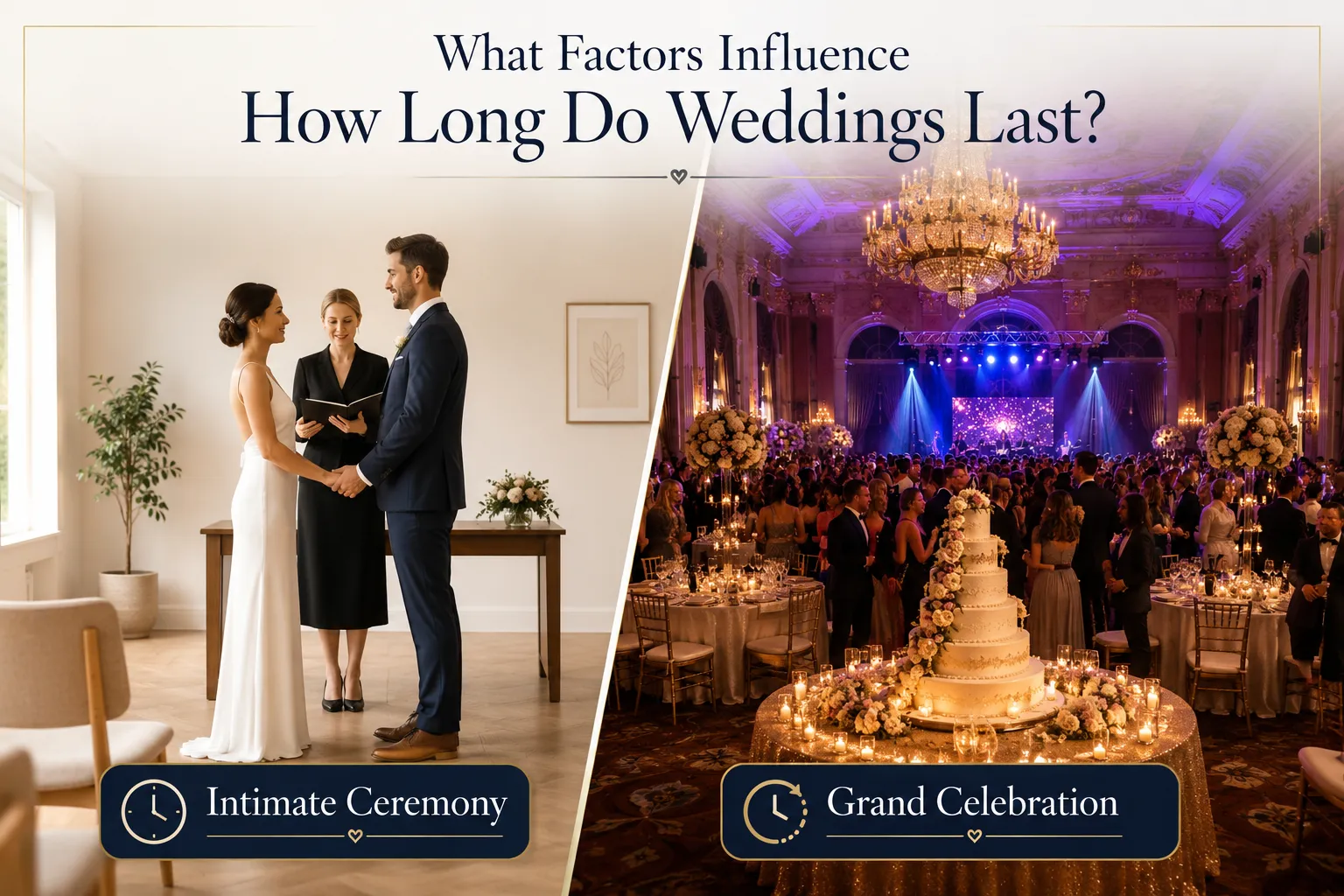
The length of a wedding day is rarely a one-size-fits-all scenario, often influenced by a complex interplay of elements ranging from cultural expectations to practical considerations. Understanding these factors is key to determining how long do weddings last and planning a day that feels right for you and your guests.
Here are the primary influences on wedding duration:
- Cultural and Religious Traditions: Certain traditions naturally extend the day. For instance, Indian weddings often span multiple days with various ceremonies like the mehndi, sangeet, and main wedding ritual. Religious ceremonies can also include additional readings, prayers, blessings, or communion. For example, the Vatican’s guidance on Catholic marriage explains that marriage in the Latin Rite normally takes place during Holy Mass, while the Church of England’s official marriage service includes declarations, readings, vows, rings, blessings, prayers, and registration.
- Ceremony Type:
- Civil Ceremonies: These are typically the shortest, often taking only 10-20 minutes, usually held at a courthouse or registry office.
- Secular Ceremonies: Often personalized with vows, readings, and music, these generally last 20-45 minutes.
- Religious Ceremonies: Can range from 30 minutes to over an hour, depending on the specific faith’s rituals.
- Number of Events:
- A wedding might include only a ceremony and reception, or it could feature additional events like a cocktail hour, a rehearsal dinner the night before, or a post-wedding brunch the next day. Each added event naturally lengthens the overall celebration.
- Many couples planning a wedding opt for a welcome party for out-of-town guests, adding another 2-3 hours to the wedding weekend.
- Venue Logistics: The travel time between ceremony and reception venues can significantly impact the timeline. If they are far apart, more time must be allocated for guest and bridal party transportation. Single-venue weddings often streamline the process.
- Guest Count: While not directly affecting ceremony length, a larger guest count can slow down transitions, such as seating guests, getting through the receiving line, or serving dinner. More guests might also mean a longer dance party or more speeches.
- Photography and Videography: Couples typically want extensive photo and video coverage, which requires dedicated time. This includes pre-ceremony shots, couple’s portraits, family photos, and capturing reception events. These sessions can add 1-2 hours to the schedule, often strategically placed during cocktail hour or before guests arrive. The Church of England’s wedding planning guidance also addresses photography and filming as part of ceremony planning.
- Personal Preferences and Budget: Ultimately, the couple’s vision for their day plays a huge role. Some prefer a short, sweet celebration, while others dream of an all-day extravaganza. Budget also dictates what’s possible, as longer events often mean more catering costs, venue rental hours, and vendor fees. You might consult our guide on How Much Does Wedding Catering Cost for budget insights.
When considering “how long do weddings last,” it’s vital to think about the experience you want to create for both yourselves and your guests. If your vision leans towards an elaborate celebration, plan for a longer day and communicate the timeline clearly to everyone involved. If you prefer intimacy, a shorter, more focused event might be ideal.
How Long Do Weddings Last: Ceremony and Reception Breakdowns
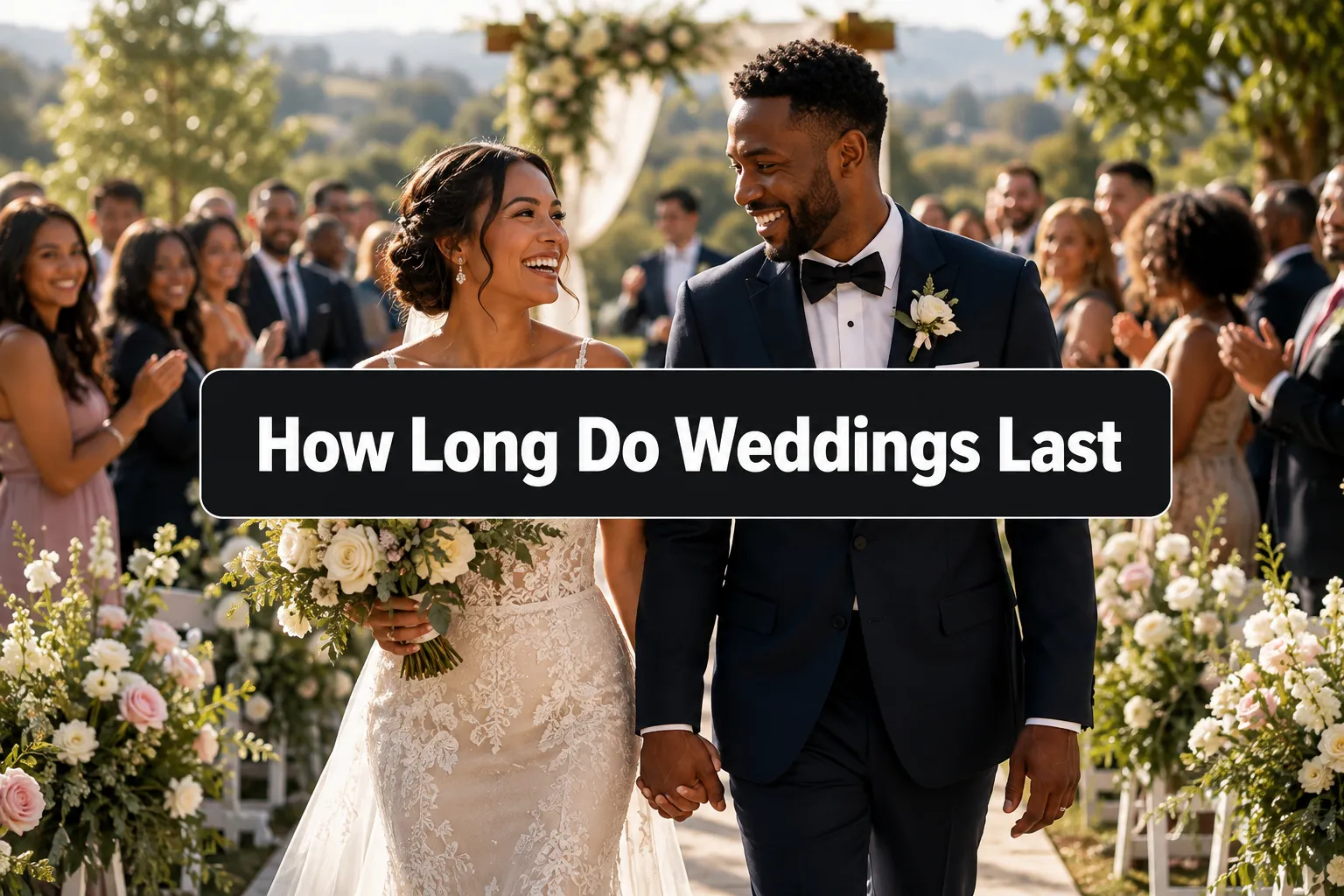
To truly understand how long do weddings last, it’s helpful to break down the major components: the ceremony and the reception. Each segment has its own typical duration, and combining them provides the full picture of the wedding day.
The Ceremony
The wedding ceremony is the heart of the day, where the couple officially exchanges vows. Its length varies primarily by type:
- Traditional Religious Ceremonies:
- Catholic Mass: Can last anywhere from 45 minutes to 1.5 hours if it includes a full Mass. A nuptial ceremony without Mass might be 30-45 minutes. The Vatican’s Catechism explains that Catholic marriage in the Latin Rite normally takes place within the celebration of Holy Mass.
- Protestant Services: Typically range from 30 minutes to an hour, incorporating hymns, readings, a sermon, and vows. Individual denominations may use different service structures. For example, the Church of England’s official marriage service includes readings, a sermon, vows, rings, blessings, prayers, and marriage registration.
- Jewish Ceremonies: Often include traditions such as the chuppah, blessings, wine, the ketubah, and breaking of the glass. The Union for Reform Judaism’s guide to Jewish wedding rituals provides an overview of these practices.
- Other Religious Traditions: Lengths vary widely. For example, some Hindu ceremonies can last several hours due to numerous rituals, while a Quaker ceremony might be shorter and more spontaneous.
- Secular or Non-Religious Ceremonies:
- These are usually between 20 to 45 minutes. They often include an entrance, welcome remarks, readings (poems or personal stories), personal vows (refer to our guide on How To Write Wedding Vows As A Groom), the exchange of rings, and the pronouncement. The officiant plays a crucial role in managing this time; consider checking out What Is A Wedding Officiant Roles Rules Costs.
- Civil Ceremonies:
- Generally the shortest, clocking in at 10-20 minutes. These focus primarily on legal requirements and a brief exchange of vows.
Expert Tip: If you’re concerned about a long ceremony, discuss timing with your officiant early in the wedding planning process. They can often help tailor the service to fit your desired duration while respecting traditions.
The Reception
The reception is where the celebration truly unfolds, and it typically takes up the bulk of the wedding day’s timeline. A useful industry benchmark comes from The Knot’s traditional wedding reception timeline, which describes a typical reception as about five hours, including one hour for cocktails and four hours for dinner and dancing.
- Cocktail Hour (1 hour):
- This usually follows the ceremony immediately, allowing guests to mingle, enjoy drinks and appetizers, and gives the couple and bridal party time for photos. It also serves as a transition if the ceremony and reception are in different spaces within the same venue.
- Grand Entrance (10-15 minutes):
- The formal introduction of the bridal party and the newlyweds.
- Dinner Service (1.5 – 2 hours):
- This includes seating guests, opening remarks, courses being served, and often includes toasts and speeches interspersed between courses. A buffet might be quicker than a plated meal, but both require careful coordination.
- Toasts/Speeches (20-45 minutes):
- Usually from the best man, maid of honor, parents, and sometimes the couple themselves. This segment’s length depends on the number of speakers and how succinct they are.
- First Dance & Parent Dances (15-20 minutes):
- The emotional centerpiece of the reception, followed by dances with parents or guardians. For ideas, see our article on What Is The Most Popular Mother Son Wedding Dance Song.
- Open Dance Floor (1.5 – 3 hours):
- The main party time! This segment’s length often depends on guest energy, the DJ/band, and venue curfew.
- Cake Cutting (10-15 minutes):
- A classic photo opportunity and signal that desserts are available.
- Bouquet/Garter Toss (10 minutes, optional):
- Traditional, often lighthearted rituals that some couples choose to include.
- Farewell/Exit (10-15 minutes):
- The couple’s grand exit, often involving sparklers, bubbles, or a receiving line.
Total Reception Time: Adding these up, a typical wedding reception, from cocktail hour to the grand exit, commonly lasts 4 to 6 hours.
The Full Wedding Day Timeline Example (Traditional)
Let’s put it all together for a standard Saturday wedding:
| Event | Typical Duration | Start Time | End Time | Notes |
|---|---|---|---|---|
| Pre-Ceremony | ||||
| Hair & Makeup | 3-4 hours | 8:00 AM | 12:00 PM | For the bridal party |
| Getting Dressed | 1 hour | 12:00 PM | 1:00 PM | |
| First Look & Couple Photos | 1 hour | 1:00 PM | 2:00 PM | Can be done before or after getting dressed |
| Bridal Party Photos | 30 minutes | 2:00 PM | 2:30 PM | |
| Travel to Ceremony Venue | 30 minutes | 2:30 PM | 3:00 PM | |
| Guest Arrival & Seating | 30 minutes | 3:00 PM | 3:30 PM | |
| Ceremony | ||||
| Ceremony | 30-45 minutes | 3:30 PM | 4:15 PM | Average for a non-religious ceremony |
| Post-Ceremony | ||||
| Receiving Line (Optional) | 15 minutes | 4:15 PM | 4:30 PM | |
| Family Photos | 30 minutes | 4:30 PM | 5:00 PM | At the ceremony site or reception venue |
| Travel to Reception Venue | 30 minutes | 5:00 PM | 5:30 PM | If different venues |
| Reception | ||||
| Cocktail Hour | 1 hour | 5:30 PM | 6:30 PM | Guests arrive, enjoy drinks/appetizers; couple often finishes photos |
| Grand Entrance | 10 minutes | 6:30 PM | 6:40 PM | |
| Dinner Service | 1.5 hours | 6:40 PM | 8:10 PM | Includes salads, main course, and perhaps some toasts |
| Toasts & Speeches | 30 minutes | 8:10 PM | 8:40 PM | |
| First Dance | 5 minutes | 8:40 PM | 8:45 PM | |
| Parent Dances | 10 minutes | 8:45 PM | 8:55 PM | |
| Open Dancing | 1.5 hours | 8:55 PM | 10:25 PM | |
| Cake Cutting | 10 minutes | 10:25 PM | 10:35 PM | |
| More Dancing | 45 minutes | 10:35 PM | 11:20 PM | |
| Grand Exit | 10 minutes | 11:20 PM | 11:30 PM | Send-off for the couple |
| Total Core Wedding Day | ~8 hours | From Guest Arrival at Ceremony to Grand Exit (excluding pre-ceremony prep) |
This table illustrates that while the core ceremony-to-exit might be around 8 hours, the entire day, starting with prep, can easily extend to 12-14 hours for the couple and their closest attendants. For comparison, The Knot’s sample reception timeline uses a five-hour reception structure, showing why individual wedding schedules can differ significantly.
What About Unconventional Wedding Timelines?
Not all weddings adhere to the traditional ceremony-then-reception structure. Many couples are choosing alternative formats that can significantly alter how long do weddings last.
- Elopements: These are typically the shortest. An elopement focuses solely on the vows and legal aspects, often lasting less than an hour, including travel to a scenic spot and a quick ceremony. Some may include a celebratory meal afterwards, but the core event is brief and intimate.
- Micro Weddings: Smaller in scale but still more structured than elopements, micro weddings often feature a shorter guest list (under 50), a meaningful ceremony, and a simplified reception, such as a seated dinner. The entire event might span 3-5 hours.
- Destination Weddings: While the main event might be a standard 5-7 hours, destination weddings often extend into a multi-day celebration. Guests travel a long distance, so couples frequently host welcome dinners, group activities, and farewell brunches, turning the “wedding” into a 2-4 day affair. For more on this, check our guide on What Is A Destination Wedding Package? Costs + Inclusions.
- Weekend Weddings: Similar to destination weddings, these involve booking a venue for the entire weekend. This allows for a more relaxed schedule, with events spread out, like a Friday night rehearsal dinner, a Saturday main event, and a Sunday brunch. The actual “wedding” on Saturday might still be 5-7 hours, but the entire celebration encompasses much more.
- Break-Up Weddings: Some couples choose to separate the legal ceremony from a larger celebration. A small, intimate legal ceremony might happen one day (lasting an hour or two), followed by a larger party or reception weeks or months later. This splits the duration into two distinct events.
- Non-Traditional Events: Some couples skip certain traditional elements altogether. No cake cutting? No garter toss? These small omissions can shave minutes off the reception timeline, contributing to a shorter overall duration.
When planning an unconventional wedding, the key is to be intentional about what you include and exclude. A wedding planner can be instrumental in organizing complex multi-day events or optimizing a shorter, non-traditional timeline.
How Can Couples Manage the Wedding Day Schedule?
Managing the wedding day schedule effectively is crucial to ensuring everything runs smoothly and to prevent the day from feeling rushed or overly long. Couples in 2026 have many tools and resources available to help them navigate this.
Here’s how to best manage your wedding day timeline:
- Create a Detailed Timeline: Start by outlining every single event, from hair and makeup to the final exit. Assign realistic time slots for each, including buffer time. Think about who needs to be where, and when. For instance, allowing an extra 15-30 minutes for bridal party photos can prevent stress if unexpected delays occur. Our article on When To Start Planning A Wedding (2026 Timeline) offers excellent starting points.
- Consult Your Vendors: Your vendors are experts in their respective fields.
- Photographer/Videographer: They can advise on the best times for photos based on light and can help build a photo schedule that fits your day without feeling intrusive.
- Venue Coordinator: They know the venue’s capabilities and limitations, including kitchen timing for dinner service and closing times.
- Caterer: Essential for timing dinner service, ensuring meals are served hot and efficiently, especially with a large guest count.
- DJ/Band: Can help pace the reception events, from introductions to dance sets and farewell songs.
- Hire a Wedding Planner or Day-Of Coordinator: This is perhaps the most effective way to manage your schedule. A professional wedding planner, or even a day-of coordinator, takes the burden off your shoulders. They act as the central point of contact, ensure vendors are on schedule, troubleshoot issues, and keep the entire day flowing. They are invaluable for knowing exactly what a wedding planner does.
- Prioritize Events: Decide which moments are non-negotiable and which can be flexible or even omitted. If a long dance party is paramount, you might shorten cocktail hour or have fewer speeches. If an intimate dinner is key, perhaps skip the open dancing.
- Communicate the Schedule: Share the detailed timeline with your bridal party, immediate family, and all vendors. Provide a condensed version for guests, especially for multi-day events, perhaps on your wedding website or an event program.
- Build in Buffer Time: This is crucial. Unexpected delays are common, whether it’s a dress issue, traffic, or a toast running long. Adding 10-15 minutes of buffer between major transitions can absorb these small hiccups without derailing the entire schedule.
- Consider Guest Comfort: A very long day can be tiring for guests, especially those with children or older relatives. Factor in travel time, adequate breaks, and comfortable seating. An excessively long cocktail hour or gaps between events can lead to guest fatigue.
Effective schedule management ensures that your wedding day feels purposeful, enjoyable, and creates lasting memories without unnecessary stress. My own wedding involved a detailed timeline, and even with a planner, we still added extra buffer for photos, which saved us when the florist was running a little behind!
FAQS: How Long Do Weddings Last
How long does an average wedding ceremony last?
An average wedding ceremony typically lasts between 20 to 60 minutes, with civil ceremonies often being shorter and religious ceremonies sometimes extending beyond an hour.
How long does a wedding reception usually last?
A typical wedding reception, including cocktail hour, dinner, speeches, and dancing, usually lasts between 4 to 6 hours.
Is a 7-hour wedding too long?
A 7-hour wedding, including both ceremony and reception, is a common and often enjoyable length. Anything significantly longer, without breaks or variety, might risk guest fatigue.
What is the shortest a wedding can be?
The shortest a wedding can be is an elopement or civil ceremony focused solely on legal requirements, which can take as little as 10-20 minutes.
How much time should I allow for pre-wedding photos?
Allow at least 1-2 hours for pre-wedding photos, including first look, couple portraits, and bridal party shots, especially if you have multiple locations.
Should there be a gap between the ceremony and reception?
A gap, usually 1 to 1.5 hours, is common for a cocktail hour, allowing guests to mingle while the couple takes photos and transitions to the reception. Longer gaps can be inconvenient for guests.
How long should dinner service take at a wedding?
Dinner service, from guests being seated to the main course being cleared, typically takes 1.5 to 2 hours, depending on whether it’s plated or buffet style.
How long should wedding speeches last?
Individual wedding speeches should ideally be kept to 3-5 minutes each to maintain guest engagement. Collectively, speeches usually run for 20-45 minutes.
Does a wedding planner help with timing?
Yes, a wedding planner is invaluable for creating, managing, and executing the wedding day timeline, ensuring everything stays on schedule and troubleshooting any issues.
How do destination weddings affect the duration?
While the main wedding event may still be 5-7 hours, destination weddings often encompass multi-day celebrations with additional events like welcome dinners and farewell brunches.
Conclusion
Understanding how long do weddings last is fundamental to effective wedding planning. While a standard wedding day, from ceremony to reception, generally spans 5 to 7 hours, this is merely a guideline.
The actual duration is a deeply personal choice, shaped by cultural heritage, religious tenets, logistical considerations, and your unique vision as a couple.
From the intimate brevity of an elopement to the multi-day grandeur of a destination wedding, flexibility and foresight are your best allies. By meticulously planning each segment, building in necessary buffer times, and collaborating closely with your vendors, or even better, enlisting the expertise of a wedding planner, you can orchestrate a day that flows effortlessly and joyfully.
Ultimately, the “right” length for your wedding is the one that allows you to fully celebrate your commitment while creating an enjoyable and memorable experience for everyone involved.
Related Reading:
- How Long Does Wedding Planning Take
- What Different Types Of Weddings Are There? | Complete Guide
- Are Wedding Planners Worth It

1 comment
Just wanted to share how much I enjoy playing here lately. The navigation is super simple and I never have to wait long to cash out. Definitely one of the most trustworthy spots I have tried so far. mymudahking