
There are many different types of weddings, ranging from grand traditional ceremonies to intimate elopements, each offering unique experiences shaped by cultural traditions, personal preferences, guest count, and budget.
The most common categories include traditional, destination, elopement, themed, cultural, and intimate weddings, with variations existing within each to suit every couple’s vision for their special day.
Key Takeaways:
- Traditional weddings typically feature formal ceremonies, large guest lists, and classic elements like white gowns and multi-course receptions.
- Destination weddings involve celebrating in a location away from home, often combining the wedding and honeymoon.
- Elopements are small, private ceremonies, often with just the couple and an officiant, prioritizing intimacy and minimizing stress.
- Themed weddings incorporate a specific concept or style, allowing couples to express their personalities through decor, attire, and food.
- Cultural and religious weddings are deeply rooted in specific customs and rituals, reflecting a couple’s heritage and beliefs.
- Intimate or micro weddings strike a balance between a full-scale event and an elopement, featuring a small guest list (typically under 50).
- Backyard or home weddings offer a personal, relaxed, and often budget-friendly option, leveraging a familiar setting.
- The choice of wedding type profoundly impacts planning, budget, guest experience, and overall atmosphere.
- Understanding these types helps couples define their priorities and navigate the initial stages of wedding planning.
What Are the Most Common Traditional Wedding Types?
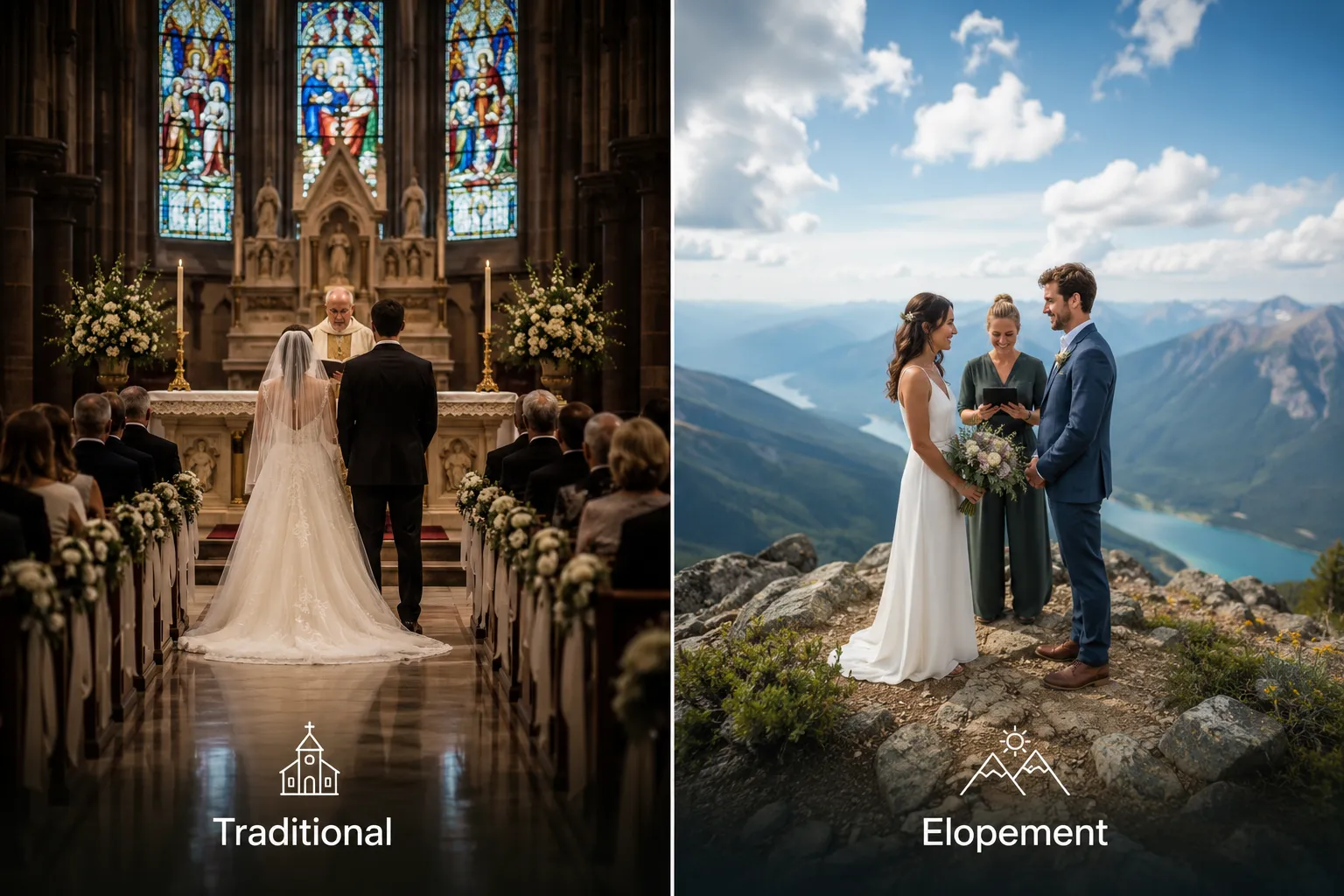
The most common traditional wedding types generally involve formal ceremonies, adherence to established customs, and a significant guest list, focusing on celebrating with extended family and friends.
These weddings often take place in religious institutions or grand venues, incorporating elements like white wedding dresses, specific processional orders, and multi-course receptions.
For example, a classic traditional wedding may include vows, an exchange of rings, a formal processional, and a reception with dinner and dancing. The typical wedding ceremony order commonly includes events such as the processional, vows, ring exchange, pronouncement, and recessional.
Choosing a traditional wedding often means embracing a structured approach to your special day.
Religious Ceremonies
Many traditional weddings take place in places of worship, including churches, synagogues, mosques, and temples. These ceremonies usually follow specific religious rites and customs and may be led by clergy or another authorized religious officiant.
The exact rituals differ between religions and denominations. Couples should consult their religious institution early because some ceremonies have specific requirements.
Formal Ballrooms and Estates
Traditional receptions are often hosted in ballrooms, historic estates, luxury hotels, or other formal venues. These locations provide space for cocktail hours, seated dinners, speeches, dancing, and other reception activities.
Decor often emphasizes an elegant and formal appearance. Couples may use elaborate floral arrangements, formal table settings, professional lighting, and fine dining.
Large Guest Lists
A traditional wedding can accommodate a substantial number of guests. A larger guest list requires careful planning for invitations, seating arrangements, catering, transportation, and venue capacity.
The guest count also affects the wedding budget because many major expenses increase as more people attend.
Classic Attire
Classic wedding attire commonly includes a formal gown for the bride and a tuxedo or formal suit for the groom. Bridesmaids and groomsmen may wear coordinated outfits selected by the couple.
The exact attire should follow the couple’s chosen dress code and cultural or religious traditions.
Structured Events
Traditional weddings generally follow a clear timeline. The day may include the ceremony, reception entrance, first dance, speeches, meal service, cake cutting, dancing, and farewell.
A structured schedule helps vendors and guests understand what happens next while giving the celebration a familiar flow.
I remember attending my cousin Sarah’s wedding, a beautiful traditional affair at a historic mansion. The grandeur, the sheer number of beaming faces, and the heartfelt toasts truly captured the essence of a family coming together.
It was a day filled with classic elegance, meticulously planned down to every detail, from the string quartet during cocktail hour to the elaborate dessert display.
What Different Types of Weddings Are There for Unique Destinations or Intimate Settings?
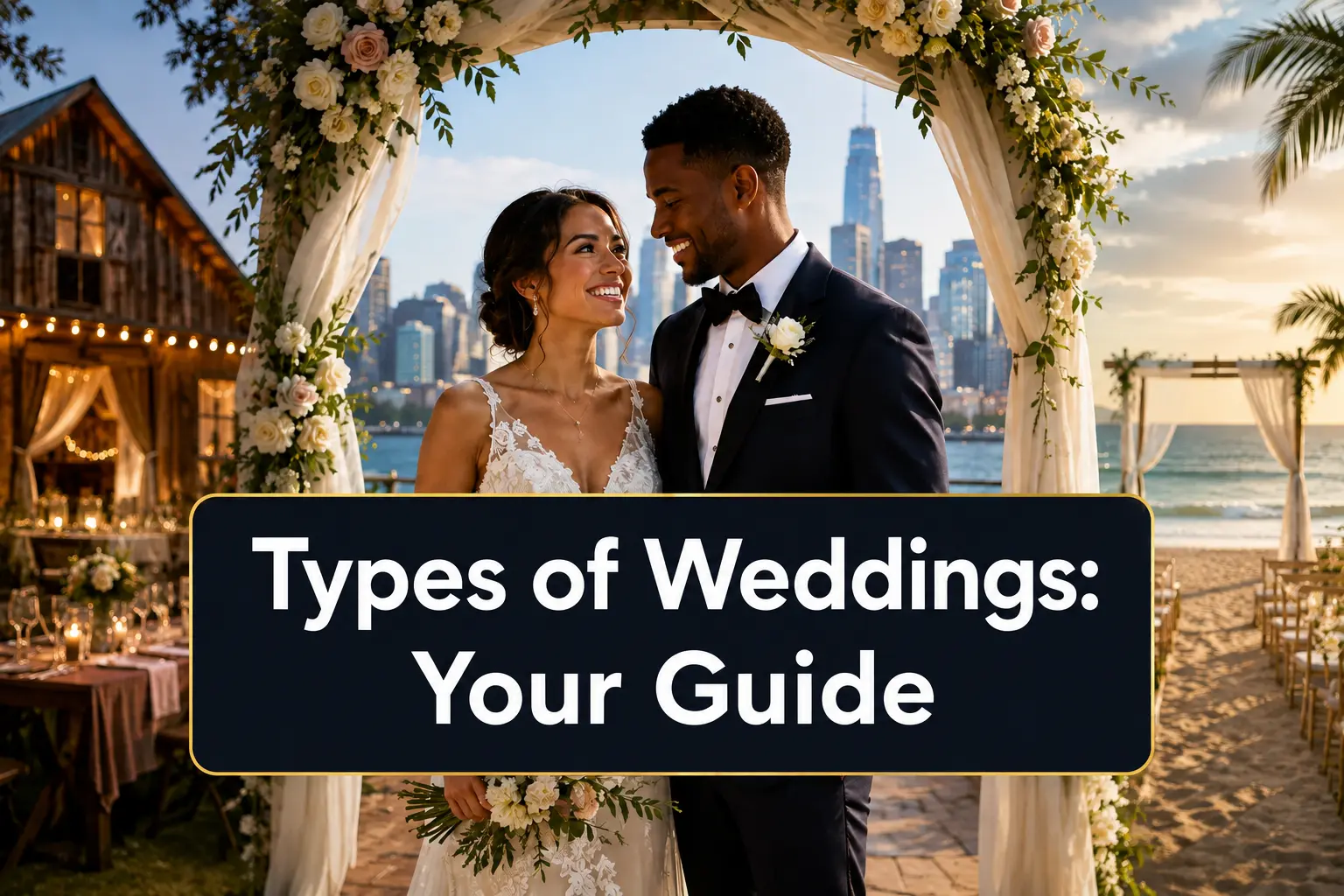
When considering what different types of weddings are there that prioritize unique locations or a smaller guest experience, destination weddings and elopements stand out as popular choices. These options cater to couples who seek adventure, intimacy, or a memorable backdrop for their vows that goes beyond a local venue.
Destination Weddings
A destination wedding takes place somewhere away from the couple’s hometown and generally requires travel for most guests. The concept can include domestic destinations as well as international locations.
The Knot notes that destination weddings traditionally involve ceremonies or receptions outside the couple’s hometown and require travel for many participants. Its recent research also shows that destination weddings are not limited to tropical or international locations.
Scenic Backdrops
Destination weddings can take place on beaches, at historic properties, in vineyards, at mountain resorts, or in other locations that hold special meaning for the couple.
The location often becomes an important part of the wedding experience and photography.
Extended Celebration
Unlike a wedding that lasts only one day, destination celebrations can include welcome parties, excursions, the main ceremony, and farewell brunches.
This format gives couples more time to spend with family and friends.
Reduced Guest Count
Destination weddings can naturally produce a smaller guest list because some invitees may be unable to travel or afford accommodation.
However, this is not always the case. Some destination weddings can involve large groups and multiple events.
All-Inclusive Packages
Many resorts and destination venues offer wedding packages that combine several services. These may include the venue, catering, decor, photography, entertainment, and planning support.
Couples should carefully review what each package includes before making a decision.
Legal Considerations
Getting married abroad can involve additional legal requirements. The U.S. Department of State’s guidance on marriage abroad recommends checking the laws and requirements of the country where the marriage will take place before traveling. Requirements can include residency periods, documents, translations, authentication, and proof of eligibility to marry.
Some couples choose to complete the legal marriage in their home country and hold the destination ceremony separately. This can reduce the legal complexity of getting married overseas.
Elopements
An elopement is traditionally defined as running away to get married secretly. Today, it more commonly refers to a small, intentionally private wedding ceremony, often involving just the couple, an officiant, and perhaps a few close witnesses.
Focus on Intimacy
The main appeal of an elopement is its focus on the couple and their vows. With fewer guests, couples can avoid many of the pressures associated with a large wedding.
Minimal Planning
Fewer guests generally mean fewer logistical requirements. Couples may need less catering, decor, seating, entertainment, and venue space.
This can make the planning process simpler and faster.
Budget-Friendly
Elopements can cost considerably less than large weddings because couples can reduce spending on venues, catering, decorations, and guest-related expenses.
However, an elopement is not automatically inexpensive. Travel, photography, accommodation, attire, and specialized locations can still create significant costs.
Unique Locations
A small guest list makes unusual locations easier to consider. Couples may choose a mountaintop, remote beach, national park, city hall, or private property.
Post-Elopement Celebration
Some couples elope privately and later organize a reception or celebration with family and friends.
This approach allows them to enjoy an intimate ceremony while still creating an opportunity to celebrate with loved ones.
I’ll never forget when my friends, Alex and Ben, decided to elope to Iceland. They sent out “We eloped!” announcements with stunning photos of their vows against a dramatic waterfall. It was incredibly authentic to them and inspired many of their friends to consider more personalized approaches to their own weddings.
Exploring Themed, Cultural, and Religious Wedding Variations
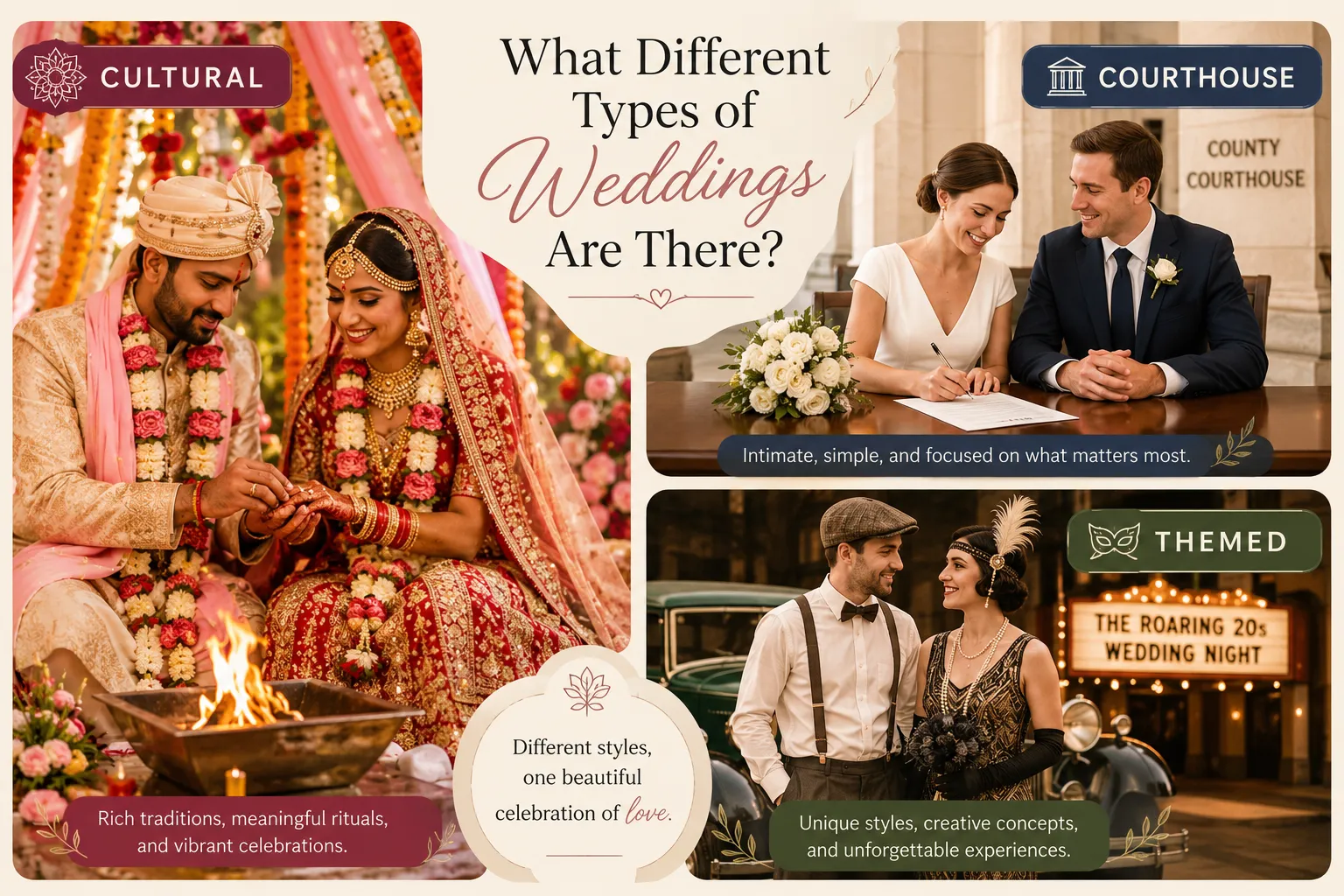
Delving deeper into what different types of weddings are there reveals a rich tapestry of options for couples seeking to infuse their personality, heritage, or spiritual beliefs into their special day. Themed, cultural, and religious weddings offer distinct frameworks for celebration, allowing for profound personalization and adherence to meaningful traditions.
Themed Weddings
A themed wedding is one where the couple chooses a specific concept, era, or aesthetic to guide all aspects of their wedding, from decor and attire to food and music.
Creative Expression
Themes give couples an opportunity to express shared interests and personality.
Popular examples include vintage, rustic, bohemian, fairytale, Hollywood glamour, and historical themes.
Cohesive Design
A well-planned theme creates consistency across the wedding. Invitations, table settings, flowers, signage, music, and favors can all support the same concept.
Attire and Decor
The theme can influence what the couple and wedding party wear. Some couples may also suggest a particular dress style for guests.
For example, a 1920s-inspired wedding might incorporate Art Deco decorations, vintage-inspired clothing, and jazz music.
Entertainment and Food
Themes can also influence entertainment and menu choices. A vintage celebration might feature a live swing band, while a rustic wedding could use family-style dining or outdoor food stations.
Cultural and Religious Weddings
These wedding types are deeply rooted in the traditions, customs, and spiritual practices of a specific culture or religion. They are often characterized by elaborate rituals, traditional attire, and multi-day celebrations that reflect a couple’s heritage.
Rich Symbolism
Many cultural and religious ceremonies include rituals with specific meanings. Examples include Hindu wedding rituals, Chinese tea ceremonies, and Jewish traditions such as breaking a glass.
Traditional Attire
Traditional clothing can play an important role in cultural weddings. Examples include sarees or lehengas, kilts, and hanbok.
The clothing often carries cultural and family significance.
Family Involvement
Family members may have important roles during cultural and religious weddings. They may participate in ceremonies, traditions, planning, music, food preparation, or other parts of the celebration.
Multi-Day Celebrations
Some cultural and religious weddings extend across several days. Pre-wedding ceremonies, the main wedding, and post-wedding celebrations can each have their own rituals and activities.
Diverse Music and Cuisine
Music, dance, and food can provide important expressions of cultural identity. They also give guests an opportunity to experience traditions connected to the couple’s heritage.
My friend Priya’s wedding was a stunning three-day Indian celebration. The vibrant colors, the intricate henna, the lively music, and the beautiful rituals told a story of her family’s rich traditions, making it an incredibly immersive and joyous experience for all of us.
What Are Other Non-Traditional and Modern Wedding Options?
Beyond the classic and culturally specific ceremonies, what different types of weddings are there that embrace a more modern or non-traditional approach? Many couples today are opting for unique celebrations that reflect their individual styles, prioritize guest experience, or offer flexibility not found in conventional formats. These options often move away from strict etiquette, focusing instead on personalization and atmosphere.
Casual and Bohemian Weddings
These weddings prioritize a relaxed, laid-back atmosphere, often in outdoor or unconventional settings, with a focus on natural beauty and comfort.
- Relaxed Vibe: Casual weddings typically forego formal dress codes, strict timelines, and elaborate multi-course meals. The emphasis is on fun, comfort, and a relaxed celebration with loved ones.
- Outdoor Settings: Barns, vineyards, gardens, beaches, and even private ranches are popular venues. These settings provide a naturally beautiful backdrop that requires minimal additional decor.
- Bohemian Aesthetics: Bohemian weddings often feature flowing dresses, floral crowns, eclectic decor, dreamcatchers, string lights, and a general rustic-chic appeal. Food might include food trucks, BBQ, or family-style dining.
- DIY Elements: Many casual weddings incorporate DIY projects, adding personal touches and often helping to manage the budget. This could range from handmade invitations to self-decorated altars.
Courthouse Weddings and Civil Ceremonies
These are legal ceremonies performed by a government official, typically in a courthouse or municipal building, without religious affiliation.
- Simplicity and Legality: The primary purpose is to legally formalize the marriage. These ceremonies are usually very brief, straightforward, and require minimal planning.
- Intimate Guest List: Often, only a few witnesses are present, or sometimes just the couple and the officiant. This makes it an incredibly private and intimate option.
- Budget-Friendly: Courthouse weddings are typically the most inexpensive way to get married, as there are no venue fees, catering costs, or extensive decor expenses.
- Often Followed by a Celebration: Many couples choose a civil ceremony for the legal aspect, then host a separate, more personal celebration (a reception, dinner, or party) at a later date with family and friends.
Adventure Elopements
A specialized form of elopement, adventure elopements involve traveling to a remote or adventurous location to exchange vows, often incorporating an outdoor activity.
- Experiential Focus: These weddings are all about the experience, hiking to a breathtaking viewpoint, exchanging vows on a glacier, or saying “I do” during a kayaking trip. The journey and the natural beauty are central to the celebration.
- Photographic Opportunities: The dramatic landscapes and unique activities make for stunning and unforgettable wedding photos.
- Minimalist Approach: Gear and attire are often practical and suited for the environment, emphasizing comfort and functionality over traditional formality.
- Smallest Guest List: Typically, it’s just the couple and their officiant, and often a photographer, making for the ultimate intimate experience.
My friends Maya and Sam are avid climbers, so their adventure elopement involved a sunrise ceremony at the base of a majestic mountain in Patagonia, followed by a day of hiking. It was quintessential them, unconventional, breathtaking, and deeply personal.
What Different Types of Weddings Are There Based on Scale and Setting?
When deciding what different types of weddings are there, considering the scale of the event and the chosen setting is crucial, as these elements significantly shape the atmosphere, budget, and guest experience. Options range from grand, expansive affairs to incredibly personal gatherings held in familiar surroundings.
Large-Scale and Grand Weddings
These weddings are characterized by their extensive guest lists, elaborate decor, multiple vendors, and typically a higher budget, aiming for a luxurious and impactful celebration.
- Extensive Guest Lists: Large weddings typically host 150+ guests, allowing couples to celebrate with a wide circle of family, friends, and professional acquaintances. This necessitates larger venues and substantial catering.
- Elaborate Production: These events often involve a full team of vendors, including wedding planners, florists, lighting designers, multiple photographers and videographers, and extensive entertainment. Couples can use professional wedding planners to coordinate vendors, schedules, logistics, and other details. For managing vendors, consider our guide on What Vendors Do You Need For A Wedding.
- Luxury Venues: Grand ballrooms, historic estates, sprawling vineyards, or high-end resorts are common venues, providing the space and facilities required for a large event.
- Multiple Events: Large-scale weddings might include several associated events, such as a formal rehearsal dinner, welcome reception, and post-wedding brunch, extending the celebration.
- High Budget: Naturally, the scale and luxury associated with grand weddings mean a substantial financial investment. Couples choosing this option often prioritize a memorable, show-stopping event for all their guests.
Intimate and Micro Weddings
These weddings strike a balance between a full-scale event and an elopement, typically featuring a small, curated guest list (often under 50 people) and a focus on quality over quantity.
- Curated Guest List: Intimate weddings invite only the closest family and friends, ensuring that the couple can genuinely connect with everyone present. This creates a deeply personal and warm atmosphere.
- Elevated Experience: With fewer guests, couples can allocate more of their budget per person, investing in high-quality food, personalized favors, unique entertainment, or a more luxurious venue experience.
- Flexibility in Venue: Smaller guest counts allow for a wider range of venue options, from charming restaurants and boutique hotels to private gardens or vacation rentals, which might not accommodate a larger group.
- Reduced Stress: Managing a smaller event often means less logistical stress for the couple, allowing them to enjoy the planning process and the day itself more fully.
Backyard and Home Weddings
These weddings leverage a personal residence or property, offering a unique blend of intimacy, comfort, and often significant cost savings.
- Personal Connection: Getting married at home or a family property adds an incredibly personal and sentimental layer to the wedding, surrounded by familiar memories.
- Relaxed Atmosphere: Home weddings naturally feel more relaxed and informal, creating a comfortable environment for guests. They often involve a more casual style of catering, like food trucks or a family-style meal.
- Budget Advantages: Eliminating venue fees can significantly reduce costs. Couples can also save on decor by utilizing existing landscaping and furniture. However, it’s important to factor in rentals for tents, restrooms, and kitchen equipment if the home isn’t fully equipped.
- Customization: A private residence offers maximum flexibility for customization, allowing couples to design the space exactly as they envision, free from venue restrictions.
- Logistical Considerations: Planning a home wedding requires careful thought regarding parking, restroom facilities, electricity, catering setup, and contingency plans for weather. Professional support for rentals and setup is often crucial.
My sister’s backyard wedding was beautiful. Her parents’ garden was transformed with string lights and wildflowers, and it felt so warm and inviting. Everyone pitched in, making it a true community effort and a reflection of their family’s love.
Understanding the Scope: Small, Medium, and Large Weddings
When exploring what different types of weddings are there, categorizing them by guest count, small, medium, and large, provides a useful framework for understanding the overall scope and implications for planning. This classification directly influences venue choice, budget allocation, and the overall feel of the celebration.
Small Weddings (Under 50 Guests)
Small weddings, often overlapping with intimate weddings, micro weddings, and elopements, prioritize deep connections and a highly personalized experience.
- Intimacy: The defining characteristic is the ability for the couple to interact meaningfully with every single guest. This fosters a warm, personal atmosphere.
- Budget Flexibility: While generally more affordable due to fewer guests, small weddings also allow couples to splurge on higher-quality elements per person, such as gourmet dining, premium drinks, or luxurious decor.
- Venue Versatility: Almost any location can serve as a venue, from private dining rooms in restaurants and charming bed-and-breakfasts to art galleries, mountaintops, or even a cozy backyard.
- Reduced Stress: Fewer logistical complexities translate to less stress during planning and on the wedding day itself, enabling the couple to truly enjoy the experience.
Medium Weddings (50-150 Guests)
Medium-sized weddings offer a balance between the intimacy of a small gathering and the festive energy of a larger celebration.
- Balanced Experience: This size allows couples to include a broader circle of family and close friends while still maintaining a sense of connection with their guests.
- Standard Venue Options: Many traditional wedding venues, such as banquet halls, renovated barns, and smaller estates, are ideally suited for this guest range.
- Moderate Budget: Costs will be higher than a small wedding but often more manageable than a large one, providing room for quality vendors without excessive financial strain.
- Social Energy: There’s enough energy for a lively dance floor and a festive atmosphere, yet it’s still possible to move around and greet most guests.
Large Weddings (Over 150 Guests)
Large weddings are grand affairs designed for celebrating with an expansive network of family, friends, and often professional acquaintances.
- Grand Celebration: These events are often a statement, meant to be a significant gathering that unites many people in celebration.
- Extensive Logistics: Planning requires meticulous coordination, often involving a professional wedding planner to manage numerous vendors, complex seating charts, and a detailed timeline. Consider [What Does A Wedding Planner Do](https://bjornandcompany.com/what-does-a wedding-planner-do/).
- Specialized Venues: Large weddings necessitate venues with ample capacity, such as large ballrooms, convention centers, or sprawling outdoor estates with tenting options.
- Significant Investment: The sheer scale of guests directly correlates with higher costs for catering, decor, staffing, and all other services. Effective budgeting and cost-saving strategies are crucial. If you’re wondering how to manage, explore How To Save Money On A Wedding.
When my sister planned her wedding, she initially envisioned a huge celebration. But after sketching out the guest list for 200 people and seeing the projected costs, she quickly scaled it back to a more manageable 80 guests. It was still vibrant and joyful, but far less overwhelming and more personal.
Conclusion
Understanding what different types of weddings are there empowers couples to make informed decisions that align with their vision, values, and budget for their celebration.
From the grandeur of a traditional ballroom affair to the adventurous intimacy of an elopement, each wedding type offers a unique pathway to starting a marriage. Whether your dream involves a culturally rich ceremony, a themed extravaganza, or a cozy backyard gathering, the possibilities are vast and varied.
The key is to discuss openly with your partner what truly matters to both of you, considering factors like guest count, desired atmosphere, and financial comfort. Don’t be afraid to mix and match elements from different types to create a hybrid celebration that feels authentically “you.”
Once you have a clearer idea of your preferred wedding type, you can then move on to practical steps like setting a budget, choosing a date, and beginning to explore venues. For a complete guide on how to kickstart your planning journey, check out What To Do First When Planning A Wedding: A Complete Guide.
Related Reading
- What To Wear To A Wedding As Guest Female 2026
- What To Wear To A Wedding As A Guest Male
- Wedding Budget Checklist
FAQS
What is the most common type of wedding?
The most common type of wedding globally tends to be a traditional religious or civil ceremony, often with a reception, reflecting cultural and personal norms for celebrating with family and friends.
What is a micro wedding?
A micro wedding is an intentionally small wedding, typically with 20-50 guests, which allows couples to have a more intimate and often higher-quality experience per guest while reducing overall costs and planning complexity.
What is the difference between an elopement and a micro wedding?
An elopement is usually much smaller, often just the couple and an officiant, prioritizing extreme intimacy and simplicity, sometimes in a remote location. A micro wedding includes a small group of close family and friends, offering a more structured event than an elopement but still much smaller than a traditional wedding.
Can I have a themed wedding without it being too cheesy?
Absolutely. Successful themed weddings integrate the concept subtly and elegantly, focusing on atmosphere and personal touches rather than overt, costume-party aesthetics. Choose a theme that genuinely reflects your interests and infuse it through decor, music, and perhaps a dress code suggestion, rather than a requirement.
How much do different types of weddings cost?
Costs vary dramatically by type. Elopements are often the least expensive, ranging from hundreds to a few thousand dollars. Micro weddings typically fall between $5,000 and $20,000. Traditional or large-scale weddings can range from $20,000 to well over $100,000, depending on location, guest count, and level of luxury. Destination weddings costs are also highly variable depending on location and package inclusions.
Is a backyard wedding cheaper than a venue wedding?
A backyard wedding can be cheaper, primarily by eliminating venue fees. However, unexpected costs can arise from renting tents, tables, chairs, lighting, restrooms, catering equipment, and needing additional insurance, potentially making it comparable to a budget-friendly venue wedding if not carefully planned.
What is a civil ceremony?
A civil ceremony is a non-religious wedding conducted by a government official (like a justice of the peace or a mayor) in a non-religious setting, such as a courthouse. Its primary purpose is to legally validate the marriage.
What is a destination wedding package?
A destination wedding package typically bundles various services like venue, catering, decor, officiant, and sometimes accommodations and travel for the couple and guests, offered by resorts or specialized planners in popular destination locations.
What should guests wear to different wedding types?
Guest attire depends entirely on the wedding type and the couple’s requested dress code. For formal traditional weddings, formal wear is expected. For casual or backyard weddings, smart casual attire might be appropriate. Always check the invitation or the couple’s wedding website for guidance.
How do I choose the right wedding type for me?
Consider your priorities: intimacy vs. grand celebration, budget, desired level of planning stress, and what truly represents you as a couple. Start by discussing your shared vision and non-negotiables, and then research options that align with those core desires.

1 comment
Don’t let muscularity irritation dense you blue. enforce our https://www.cornbreadhemp.com/collections/thc-drinks to have fast CBD joint moderation right on where you indigence it. stiff CBD emollient, CBD unguent, and CBD topical vegetable oil engage cursorily to solace huffy brawn and speed up retrieval. staring for jock and active life style, this point CBD moderation keeps you travel well. repossess your mobility with high-potency CBD skincare and CBD pain moderation production. Order lifelike CBD formula nowadays and experience the powerful strong-arm benefits of everlasting CBD!