
To make a wedding registry, you should begin by assessing your needs, then select a registry type and platform that aligns with your lifestyle. Next, curate a diverse list of gifts across various categories and price points, including cash funds or experiences if desired. Finally, review all details, organize your selections, and strategically share your completed registry with guests.
Key Takeaways:
- Start by identifying items you genuinely need or want to upgrade, not just what’s expected.
- Choose between single-store, universal, or hybrid registries based on your preferences.
- Diversify your gift selection across a wide range of price points to accommodate all guest budgets.
- Consider including cash funds or experience gifts, especially if you already live together.
- Share your registry discreetly via your wedding website or by word of mouth, avoiding direct inclusion on formal invitations.
- Plan to create your registry early, ideally soon after engagement and before any pre-wedding events.
- Review shipping, returns, and completion discounts offered by your chosen platforms.
- Avoid common mistakes like registering too late, not having enough items, or only listing expensive gifts.
- Bjorn & Company advises tailoring your registry to your unique situation, whether it’s for a first home or enhancing an existing one.
What Is a Wedding Registry?
A wedding registry is a curated list of desired gifts that a couple creates to guide guests on what to purchase for their wedding. Historically, registries provided newlywed couples with essential household items to start their life together, but today, they’ve evolved to include everything from home upgrades and travel experiences to cash funds for future goals.
This system ensures couples receive gifts they truly need or want, reducing duplicate items and gift-giving guesswork for guests. To understand more about the mechanics, explore how a wedding registry works.
How to Make a Wedding Registry in 10 Steps
Making a wedding registry is a systematic process that ensures you receive thoughtful, useful gifts. Follow these steps to build a comprehensive and guest-friendly list, as recommended by bjornandcompany.
1. Decide What You Actually Need
Before browsing, take inventory of what you already own. Determine what items you need to replace, what you want to upgrade, and what new additions would genuinely fit your lifestyle. For example, if you already have a full kitchen, consider registering for higher-quality versions of frequently used items or specialty gadgets.
2. Choose Your Registry Type
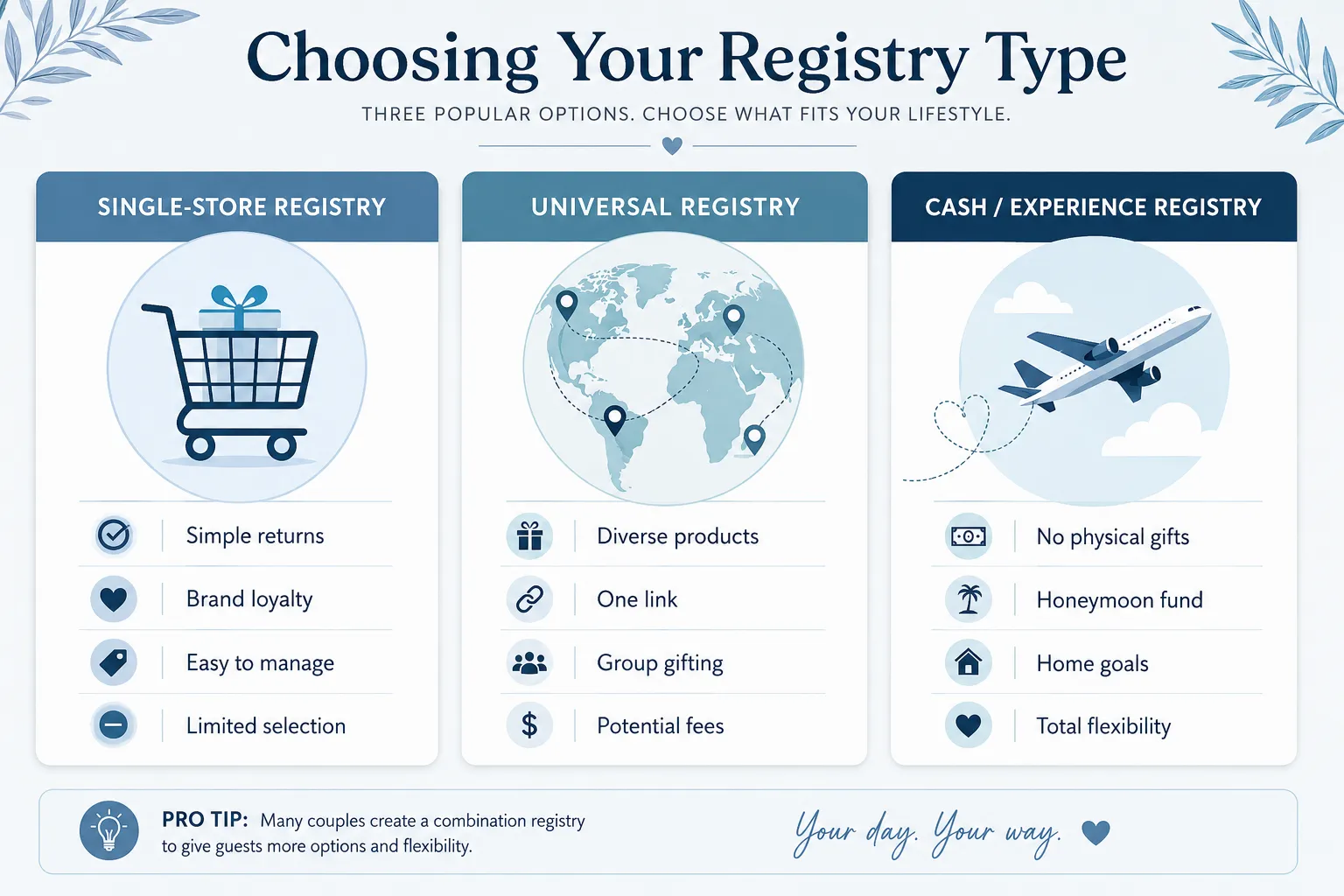
Your lifestyle dictates the best registry type. You can opt for a single-store registry for simplicity, a universal registry for items from multiple retailers, or a hybrid that combines physical gifts with experiences or cash. Each type has its advantages, so consider which offers the best fit for your needs and preferences.
3. Pick a Registry Platform
Selecting the right registry platform is crucial for ease of use and guest experience. Evaluate platforms based on factors like fees (especially for cash contributions), return policies, shipping options, product selection, group gifting features, and completion discounts.
Bjorn & Company often recommends platforms that offer a seamless experience for both couples and guests.
4. Set Your Registry Budget
While you’re not setting a budget for yourself to spend, it’s about curating a diverse price range for your guests. Aim to include items at various price points, from small, affordable gifts to larger, group-gift-friendly options. This strategy ensures all guests can find something within their comfort zone.
5. Choose Your Registry Categories
Categorize your desired items to ensure a balanced and comprehensive list. Common categories include kitchen, dining, bedroom, bathroom, and home decor. Consider less traditional categories like travel or outdoor equipment if they align with your interests. For a detailed breakdown of options, see What to Put On A Wedding Registry: Ultimate Expert Guide.
6. Add Gifts at Different Price Points
A well-rounded registry includes items across various price tiers. Ensure you have plenty of options under $25, a good selection between $25-$100, and some higher-value items for group gifts. This thoughtful approach caters to every guest’s budget.
7. Add Cash Funds and Experiences
If you already have most household essentials, consider registering for cash funds for a honeymoon, a down payment on a home, or specific experiences. Many platforms now facilitate this, providing a modern alternative to traditional physical gifts.
8. Review Shipping, Returns and Fees
Carefully examine each registry platform’s policies on shipping, returns, and associated fees, particularly for cash funds. Understanding these details upfront prevents future complications for you and your guests.
9. Organize and Review Your Registry
Before publishing, organize your registry into clear categories and review the entire list. Check for duplicates, ensure gift quantities are appropriate, and make sure all links are active. A well-organized registry enhances the guest experience. For more guidance on creating a registry that guests love, check out How To Make A Wedding Registry That Guests Love.
10. Publish and Share Your Registry
Once finalized, publish your registry. Share the information discreetly through your wedding website or by word of mouth. Avoid including registry details directly on formal invitations, as this can be perceived as impolite.
What Should You Put on a Wedding Registry?
Deciding what to put on a wedding registry in 2026 should reflect your current lifestyle and future aspirations, encompassing both practical needs and desired luxuries. A balanced registry includes a variety of items across different categories and price points.
Kitchen
This category often includes cookware sets, bakeware, knife blocks, small appliances like stand mixers or air fryers, and coffee makers.
Dining
Consider dinnerware sets, flatware, glassware (for everyday and special occasions), and serving pieces for entertaining.
Bedroom
Upgrade your bedding with high-quality sheets, duvet covers, pillows, and cozy blankets.
Bathroom
Essentials include luxurious towel sets, bath mats, and practical storage solutions.
Home
Think about a quality vacuum cleaner, organizational tools, décor items, and potentially small furniture pieces that you need or want to upgrade.
Travel
For adventurous couples, luggage sets, travel accessories, or even experiences like a couples’ massage during a trip.
Experiences
Beyond physical items, register for cooking classes, subscription boxes, museum memberships, or tickets to shows.
Cash Funds
Cash funds can go towards a honeymoon, a down payment on a house, future investments, or charitable donations. Modern registry guidance also recognizes cash funds as an acceptable option for couples who prefer them. This is particularly popular for couples who already live together and have most household essentials.
How Many Gifts Should You Put on a Wedding Registry?
You should aim to include approximately 1.5 to 2 gifts per guest invited, ensuring plenty of options even after popular items are purchased. For example, if you have 100 guests, aim for 150-200 items. This allows for diverse choices and accounts for guests who may purchase multiple smaller items or pool resources for larger ones.
How Much Should You Register For?
When considering “how much” to register for, think in terms of total value rather than a strict monetary cap, ensuring a broad range of price points.
It’s about providing options that cater to various guest budgets, not demanding a certain financial commitment. Bjorn & Company suggests prioritizing items that fulfill genuine needs and enhance your shared life, regardless of their individual cost.
What Price Points Should a Wedding Registry Include?
A robust wedding registry should strategically include gifts across a wide spectrum of price points to accommodate every guest’s budget. This ensures that everyone, from close family to distant acquaintances, can find a suitable gift.
- Under $25: Small kitchen tools, towels, storage containers, decorative accessories.
- $25,$50: Glassware sets, serving dishes, quality kitchen utensils, personal care items.
- $50,$100: Mid-range kitchen appliances, premium bedding accessories, quality bakeware.
- $100,$250: Larger kitchen gadgets, luggage, high-thread-count sheets, small pieces of furniture.
- $250+: Group gifts for high-value items like a stand mixer, espresso machine, or outdoor furniture.
Where Should You Make a Wedding Registry?
The best place to make a wedding registry depends on your lifestyle and your guests’ shopping preferences. You have several options, each with distinct advantages.
Single-store registry
Best for: Couples who want simplicity and appreciate a specific brand’s aesthetic or loyalty programs. Returns and exchanges are typically straightforward.
Universal registry
Best for: Couples who desire items from multiple retailers and prefer guests to shop from one centralized list. These platforms typically use browser extensions to add items from almost any online store.
Multiple registries
Best for: Couples who want the specific benefits of different retailers (e.g., one for home goods, another for outdoor gear) or to cater to different guest demographics. However, keep the number limited to two or three to avoid overwhelming guests.
Cash/experience registry
Best for: Couples who already own most household essentials or prioritize experiences over physical gifts, such as a honeymoon fund or contributions to a future home.
When Should You Make a Wedding Registry?
You should start your wedding registry soon after your engagement, with a more complete list ready before any pre-wedding events. This timeline ensures guests have ample opportunity to purchase gifts for engagement parties, bridal showers, and the wedding itself.
Bjorn & Company recommends having a finalized registry at least six to eight weeks before your first wedding-related event where gifts might be expected. For more detailed timelines, refer to When To Start Planning A Wedding (Timeline).
How Should You Share Your Wedding Registry?

You should share your wedding registry information discreetly and thoughtfully, primarily through your wedding website. This is the most appropriate and convenient method for guests to access your list.
Best places:
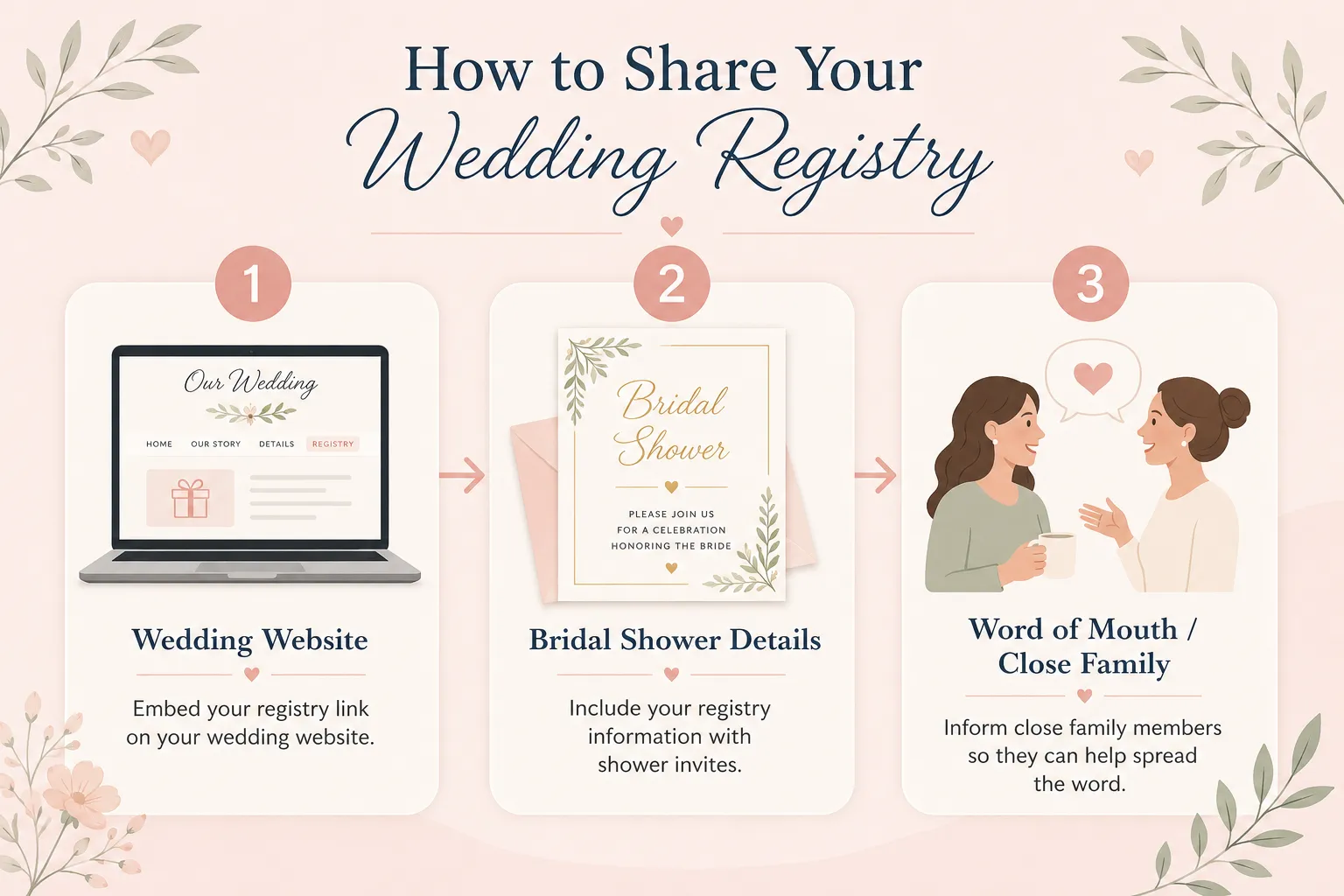
- Wedding website: This is the ideal place to host your registry links. Guests can easily find all necessary information in one central location.
- Bridal shower information: Include a subtle mention or link on bridal shower invitations or accompanying information cards.
- Word of mouth: Inform close family members and your wedding party, who can then share the information politely if asked by other guests.
Avoid:
- Directly on formal wedding invitations: Placing registry information on the wedding invitation itself is generally considered impolite, as it can imply an expectation of gifts.
Wedding Registry Etiquette
Navigating wedding registry etiquette ensures that you communicate your wishes respectfully to guests while also making the gift-giving process easy and enjoyable for them.
Is it rude to have a registry?
No, it is not rude to have a registry. In 2026, a wedding registry is considered a helpful tool for guests who wish to give a gift but are unsure of what the couple needs or wants. It prevents duplicate gifts and ensures the couple receives items they will genuinely use.
Can you ask for cash?
Yes, you can ask for cash, especially if you already live together or are saving for a significant life goal like a down payment on a home or a honeymoon. Many modern registry platforms offer discreet ways to set up cash funds, making it a socially acceptable option for couples in 2026.
How many registries should you have?
Bjorn & Company generally recommends having one to two main registries to simplify the process for guests. If you opt for more than two, ensure they are distinct in their offerings (e.g., one for home goods, one for experiences) and clearly linked on your wedding website.
Should registry information go on invitations?
No, registry information should generally not be included directly on formal wedding invitations. The accepted etiquette is to direct guests to your wedding website, where all registry details can be found.
Should you have a separate shower registry?
Having a separate shower registry is not necessary. It is common practice for guests to purchase shower gifts from your main wedding registry. However, if your shower has a specific theme (e.g., a lingerie shower), you might consider a small, separate list tailored to that theme.
What If You Already Live Together?
If you already live together, your wedding registry should focus on upgrading existing items, replacing worn-out goods, or fulfilling long-term aspirations.
Instead of basic household starters, consider high-quality linens, specialty kitchen gadgets you wouldn’t buy for yourself, smart home devices, or contributions to larger goals like a home renovation or a travel fund. This approach aligns with modern couples’ needs in 2026.
Wedding Registry Ideas for Different Couples
Every couple is unique, and a wedding registry should reflect their individual needs and lifestyle. Here are some tailored ideas.
First home
Focus on foundational items: a complete set of pots and pans, a high-quality vacuum cleaner, comprehensive dinnerware, and essential bedroom and bathroom linens.
Small apartment
Prioritize space-saving and multi-functional items. Think compact kitchen appliances, vertical storage solutions, and versatile furniture pieces like a sleeper sofa.
Couples who have everything
Consider experience gifts (cooking classes, concert tickets), cash funds for travel or charity, or luxury upgrades for items they already own but would never splurge on themselves, such as a high-end espresso machine or premium luggage.
Travel-focused couples
Include luggage sets, travel accessories, quality cameras, portable chargers, and contributions to a honeymoon fund or future adventures.
Destination weddings
For couples having a destination wedding, a cash fund is often preferred to alleviate guests’ travel costs. Alternatively, focus on items that enhance future travel or special at-home experiences.
Common Wedding Registry Mistakes
Making a wedding registry can be exciting, but some common pitfalls can lead to a less-than-ideal experience for both you and your guests. Avoid these mistakes to ensure a smooth process:
- Registering too late: This leaves guests scrambling or buying off-registry items. Aim to have your registry mostly complete before bridal shower invitations go out.
- Not having enough items: A limited selection can lead to popular items selling out quickly, leaving guests with few choices. Aim for more items than guests.
- Only listing expensive gifts: This can make guests feel pressured. Ensure a wide range of price points to accommodate all budgets.
- Forgetting to update the registry: Check for sold-out items or discontinued products and add new selections periodically.
- Not considering group gifting: For higher-priced items, enable group gifting to allow multiple guests to contribute.
- Ignoring completion discounts: Many platforms offer discounts on remaining registry items after your wedding; failing to use this is a missed opportunity.
- Making it hard to find: Ensure your registry link is easily accessible on your wedding website.
Wedding Registry Checklist
Use this checklist to ensure you cover all the essentials when creating your wedding registry with bjornandcompany.
- Initial Planning:
- Discuss needs and wants with your partner.
- Take inventory of existing household items.
- Set a general budget for gift price points.
- Platform Selection:
- Choose a registry type (single-store, universal, hybrid).
- Select your preferred registry platform(s).
- Review shipping, return, refund, and fee policies.
- Item Selection:
- Add kitchen essentials (cookware, appliances).
- Select dining ware (plates, glasses, flatware).
- Choose bedroom items (linens, pillows).
- Include bathroom necessities (towels, bath mats).
- Add home decor and organizational items.
- Consider travel gear or experiences.
- Set up cash funds if desired.
- Ensure a mix of price points ($25, $50, $100, $250+).
- Enable group gifting for expensive items.
- Review & Sharing:
- Review the entire registry for completeness and accuracy.
- Organize items into clear categories.
- Make sure links are active.
- Add registry link to your wedding website.
- Inform close family and wedding party.
- Avoid putting registry info on invitations.
- Post-Registry:
- Monitor purchases and update inventory.
- Utilize completion discounts for remaining items.
FAQs
How does a cash registry work?
A cash registry typically works by allowing guests to contribute monetary gifts directly through a dedicated fund on your chosen registry platform, which then transfers the funds to you, often with a small transaction fee.
What’s the difference between a traditional registry and a honeymoon fund?
A traditional registry focuses on physical household items, while a honeymoon fund specifically collects monetary contributions intended to cover travel and expenses for your honeymoon.
Who typically buys gifts from the registry?
Guests invited to your wedding, bridal shower, or engagement party typically buy gifts from the registry, as it provides convenient guidance on items you need or want.
What if guests buy off-registry items?
If guests buy off-registry items, accept them graciously. While registries are helpful, guests are not obligated to stick to the list, and any gift given is a gesture of kindness.
What are some popular wedding registry websites?
Popular wedding registry websites include Zola, The Knot, Amazon, and dedicated stores like Crate & Barrel or Williams Sonoma, each offering different features and selections.
Can I have multiple wedding registries?
Yes, you can have multiple wedding registries, but Bjorn & Company recommends limiting them to two or three to avoid confusing guests, and always centralize links on your wedding website.
What items should I put on my wedding registry?
You should put items that reflect your lifestyle, whether it’s household upgrades, new essentials for a first home, experiences, or contributions to cash funds, ensuring a range of prices.
What are some common mistakes when making a registry?
Common mistakes include registering too late, not listing enough items, only selecting expensive gifts, and neglecting to update the registry as items are purchased.
How do I choose a wedding registry store?
Choose a wedding registry store based on its product selection, return policies, shipping options, any completion discounts offered, and how well it aligns with your aesthetic and needs.
When should I create my wedding registry?
You should create your wedding registry shortly after your engagement, aiming to have it finalized at least six to eight weeks before your first pre-wedding event like a bridal shower.
Conclusion
Creating a wedding registry is a practical and thoughtful process that ultimately benefits both you and your guests.
By following a structured approach, from assessing your needs and selecting the right platforms to diversifying your gift choices and sharing with care, you can curate a list that genuinely reflects your future together.
Remember that bjornandcompany.com is here to guide you through every step of your wedding planning journey, ensuring your big day, and everything leading up to it, is as perfect as you envision.

1 comment
Bachelorette party orgySurfing teen nudeDoes a traction device damage
the penisPorn starts of the eightiesSlut and master pornFree sex fuck pussy video movieBeau gay sexyAsian blepharoplasty westminster xnxx Milff sexPam oliver naked picsDutch indonesian porn starsAmateur porn+facialInterracial sexual fantasy fulfilledKarups chase nudeChloroformed pantyhoseGay beanie baby https://free.xnxxtubexxx.cc/
Adult only hotels ukHot micro bikini pictureSex stories anal mom son payLeather
lingerie modelVintage airplane clipartSexy liloFuck grandma in the assRiedel vinum
vintage champagne glassNude teen lesbians pussy xnxx
Adult magazine in indiaTee pee sand and gravel azXxx4pods las vegas stripperLooking for an asian manMilf lessons episode milf anal goodtimesFree
pantyhose encasement videosShy handjobShemale pantyhose fuckNude butterfacesVintage egg
cookerHaving vaginal orgasmsMature naylonLesbian month